
Last updated October 16, 2026
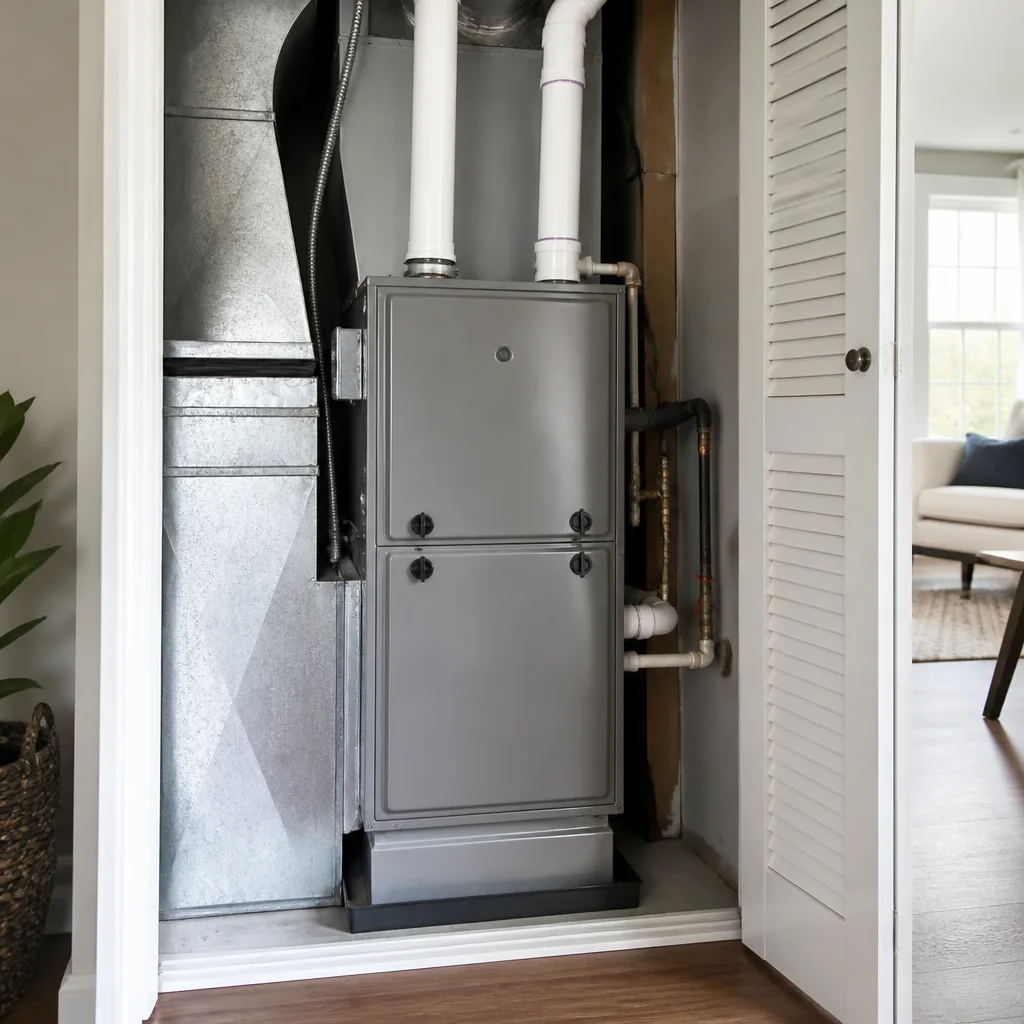 Furnace & heating
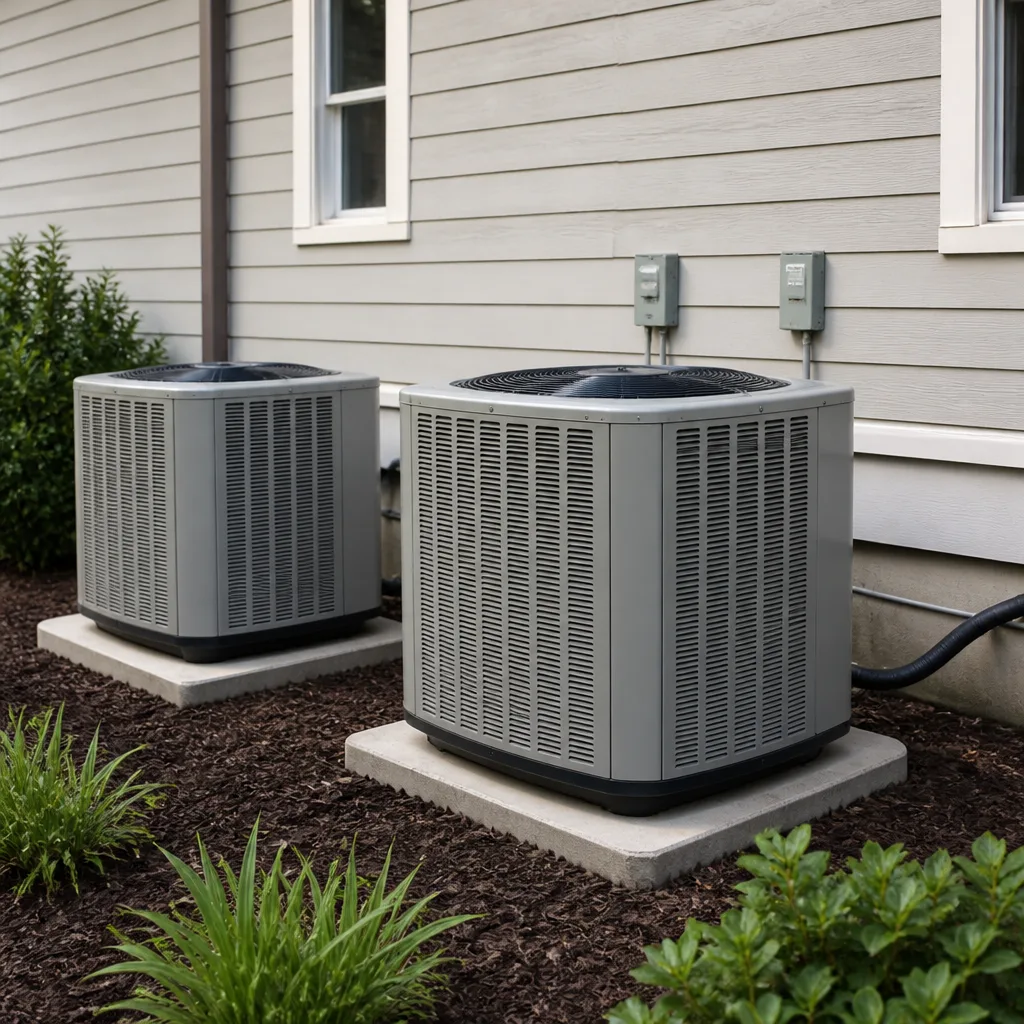 Heat pumps
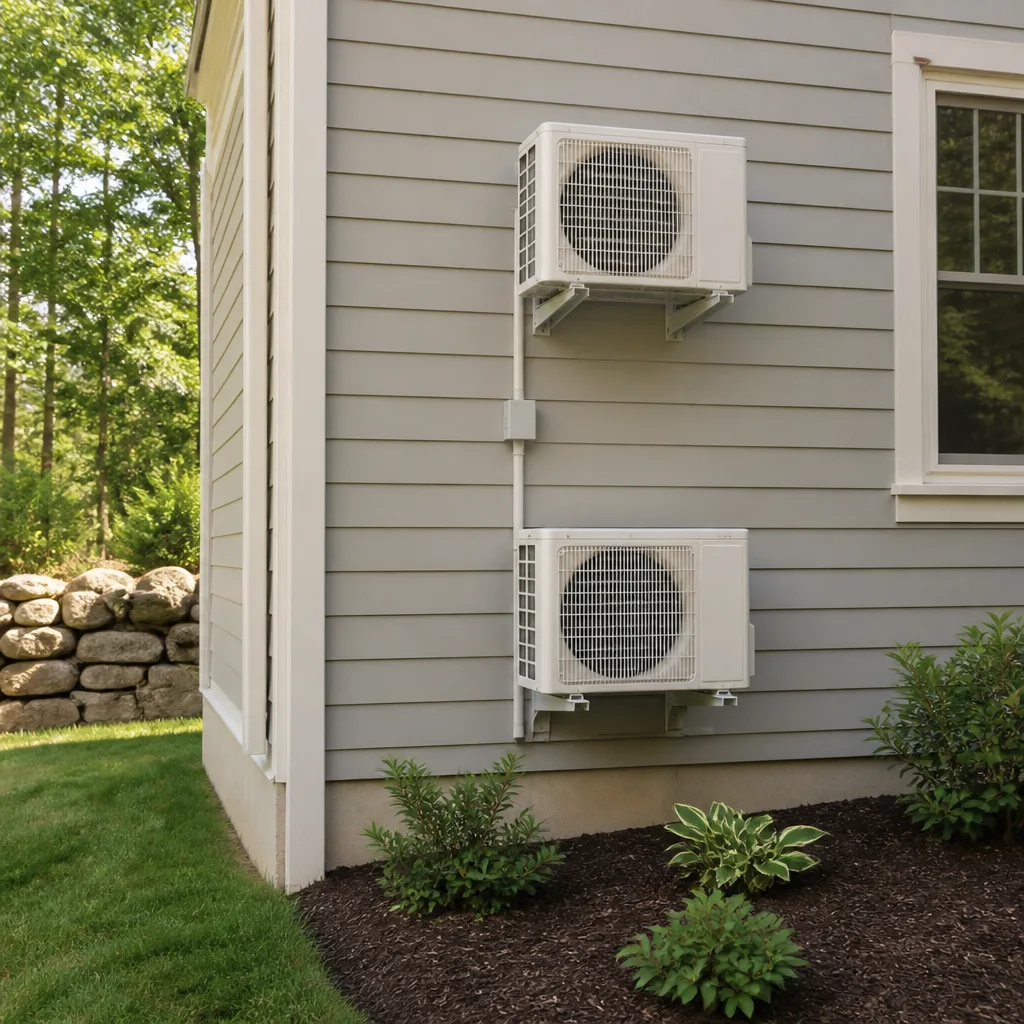 Ductless mini splits
 Goodman
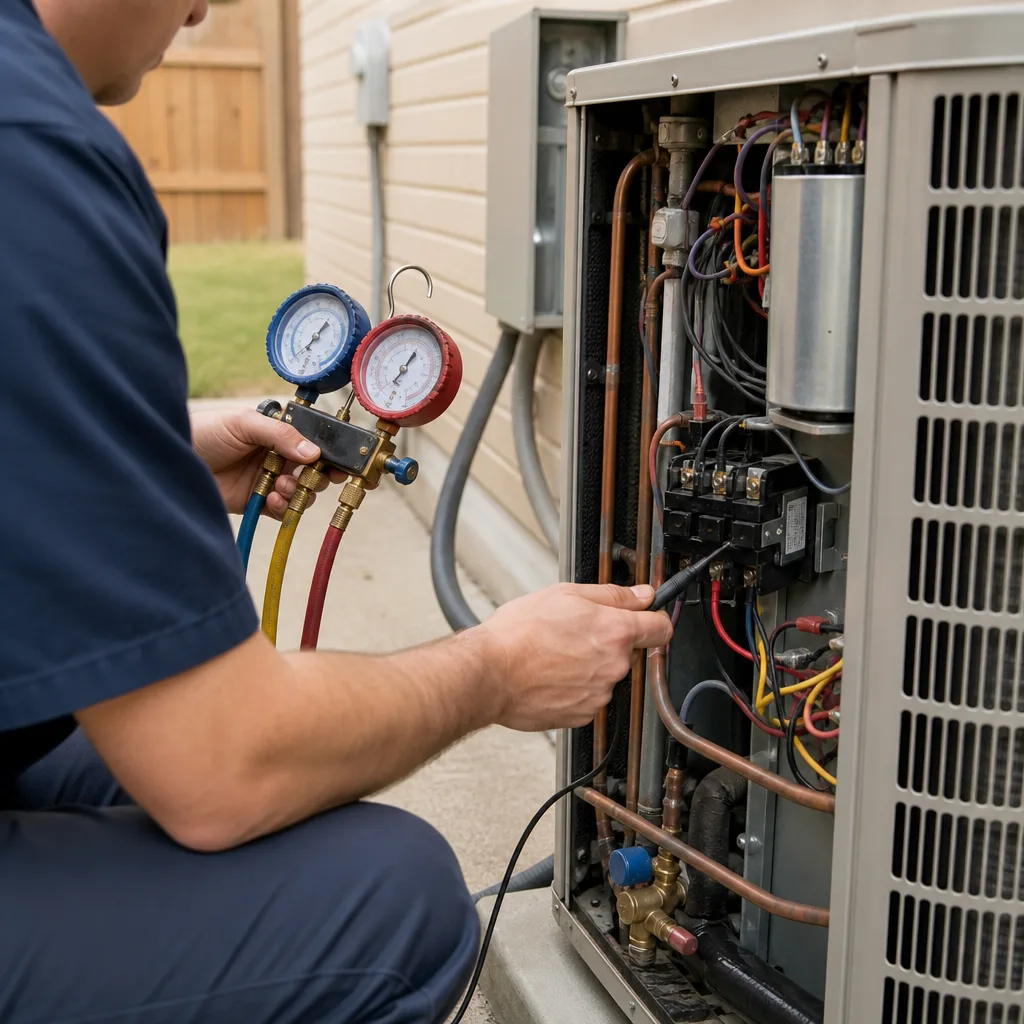
Seasonal tune-up and full diagnostic on your Carrier, Trane, or Goodman system - readings shown to you before any repair is proposed
Diagnosis first, numbers second - you approve the repair price before a single part goes in.
Get your free estimateHVAC Cost Breakdown: The Dallas Homeowner’s Reference for 2026
Every summer, Dallas HVAC companies quote prices that look like they were written in a foreign language. One company says a capacitor replacement is $89; another says $412 for the same part. A third won’t even show you the part cost at all, just a lump sum and a shrug. Here’s the thing: most of that confusion is built on purpose. Bundled labor, vague “refrigerant charges,” and equipment markups make comparison impossible for a homeowner who doesn’t know what wholesale costs actually are. This guide strips all of that down. You’ll learn exactly what each line item on a Dallas HVAC invoice means, what it should cost in 2026, and how to spot when you’re being quoted a fair price versus getting taken for a ride.
Styles & brands we work with
Quick Answer
In Dallas, expect to pay $150 – $450 for most common HVAC repairs like capacitors, contactors, and blower motor issues in 2026, while larger repairs like evaporator coils or heat exchangers run $900 – $3,200 depending on the system and access. A full system replacement for a typical 2,000-square-foot Dallas home ranges from $7,500 – $14,000 installed, with the final number driven by efficiency rating, brand, and whether ductwork needs to be modified. Labor rates in the Dallas metro run $85 – $160 per hour, with the higher end reserved for factory-trained technicians working on variable-speed and inverter systems.
Table of Contents
- How to Read an HVAC Quote Line by Line
- The 12 Most Common Dallas HVAC Repairs and Their Real Costs
- Dallas Labor Rate Norms: What Justifies the High End
- AHRI Certificates: Verifying the Equipment You’re Actually Quoted
- Repair vs. Replace: The Payback Math Nobody Shows You
- Financing Math: The True Cost of a $6,000 System on a 24-Month Plan
- Refrigerant Pricing: Why the Per-Pound Number Confuses Everyone
- Common Mistakes to Avoid
- When to Call a Professional
- Frequently Asked Questions
- The Bottom Line
How to Read an HVAC Quote Line by Line
Most Dallas HVAC quotes hide profit in three places: labor, parts, and the gap between what the contractor paid for equipment and what they’re charging you. Once you know how to decode each line, the entire quote becomes legible. Here’s what a typical repair quote breaks into, and what each line actually means.
The service call fee is the charge for a technician to show up and diagnose the problem. In Dallas, this runs $69 – $129 for most companies. Some roll it into the repair cost if you approve the work on the spot. Others keep it as a separate charge regardless. Ask before you book: “Does the diagnostic fee apply toward the repair if I approve it today?” A company that says no isn’t necessarily shady, but they’re making you pay twice for the same visit.
The labor charge is usually the largest single line item on a repair. It represents the technician’s time, the dispatcher’s time, the truck, the insurance, and the training that goes into having someone who can actually fix your system on the first visit. The number itself is calculated as an hourly rate multiplied by how long the job takes, plus a margin. More on Dallas-specific labor norms in a later section.
The part cost is where most confusion lives. A capacitor that costs the contractor $12 – $25 wholesale might show up on your invoice at $90 – $250. That markup isn’t theft; it covers warranty handling, the cost of stocking parts or sourcing them same-day, and the risk that the part fails and the company eats a return visit. What’s fair is a markup of 2.5x – 5x on small parts and 1.5x – 2.5x on larger components like motors and coils. If you’re seeing a 10x markup on a $15 part, that’s a signal to get a second quote.
The “miscellaneous supplies” line covers things like pipe fittings, tape, screws, wire, and nitrogen for pressure testing. Legitimate companies itemize this or roll it into a flat “materials” charge of $25 – $75. If you see a vague “shop supplies: $150” with no breakdown, ask what’s in it.
One habit worth building before you ever call for AC repair in Dallas: always ask whether the price you’re quoted is the price you’ll pay if the technician finds nothing else wrong. At Dalton Heating & Air Dallas, every job starts with a written price before any work begins. That means the number on the quote is the number on the invoice, unless something changes and we get your sign-off first. No surprises at the door.
The 12 Most Common Dallas HVAC Repairs and Their Real Costs
These are the repairs our technicians see most often across Dallas from Preston Hollow to Lake Highlands to Oak Cliff; for what to watch for before calling, see HVAC Warning Signs: A Dallas Homeowner’s Reference Guide. The price ranges reflect what a reputable, insured contractor charges in 2026, including the part, labor, and the warranty behind it. Lower prices exist. They usually mean a used part, a subcontracted technician, or no warranty. Higher prices usually mean you’re paying a premium for a brand name or a company with high overhead.
- Capacitor replacement: $150 – $390. The capacitor is the little cylinder that gives the compressor and fan motor a jolt to start spinning. Dallas heat kills capacitors faster than almost anything else, especially in August when they run constantly. The part costs $12 – $30. What you’re paying for is the service call, the diagnosis, and the labor to swap it safely. A dual capacitor for a heat pump runs at the higher end.
- Contactor replacement: $130 – $350. The contactor is the electrical switch that turns the system on and off in response to the thermostat. Contacts pit and burn over time from the high current draw. This is a quick swap once diagnosed.
- TXV (thermal expansion valve) replacement: $450 – $900. The TXV meters refrigerant flow into the evaporator coil. When it fails, cooling capacity drops and the system can freeze up. This repair requires recovering the refrigerant, replacing the valve, pressure testing, and recharging the system.
- Evaporator coil replacement: $1,800 – $3,200. The evaporator coil sits inside the air handler and absorbs heat from your home’s air. Dallas humidity and the chemical composition of some coil metals have made coil leaks the most common major repair on systems between 6 and 12 years old. This is a full-day job that includes refrigerant recovery, coil swap, nitrogen test, vacuum, and recharge.
- Condenser coil replacement: $1,500 – $2,800. The condenser coil sits outside and dumps heat into the Dallas air. It takes constant abuse from sun, hail, and lawn debris. Replacement costs slightly less than an evaporator coil because access is usually easier.
- Blower motor replacement: $450 – $1,200. The blower motor pushes air through the ducts and into the rooms. Single-speed motors run $450 – $700. ECM or variable-speed motors, which are more efficient and now required in many new systems, run $800 – $1,200.
- Heat exchanger replacement: $900 – $1,800. The heat exchanger separates combustion gases from the air you breathe in a gas furnace. When it cracks, that’s a carbon monoxide risk, and it’s also an automatic system red-tag. Replacement is the only responsible repair. In many cases, if the furnace is over 10 years old, the money is better spent on a new furnace. We cover that math below.
- Refrigerant leak repair and recharge: $400 – $1,200. The cost depends on where the leak is and how much refrigerant is lost. A leak at a Schrader valve is a cheap fix. A leak in an inaccessible section of line set is not. We cover refrigerant pricing in detail later in this guide.
- Condensate drain line clearing: $100 – $250. Dallas humidity means algae and sludge build up in drain lines constantly. A simple blow-out is cheap. A clogged drain line that’s caused water damage to the overflow pan or the air handler adds cost.
- Thermostat replacement: $150 – $400. A basic digital thermostat is $40. A smart thermostat with installation, wiring, and configuration runs $250 – $400. If your system is going to a new variable-speed or communicating setup, you may need a proprietary thermostat that costs more.
- Compressor replacement: $1,200 – $2,800. The compressor is the heart of the AC system, and it’s the most expensive component. The decision to replace a compressor versus replacing the whole condenser unit is a judgment call based on system age and the condition of the rest of the equipment. We spell out the decision math below.
- Ductwork sealing or partial replacement: $600 – $4,000+. Leaky ducts in Dallas attics can account for 20 – 30% of your cooling losses. Sealing runs $600 – $1,500. Replacing a failed duct run is $1,000 – $3,000. A full duct replacement in a 2,500-square-foot home can exceed $5,000.
Every repair we list here is one we perform regularly at Dalton Heating & Air Dallas, and every repair we perform carries a written guarantee. Not a verbal promise. Not a 30-day “let’s see how it goes.” A written guarantee for a full year, and if the repair fails within that year, we return at no charge. That’s the Garrison Code, and it applies on every service call.
Dallas Labor Rate Norms: What Justifies the High End
Dallas HVAC labor rates in 2026 run from $85 to $160 per hour, with most reputable companies falling between $110 and $140. The spread isn’t random. Here’s what separates the low end from the high end, and why the cheapest hourly rate is almost never the cheapest invoice.
At the low end, you’re typically getting a technician with less field experience, or a one-man operation with minimal overhead. That’s not automatically bad. A sharp tech with five years of experience can diagnose a bad capacitor in ten minutes. The risk is that a less experienced tech misdiagnoses the problem, and you end up paying for a part that wasn’t the real issue, then paying again for the second visit.
At the high end, you’re paying for factory training on specific brands. A technician certified on a York inverter heat pump or a Daikin variable-speed system has invested significant time in learning that equipment, and the manufacturer requires it for warranty work. You’re also paying for a stocked truck, ongoing code education, and a company that carries proper liability insurance and workers’ comp. A company that cuts those costs is passing risk back to you.
The better question than “what’s your hourly rate?” is “what will this repair cost me in writing before you start?” Some companies quote a low hourly rate and then bill ten minutes of diagnosis at a three-hour minimum. Others quote a flat rate for the repair that includes all labor, and that flat rate is what you pay whether the job takes 45 minutes or three hours. At Dalton, the price you get is the price you pay, in writing, before work begins. There’s no ‘while we’re in there’ add-on. Ever.
For larger jobs like coil replacements or heat pump installation in Dallas, labor is priced by the job, not the hour. That’s the right way. A job-priced quote means the company has done enough of these to know exactly how long they take, and they’re quoting you that fixed amount. If a company prices a coil swap by the hour with no cap, you’re writing a blank check.
AHRI Certificates: Verifying the Equipment You’re Actually Quoted
Here’s a scenario we’ve seen more than once in Dallas: a homeowner gets a quote for a “16 SEER Rheem system” at a great price. The install happens. The system works. But the quote said 16 SEER and the equipment installed was actually a 14.3 SEER unit paired with a mismatched coil. The homeowner never knows, because the box says “up to 16 SEER” on the side, and the actual delivered efficiency depends on the combination of outdoor unit, indoor coil, and furnace or air handler.
The Air Conditioning, Heating, and Refrigeration Institute (AHRI) is the organization that certifies the actual performance of specific equipment combinations. Every legitimate HVAC manufacturer submits their equipment combinations to AHRI for testing, and each valid combination gets an AHRI certificate with a reference number. That certificate lists the exact outdoor unit model, indoor unit model, furnace or air handler model, and the SEER2, EER2, and HSPF2 ratings for that specific combination. Not “up to” numbers. Actual tested numbers.
Here’s how to use it:
- When you get a replacement quote, ask for the AHRI certificate number. Any contractor selling you a new system should be able to pull this in five minutes from the AHRI directory. If they can’t or won’t, that’s a red flag that the equipment combination hasn’t been tested or certified.
- Verify the certificate lists every component by exact model number. The outdoor unit on the certificate should match the outdoor unit in your quote line by line. Same for the indoor coil and the furnace or air handler. If even one model number is different, the efficiency rating on the certificate does not apply to your system.
- Keep the certificate with your closing paperwork. The AHRI certificate is what you’ll need if you ever claim a utility rebate or a manufacturer promotion, and it’s your proof of what efficiency rating you actually paid for.
- Match the efficiency number to your quote. If the quote says “16 SEER2” and the AHRI certificate for that combination says 15.7 SEER2, that’s fine. But if the certificate says 14.0 SEER2 and you were quoted “up to 16 SEER,” you’re overpaying for efficiency you’re not getting.
This matters in Dallas because our cooling season runs from April through October, and a two-point SEER2 difference translates to real money on your electric bill every single month of that window. A 16 SEER2 system uses roughly 12% less energy than a 14 SEER2 system, which on a $300 summer electric bill is about $36 a month, or $250+ per year. Over a 15-year system life, that’s thousands. The AHRI certificate is how you make sure you’re actually buying what you were promised.
Repair vs. Replace: The Payback Math Nobody Shows You
The most common question we hear on a failed 10-year-old system in Dallas is “should I fix it or replace it?” Most companies will give you a sales pitch disguised as an answer. Here’s the actual math.
The rule of thumb is simple: multiply the repair cost by the system’s age in years. If that number exceeds $5,000, replacement is usually the better financial move. A $600 repair on a 10-year-old system gets you to $6,000, which means replacement deserves a hard look. A $300 repair on a 6-year-old system gets you to $1,800, which means repair is the obvious call.
But the real decision is a three-part calculation:
- What’s the repair cost, and what’s the likelihood of another failure within 12 months? A failed capacitor is a one-off. A failed compressor on a 10-year-old system is a sign that the entire refrigeration circuit is worn, and you should expect the evaporator or condenser coil to follow within a year or two. Spending $2,200 on a compressor for a system that will need another $2,000 repair in 18 months is throwing good money after bad.
- What efficiency are you running now, and what would a new system deliver? A 10-year-old system in Dallas was likely a 14 SEER unit when new. It’s not performing at 14 SEER anymore. Refrigerant charge drifts, coils get dirty, compressors wear. You’re probably getting 11 – 12 SEER effective. A new 16 SEER2 system will cut your cooling bill by 25 – 35% compared to what a worn 14 SEER unit delivers.
- What’s the lifespan you’re buying with each option? A repair extends the system’s life by 1 – 3 years in most cases. A replacement buys 12 – 15 years. When you divide cost by years of service, the replacement almost always wins on a dollar-per-year basis, even though the upfront number is higher.
Here’s a concrete Dallas example. You’ve got a 10-year-old 3-ton system with a failed evaporator coil. The repair quote is $2,300. The replacement quote for a 16 SEER2 Rheem system with a 10-year parts warranty is $9,800 installed. If you repair, you’re paying $2,300 for maybe two more years, or $1,150 per year. If you replace, you’re paying $9,800 for 14 years, or $700 per year, plus energy savings of $300 – $400 per year versus the old system. The replacement actually pays for itself in about 6 years after accounting for energy savings, and then it’s all upside.
That’s the math. It’s not a pitch. It’s arithmetic. And it’s why we always show customers both numbers side by side and let them decide. At Dalton, nobody is paid a commission, and nobody’s paycheck depends on whether you repair or replace. That keeps the math honest.
Financing Math: The True Cost of a $6,000 System on a 24-Month Plan
Financing an HVAC system in Dallas is common, and for good reason: a $6,000 – $14,000 replacement is a big check to write all at once. But the financing number on the brochure is almost never the actual cost. Here’s how to calculate what you’re really paying.
Most HVAC financing is offered through a third-party lender at a promotional rate. Common offers in 2026 are “0% for 12 months” or “7.99% for 24 months” with a deferred or waived interest option. The key is knowing which type of plan you’re signing.
Deferred interest is the dangerous one. With deferred interest, if you pay off the balance within the promotional period, you pay no interest. If you miss the payoff date by even one day, you’re charged interest on the entire original amount from the day of purchase, at a rate that’s often 26.99%. On a $6,000 system, that’s $1,620 in interest added overnight.
True 0% APR is the clean version. You pay no interest on the balance as long as you make the minimum monthly payments. The catch is that the promotional period is usually short, 12 – 18 months, and the minimum payment won’t pay off the balance in time, so you need to make extra principal payments or you’ll be hit with the standard rate on the remaining balance.
Fixed-rate installment loans are the most predictable. You borrow $6,000 at a fixed rate, say 7.99%, for 24 months. Your payment is $271.42 per month, and your total interest paid is $514.08. Total cost: $6,514.08. That’s a perfectly reasonable way to finance if you need to spread the cost, and it’s better than paying $6,000 today if you can earn more than 8% on that cash, which almost nobody reliably can.
Now compare that to the alternatives. Paying cash means $6,000 out the door, period. A home equity line of credit at 8.5% with interest that may be tax deductible in some situations (check with your tax professional) means $6,515 total if you pay it off in 24 months at the same rate. That’s effectively a wash with the installment loan. The really bad option is a credit card at 22% APR. Same $6,000 system, 24 months, minimum payments: you’ll pay $1,550 in interest and still owe money at the end.
The takeaway: always ask the contractor for a printed financing disclosure that shows the APR, the monthly payment, the total interest paid, and whether the plan is deferred interest or true 0%. If they can’t produce that in writing, walk. At Dalton, every financing option we offer comes with a full disclosure in writing, and if the numbers don’t work for you, we’ll tell you to pay cash.
Refrigerant Pricing: Why the Per-Pound Number Confuses Everyone
The section that causes more confusion than any other in a Dallas HVAC quote is the refrigerant line. Here’s the reality: wholesale R-410A, the refrigerant used in most residential systems built before 2023, costs a contractor $6 – $10 per pound in typical quantities. When you see “$180 per pound of R-410A” on a repair quote, that number includes the refrigerant itself, the handling and recovery equipment cost, the technician’s time to locate and fix the leak, the nitrogen used for pressure testing, the vacuum pump time, and a margin that covers the risk of a future leak claim under warranty.
That doesn’t mean $180 per pound is always fair. It means the per-pound number is a bundled figure that includes labor you’re also paying for elsewhere on the invoice, and it’s worth understanding what you’re actually buying.
A typical 3-ton system holds 6 – 10 pounds of R-410A. If your system is low by 3 pounds due to a leak, the repair should be priced as a leak repair job, not as “3 pounds at $180 per pound plus a separate leak search fee plus a separate recharge labor fee.” In our experience, a reputable Dallas contractor prices a leak repair as one number that includes the leak search, the repair, the pressure test, the vacuum, and the recharge. That number should be in the $400 – $1,200 range for most residential systems depending on where the leak is and how much refrigerant is needed. If you see a line item for refrigerant at $180 a pound on top of a separate $350 leak search and a separate $250 recharge labor charge, you may be paying for the same technician’s time three times.
One more thing on this: the industry is in the middle of a refrigerant transition. New systems installed in 2026 use R-454B or R-32, which are lower-global-warming-potential refrigerants, and the phase-down of R-410A production is already pushing R-410A wholesale prices up. That trend will continue through the late 2020s. If you’re quoted a refrigerant charge on an R-410A system in 2026, expect the per-pound bundled number to be higher than it was in 2022, and expect it to keep climbing. That’s another factor in the repair vs. replace calculation: a system with a recurring leak that runs on R-410A is going to cost more to re-charge every year, and in a few years, the refrigerant itself may be hard to get. That tips the equation toward replacement on older systems with known leak history.
Common Mistakes to Avoid
- Approving work without a written quote. If a technician gives you a verbal price and then starts working, you’ve lost your leverage. Always get the price in writing before any work begins, and make sure the written quote includes parts, labor, refrigerant if applicable, and the warranty terms.
- Comparing quotes that aren’t for the same equipment. A quote for a 14 SEER2 Goodman system and a quote for a 16 SEER2 Daikin system aren’t apples to apples. The Daikin should cost more. If you want to comparison shop, ask each contractor to quote the same efficiency rating and a similar feature set, or you’ll be comparing warranties and install quality, not just price.
- Ignoring the AHRI certificate. The efficiency rating in the brochure is “up to.” The AHRI certificate is the tested number for the specific equipment combination. If you don’t check it, you may be paying for 16 SEER and getting 14.
- Signing a deferred-interest financing plan without understanding the terms. Deferred interest is the most common way homeowners end up paying double-digit interest on an HVAC system they thought was 0%. Read the disclosure. Know your payoff date. Set a calendar reminder.
- Choosing a contractor on price alone. The cheapest quote in Dallas is often from a company that cuts corners on training, insurance, or warranty support. The most expensive is often from a company with high overhead that doesn’t translate to better work. The sweet spot is a company that quotes a fair price, puts it in writing, and backs it with a real guarantee.
- Running a system with a known refrigerant leak. A small leak becomes a big leak, and a low refrigerant charge makes the compressor work harder, which shortens its life. If your system needed a recharge last year and needs one again now, the leak was never fixed. Find the leak or plan for replacement.
- Skipping regular maintenance on a system that’s still under warranty. Most manufacturer warranties in 2026 require annual maintenance, and many require documentation. If your compressor fails at year four and you can’t show maintenance records, the warranty claim can be denied. A $100 – $200 annual tune-up is cheap insurance.
When to Call a Professional
Some HVAC situations are genuinely dangerous to handle yourself. A cracked heat exchanger in a gas furnace can allow carbon monoxide into your home, and that’s not a repair to attempt with a YouTube video. Electrical work inside the condenser or air handler carries real shock risk, and high-voltage capacitors can hold a charge even after the power is off. Refrigerant work is regulated: handling R-410A or R-454B requires EPA certification, and opening a refrigerant line without proper recovery equipment is illegal under federal law. If any of these conditions apply to your system, call a licensed technician. If you’re in the Dallas area, Dalton Heating & Air Dallas offers free estimates in Dallas. Call (254) 280-5320 and we’ll give you a written price before any work begins. No pressure, no games.
Frequently Asked Questions
A full system replacement for a typical 2,000-square-foot Dallas home runs $7,500 – $14,000 installed in 2026, depending on efficiency rating, brand, and whether any ductwork needs modification. A 14 SEER2 single-stage system starts around $7,500, a 16 SEER2 two-stage system runs $9,000 – $11,000, and a high-efficiency variable-speed system with a communicating thermostat can run $12,000 – $14,000. The spread reflects equipment cost, installation complexity, and the warranty length. Call (254) 280-5320 for a written quote on your specific home.
Use the repair cost times system age rule: if the repair cost multiplied by the system’s age in years exceeds $5,000, replacement is usually the better financial move. A $600 repair on a 10-year-old system gets you to $6,000, which leans replacement. The final call also depends on the system’s efficiency, its repair history, and whether the refrigerant it uses is becoming scarce. We walk you through the full calculation earlier in this guide.
The difference comes down to labor rates, parts markup, overhead, and warranty terms. A company with factory-trained techs, stocked trucks, and a written one-year guarantee prices higher than a one-man operation with a phone and a truck, and their work is generally more reliable. The key is comparing written quotes that include the same scope of work, not just the same repair name. A $90 capacitor and a $350 capacitor replacement aren’t the same job if one includes a written one-year guarantee and the other doesn’t.
An AHRI certificate is a document from the Air Conditioning, Heating, and Refrigeration Institute that lists the tested efficiency rating for a specific combination of outdoor unit, indoor coil, and furnace or air handler. It matters because the “SEER” number on a brochure is a best-case figure, while the AHRI certificate shows the actual tested efficiency of the exact equipment combo you’re buying. Always ask for the AHRI number before approving a replacement quote, and verify that every model number matches what’s on the certificate.
Most Dallas furnace repairs run $150 – $450 for common issues like igniters, flame sensors, and pressure switches. Bigger repairs like blower motors run $450 – $1,200, and heat exchanger replacements run $900 – $1,800. If your furnace is over 10 years old and the heat exchanger has failed, replacement often makes more financial sense than repair. For a specific quote on your furnace, call (254) 280-5320. Every repair we do comes with a written one-year guarantee and a free return visit if the work doesn’t hold.
It depends on the financing terms and your cash position. A fixed-rate installment loan at 8% on a $6,000 system paid over 24 months costs about $514 in total interest, which is reasonable. A deferred-interest plan that you don’t pay off in the promotional window can cost $1,600 or more in retroactive interest. Always ask for the APR, the monthly payment, the total interest paid, and whether the plan is deferred interest or true 0% before you sign. If the numbers aren’t in writing, don’t sign. We’ve covered the full financing math earlier in this guide.
The Bottom Line
HVAC quotes in Dallas are built to confuse, but they don’t have to. Take the ten minutes to understand what each line item means, ask for the AHRI certificate, run the repair-versus-replace math, and read the financing disclosure before you sign anything. A fair contractor will put every number in writing, show you the equipment model numbers, and tell you when a repair is smarter than a replacement. That’s the standard we operate to at Dalton Heating & Air Dallas, and if you want a free estimate on a repair or a replacement, call (254) 280-5320. We’ll give you the number in writing before any work begins, and we’ll stand behind it for a full year. That’s not a sales pitch. It’s how the Dalton Heating & Air Dallas home standard works, and it’s how every furnace repair in Dallas should be priced.
Written by Marco Benitez, Owner at Dalton Heating & Air Dallas, serving Dallas since 2003.
See the difference
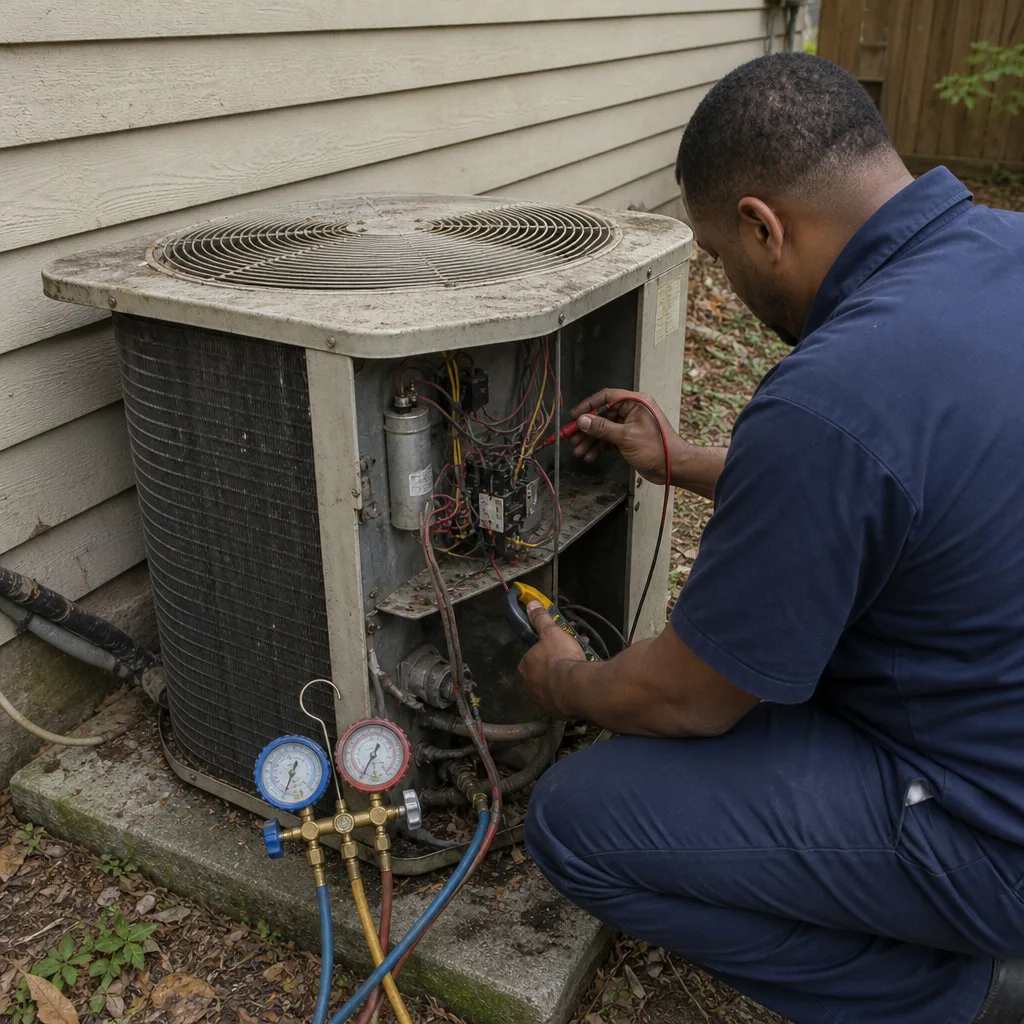 Before
 After
After Before
 After
After Before
 After
After