
Last updated October 16, 2026
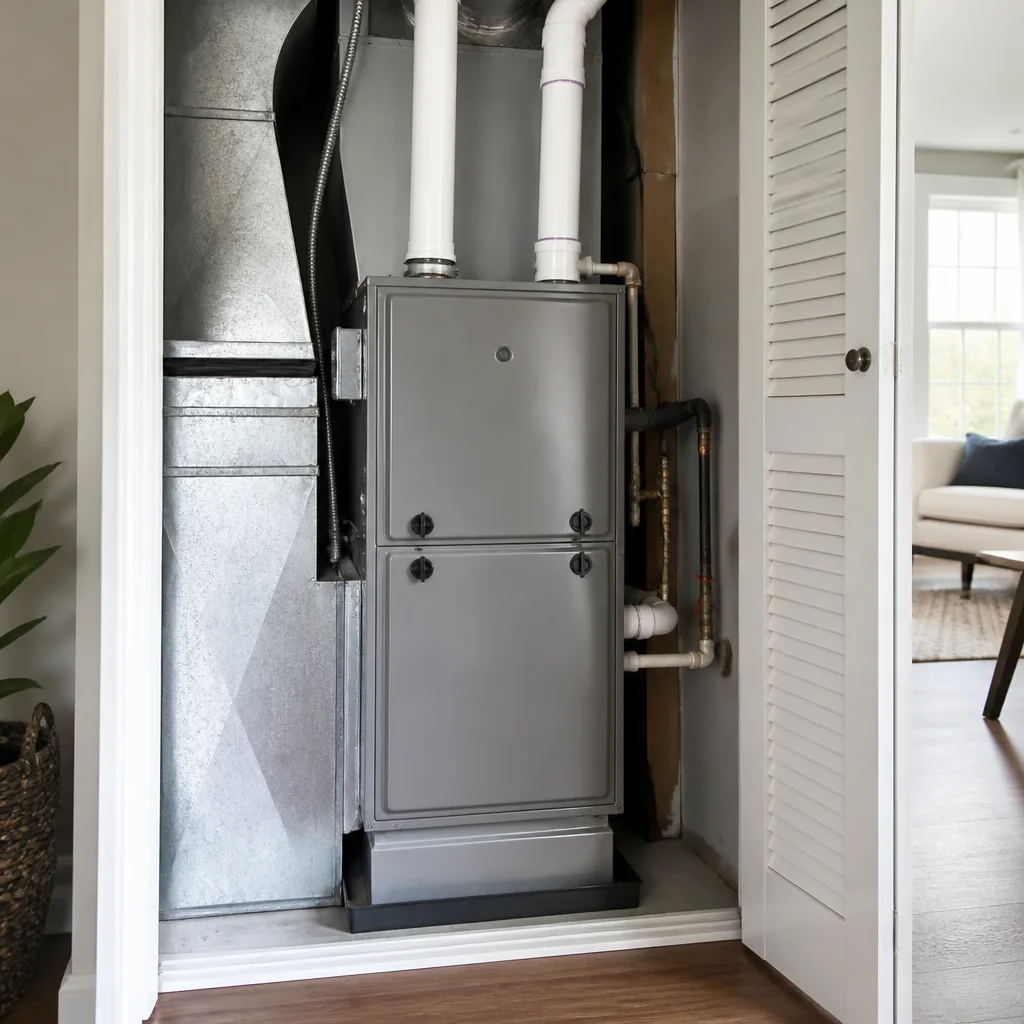 Furnace & heating
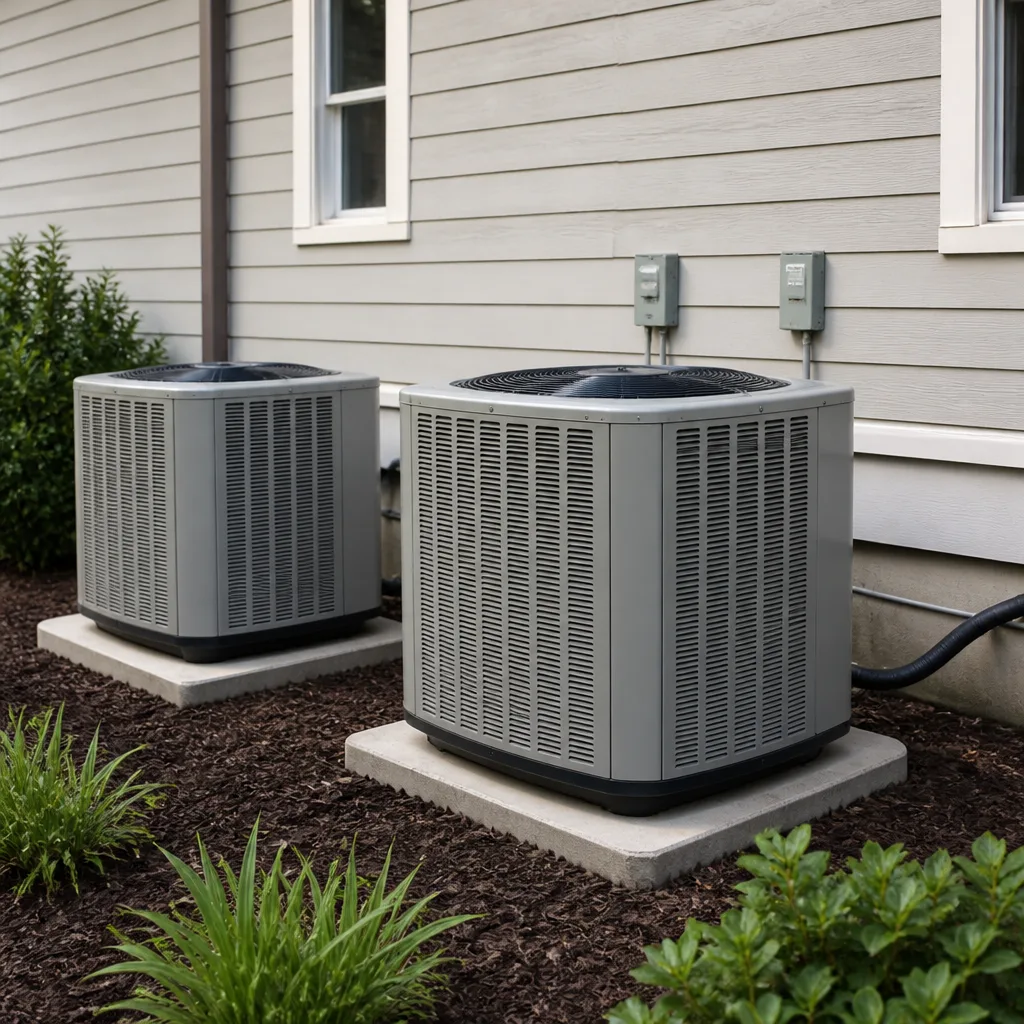 Heat pumps
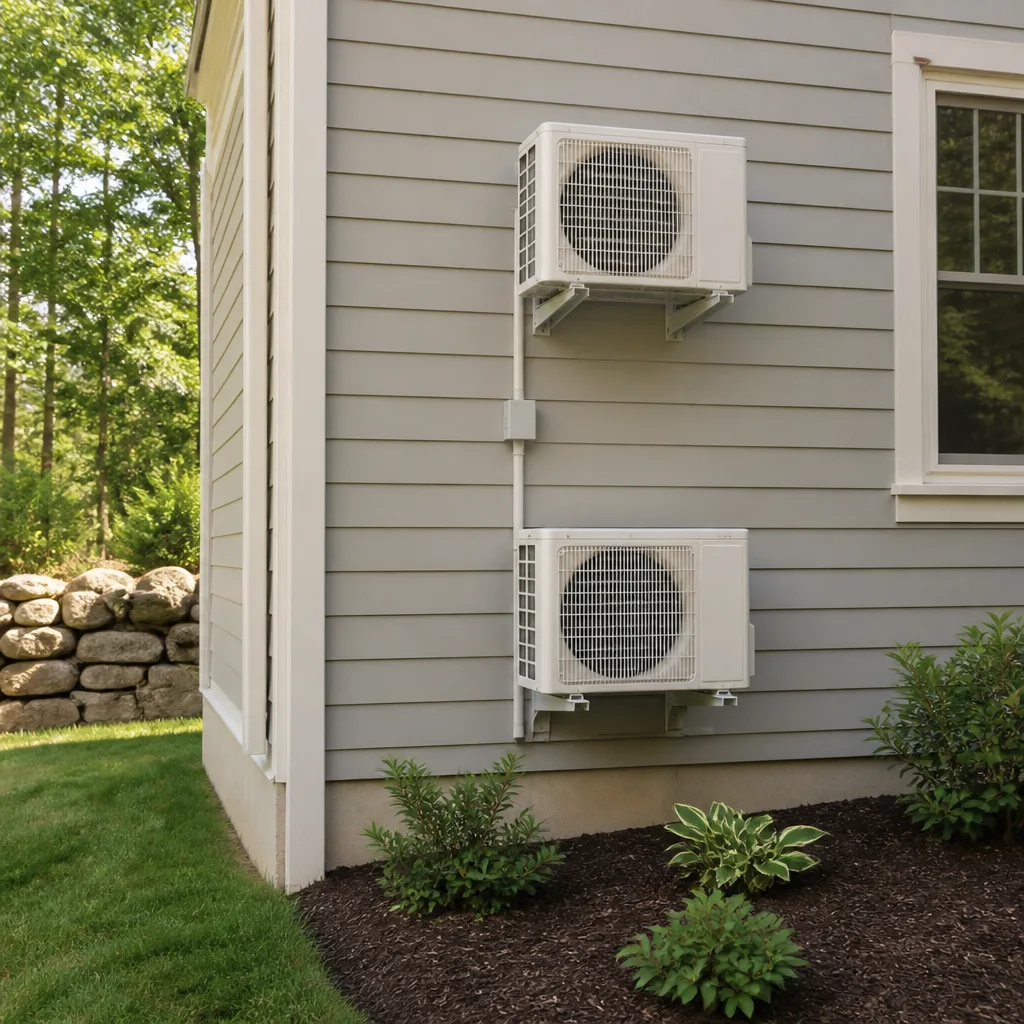 Ductless mini splits
 Goodman
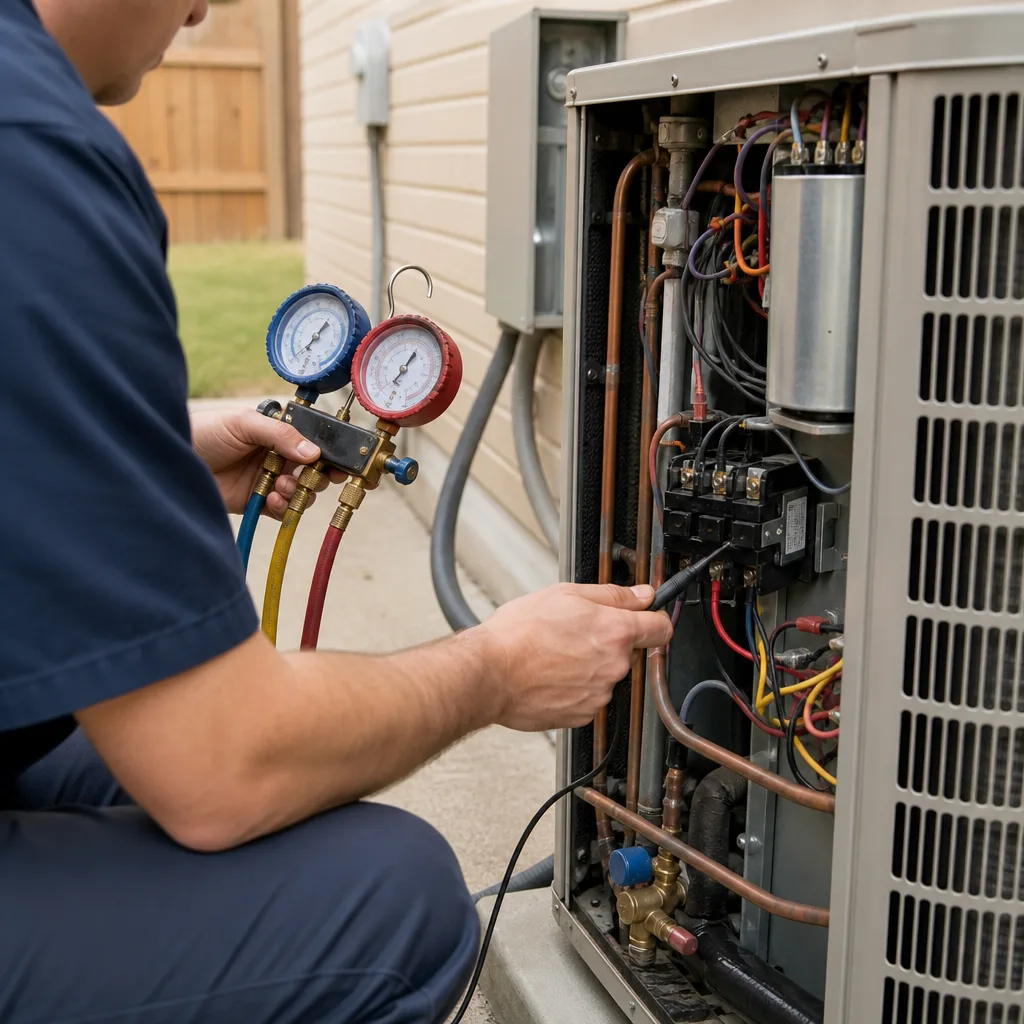
Seasonal tune-up and full diagnostic on your Carrier, Trane, or Goodman system - readings shown to you before any repair is proposed
Diagnosis first, numbers second - you approve the repair price before a single part goes in.
Get your free estimateHow to Hire a HVAC Contractor in Dallas: A Step-by-Step Guide
Texas issues more than 10,000 HVAC contracting licenses, but here’s the part most Dallas homeowners never learn: holding a license and pulling a permit are two different things, and the state doesn’t require a permit for most repair work. That gap is where the smooth talkers operate. This guide walks you through exactly how to verify a contractor, what to demand in writing, which questions make a bad contractor squirm, and how to compare bids so the cheapest quote doesn’t become the most expensive job. You’ll finish this with the knowledge to hire an HVAC contractor in Dallas like someone who has done it before, because after this, you have.
Quick Answer
To hire an HVAC contractor in Dallas, verify their TDLR license number online, confirm they carry general liability insurance, get a written scope of work with firm pricing before anyone touches your equipment, and ask whether they pull permits for installations. Skip any contractor who won’t put the price in writing, can’t name a local Dallas address, or pushes a “today-only” discount. Dalton Heating & Air Dallas does written pricing on every job, service all nine major residential brands, and back every repair with a written one-year guarantee: call (254) 280-5320 for a free estimate.
Styles & brands we work with
Table of Contents
- How to Verify a TDLR License in Under Two Minutes
- “Registered” vs “Licensed” on the TDLR Lookup: What It Actually Means
- The Five Questions to Ask Before Anyone Opens Your Equipment
- What a Written Scope of Work Must Include in Texas
- How to Compare Bids Correctly in Dallas
- Dallas-Specific Red Flags You Should Not Ignore
- Do You Need a Permit? What Dallas Code Actually Says
- What Should Be in the Contract: A Line-by-Line Checklist
How to Verify a TDLR License in Under Two Minutes
The Texas Department of Licensing and Regulation keeps a public database of every HVAC contractor authorized to work in the state. You can check a license at tdlr.texas.gov using the contractor’s name or license number. Here’s the exact sequence that saves you from the most common licensing trick in Dallas: the contractor hands you a license number that belongs to someone else, or a number that expired two years ago, or a number that’s real but belongs to a plumber.
- Go to the TDLR license search page and enter the license number printed on the business card or truck.
- Confirm the name on the license matches the name of the person who showed up, not just the name on the invoice.
- Check the expiration date. A lapsed license means the contractor is working illegally, and your insurance claim if something goes wrong gets much harder.
- Look at the “type” field. HVAC contracting licenses fall under “Air Conditioning and Refrigeration Contractor” in the TDLR system. A plumbing or electrical license is not an HVAC license.
- Verify the city. A contractor licensed out of Houston or Austin can still work in Dallas legally, but a local contractor with a Dallas address means someone has been answering to local customers for years, not weeks.
We tell every Dallas homeowner the same thing: two minutes on the TDLR website is the cheapest insurance policy you will ever buy on an HVAC job. Every technician who works for Dalton Heating & Air Dallas carries their license and we provide our license number on every estimate before any work begins, not because the law demands it on every call, but because a customer who checks is a customer who stays.
“Registered” vs “Licensed” on the TDLR Lookup: What It Actually Means
Texas uses two distinct categories for HVAC contractors, and the difference matters when you’re deciding who to hire in Dallas. A licensed contractor has passed the state exam, demonstrated field experience, and carries the insurance the state requires. A registered contractor is on file with the state but has not passed the same bar. Registered status means the company paid a fee and filed paperwork. It does not mean the state verified their skill level.
In the Dallas market specifically, you will see both. Larger, established shops in Plano, Richardson, Garland, and the Park Cities tend to hold full licenses because they do commercial work that requires it. One-man operations in Mesquite and Oak Cliff sometimes operate as registered contractors only. Here’s the practical takeaway: a licensed contractor has something to lose if the state revokes their license. A registered contractor has less at stake. When a job goes sideways and a complaint gets filed with TDLR, the licensed contractor faces real consequences. The registered one can re-file paperwork under a new name. That asymmetry shows up in how they treat your home.
Beyond the license type, confirm the contractor carries general liability insurance. Ask for a certificate of insurance, not just a yes. A Dallas contractor who cannot produce an insurance certificate within a business day is either uninsured or disorganized, and neither one belongs in your attic in July.
The Five Questions to Ask Before Anyone Opens Your Equipment
Most homeowner-contractor conversations go backward: the tech arrives, opens the unit, comes down with a diagnosis and a price, and the homeowner is reacting from that point forward. Flip that. These five questions, asked before the tech touches a panel, reframe the entire exchange. A confident, disciplined contractor answers all five without hesitation. A contractor who stumbles on question three is telling you something.
- “Is that price written or estimated?” In Texas, a verbal estimate has little legal weight. A written price, signed by both parties, is a contract. The moment a tech says “I think it’ll be around…” that’s an estimate. Around is a loophole with a tool belt. Dalton Heating & Air Dallas puts the price in writing before any work starts, on every job, without exception. If a contractor won’t do that, you don’t have a bid. You have a mood.
- “What does the warranty cover, in writing?” “Warranty” means nothing until it’s on paper. Ask whether parts, labor, or both are covered, for how long, and what voids the coverage. A one-year written guarantee is the North Texas gold standard: anything fails in that window, the contractor returns at no charge. Anything shorter than 30 days and you’re self-insuring.
- “Are you pulling a permit for this work?” For equipment replacement and new installation in Dallas, a permit should be part of the job. When a contractor waves off permits to “save you money,” they’re also waving off the city inspection that would catch a bad install. More on this in the permits section below.
- “Who exactly is showing up, and are they background-checked?” A real Dallas operation can tell you the technician’s name before they arrive, not after. Background-checked, uniformed technicians are the baseline for anyone you let into your home. A company that won’t tell you who’s coming is a company that doesn’t know, and that’s a bigger tell than any review.
- “What equipment brands do you actually service?” Half the trucks in Dallas have a magnet on the door, and half the magnets claim “all brands.” Ask them to name the brands they’re factory-trained on. If they can’t instantly list three to five major manufacturers, that “all brands” claim is a marketing slogan, not a credential. Dalton Heating & Air Dallas technicians are factory-trained to service nine major residential brands: Carrier, Trane, Lennox, Goodman, Rheem, York, Daikin, Bryant, and American Standard.
What a Written Scope of Work Must Include in Texas
A legally useful scope of work in Texas isn’t a paragraph. It’s a checklist that anticipates the ways jobs go wrong. When we hand a Dallas customer a written scope, it reads like a small contract, because it is one. Here’s what yours should include before you sign anything, and what each line protects you from.
- Exact parts being installed or replaced. Not “AC repair” but “replacement of contactor, Carrier part number HN51KC024.” If a parts list sounds vague, the quote is vague.
- Labor hours, including any estimates for unforeseen work. Some jobs take longer once the tech gets into the attic. The written scope should state the labor charge and whether additional labor gets your written approval before proceeding.
- Refrigerant type and quantity, if refrigerant is involved. R-410A and R-22 are not interchangeable, and neither is cheap. A scope that says “freon top-off” without specifying type and pounds is a blank check.
- Warranty terms in plain language. What’s covered, for how many days, what’s excluded, and who pays for the return visit if the repair fails. Dalton Heating & Air Dallas includes a written guarantee on every repair, no exceptions, and if the work does not hold, we come back at no charge.
- Start and completion dates, or at minimum a commitment on arrival windows. “We’ll get there this week” is not a scope. “We arrive Tuesday between 8 and 9 a.m.” is a scope.
- Total price, including tax, in dollars. If the word “approximately” appears anywhere near the total, do not sign it.
Texas courts and the Texas Deceptive Trade Practices Act lean toward the written document when a dispute arises. If your scope omits refrigerant quantity and the contractor bills you for 8 pounds when the system holds 5, you have an argument but not a clean one. If the scope lists 5 pounds and they bill you for 8, you have a written document that proves the overcharge. That difference is worth the five minutes it takes to read a one-page scope.
How to Compare Bids Correctly in Dallas
The cheapest bid in Dallas is rarely the lowest total cost. A compressor replacement quoted at $2,100 from one contractor and $1,600 from another looks like easy math, until you discover the $1,600 bid doesn’t include refrigerant, permit fees, or a warranty longer than 30 days. By the time the second visit happens, the “cheaper” job has cost more. Here’s the comparison method that works.
- Make every bid match the same scope. Write down the exact work being quoted: same parts, same refrigerant, same permit status, same warranty length. If one bid includes a new lineset and another doesn’t, you’re comparing two different jobs.
- Separate equipment cost from labor cost. If a bid is $400 lower on the equipment line item, the contractor is likely installing a lower-tier model or skipping the lineset. Same brand name doesn’t mean same model. Same model number, same SEER rating, same tonnage. Then compare labor.
- Check whether the warranty is included or priced separately. Some Dallas contractors show a base price, then add 10% for a “premium warranty.” Walk away from that. A reputable contractor builds the warranty into the price because they intend to honor it. The Garrison Standard at Dalton Heating & Air Dallas means a written one-year guarantee is included with every repair, not sold as an upgrade.
- Ask about the permit fee in Dallas. Dallas permit fees are real, and they vary by job. A bid that omits the permit isn’t lower. It’s incomplete. Ask each bidder whether the permit fee is included, and if not, what the fee will be.
- Factor the brand into the cost. A Trane or Carrier system costs more than a lesser-known brand, and it holds parts availability and contractor familiarity longer. But the installer matters more than the brand. A Goodman installed by a meticulous technician outperforms a Daikin installed by a rushed one. Dalton Heating & Air Dallas technicians are factory-trained on both, plus seven other major residential brands.
- Ask how they handle callbacks. Every contractor gets callbacks. The question is what happens when you call. A contractor who guarantees a callback within 24 hours in writing is pricing that into the bid. A contractor who doesn’t answer that question is pricing you out of the follow-up.
The total cost of an HVAC job is the bid price plus whatever it costs to fix the contractor’s mistakes. Comparing bids without comparing the scope behind them only guarantees one thing: you’ll learn the difference the expensive way.
Dallas-Specific Red Flags You Should Not Ignore
Dallas is a transient contractor market. People move here from Houston, from out of state, from areas where HVAC work is seasonal, and they hang a shingle on Monday. That mobility produces a particular set of red flags that homeowners in older, slower-growing metros don’t see as often. Here’s what to watch for specifically in the Dallas area.
- No local address, just a phone number and a website. A P.O. box in Mesquite and a cell phone are not a local operation. Ask for a physical Dallas-area address. Then check it on Google Street View. If it’s an empty lot or a UPS store, that’s your answer.
- “Today-only” pricing. Scarcity is the oldest trick in the Dallas summer book. A legitimate contractor’s price doesn’t evaporate at midnight. When someone says the discount expires when the truck pulls away, what they’re really saying is the price was inflated to create room for the discount.
- No permit pull, ever. We said this above and we’ll say it again: in Dallas, equipment installation requires a permit. A contractor who never pulls permits is avoiding city inspections. When the inspection never happens, the install shortcuts never get caught.
- Asking for full payment upfront. A deposit on a full system replacement is normal in Dallas. Full payment before the equipment arrives is not. The standard is partial upfront, balance on completion and inspection.
- Door-to-door “free inspection” offers in older Dallas neighborhoods. East Dallas, Casa View, and parts of Mesquite get canvassed hard in spring. Anyone going door to door offering “free system checks” is building a lead list, not running a service business.
None of these red flags vanish in the right neighborhood. Highland Park has the same transient contractor risk as Oak Cliff, just with nicer headboards when the job goes wrong. The filter is the same: written prices, real addresses, permits, and a contractor who acts like they’ll still be in Dallas next year.
Do You Need a Permit? What Dallas Code Actually Says
Here’s the distinction most guides skip, and it’s the one that separates a real Dallas contractor from a truck with a magnet on it. For the full picture on HVAC Permits, Codes & Inspections in TX: What You Need to Know, keep reading. Dallas requires a mechanical permit for equipment installation: a new furnace, a new AC unit, a heat pump install, or moving equipment to a new location. The city inspects that work. For repair work, the city generally does not require a mechanical permit; Texas law leaves most repairs to the contractor’s judgment. That gap, repair without permit, is where shortcuts hide.
A contractor can install a new system, skip the permit, and the homeowner won’t know until the equipment fails and the manufacturer’s warranty gets denied because the install never passed city inspection. That’s not a hypothetical. We’ve taken calls from Dallas homeowners facing exactly this scenario: the original installer vanished, the warranty claim bounced, and the homeowner is holding the full replacement cost.
When you’re getting bids for a new system in Dallas, add one line to your comparison: “Does this price include the city permit and inspection?” The answer should be yes, with the permit fee listed as a line item. If the contractor says permits aren’t needed for replacement, call the City of Dallas Building Inspection office and verify yourself. One phone call can save you a five-figure replacement. Dalton Heating & Air Dallas pulls permits on every installation, and our pricing includes the permit fee before we start, not as a surprise line item at the end.
What Should Be in the Contract: A Line-by-Line Checklist
By now you’ve verified the license, asked the five questions, compared bids on equal scopes, and picked a contractor. The final wall between you and a clean job is the contract itself. In Texas, a written contract signed by both parties is enforceable. A verbal handshake is not. Here’s your line-by-line checklist for signing in Dallas with your eyes open.
- Names and addresses of both parties. The contractor’s legal business name, not a DBA, and their physical Dallas-area address. If it says “John’s AC” with a P.O. box, ask for the legal entity name.
- Complete scope of work. Same standard as the written scope section above: parts, labor, refrigerant, warranty, permit status. If it’s not in the contract, it doesn’t exist.
- Total price, including tax, in dollars. Not a range. Not “subject to change.” A number.
- Payment schedule. When the deposit is due, when the balance is due, and what triggers the final payment. In Dallas, the standard is balance due after the work passes inspection, not before the tech puts the panel back on.
- Warranty terms, in writing, in the contract. Not referenced from a website. Written in the document you’re signing. Dalton Heating & Air Dallas includes a written one-year guarantee on every repair, right there in the contract, every time.
- Start and completion dates. The Dallas heat doesn’t wait, and neither should you. A contract that says “TBD” on dates is a contract that can’t be breached for delay.
- Change order procedure. How additional work gets approved: must be in writing, with a new price, before the work proceeds. This one clause ends most billing disputes before they start.
If a contractor in Dallas hands you a one-page agreement with the word “contract” on it and three blank lines for the price, that’s not a contract. That’s a work order with extra steps. You want the full document, with the full scope, at the price you agreed to. Anything less, and you’re not hiring a contractor. You’re renting one.
We built Dalton Heating & Air Dallas home operations around this discipline because we watched what happened to Dallas homeowners who didn’t have it. Written pricing before any work starts, background-checked uniformed technicians on every call, a live person answering the phone 24/7, and a written one-year guarantee on every repair. No short-cuts, no verbal estimates, no surprises at the door. That’s The Garrison Standard, and every Dalton location is independently owned and operated under The Garrison Code: arrive inside the stated window, price in writing before starting, do the job by the book, leave the site clean, and stand behind the work for a full year. If the repair fails in that time, we return at no charge. That’s not a promise. That’s the contract.
Common Mistakes to Avoid
- Taking a verbal estimate as a final price. In Texas, a verbal number is worth the breath it rode in on. If the price isn’t written, it isn’t a price. Dallas homeowners see this most often on summer emergency calls, when a no-A/C house is a health risk and contractors know it.
- Hiring based on the first Google result without checking TDLR. Ranking well in Dallas search results costs ad money, not skill. Verify the license first, then consider the website.
- Skipping permit verification on a system replacement. We drilled this above. It’s the most expensive mistake a Dallas homeowner can make, and the city won’t retroactively inspect a bad install.
- Comparing bids by total price alone. A $5,000 difference between two Dallas bids is almost never the same job. Separate equipment from labor from permit from warranty before you compare anything.
- Signing a contract that omits refrigerant quantity. Every spring, we hear from Dallas homeowners who got billed for twice the refrigerant their system holds. If the pounds aren’t in the contract, the overcharge is legal.
- Paying in full before the job is done. In Dallas, partial upfront for equipment, balance after inspection. Full payment before completion is a contract saying you’ll never see the contractor again.
- Ignoring the callback policy. Every contractor gets callbacks. The ones who won’t state their callback policy in writing are the ones who make you chase them in August.
See the difference
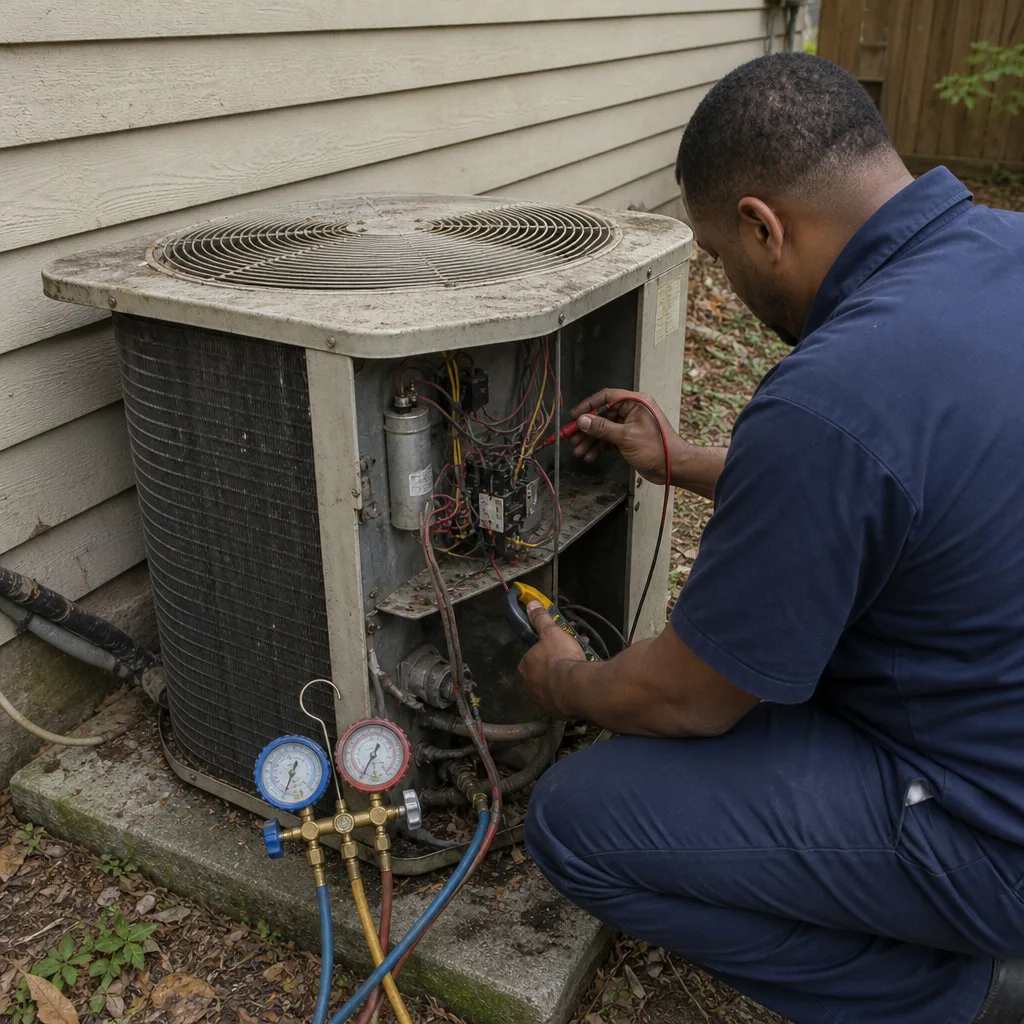 Before
 After
After Before
 After
After Before
 After
AfterWhen to Call a Professional
Some HVAC situations in Dallas are obvious calls for a licensed contractor: no cooling during a July heat wave, a furnace that won’t ignite in January, a heat pump that’s frozen solid in February, refrigerant leaking anywhere near living spaces, or a system replacement of any kind. Other situations are quieter: a system that runs constantly without reaching set temperature, a utility bill that spiked 40% year over year without a rate increase, or a unit that’s cycling on and off every few minutes. Any time repair work involves electrical wiring, gas lines, or refrigerant, call a licensed Dallas contractor instead of opening the panel yourself. Dalton Heating & Air Dallas offers free estimates in Dallas: call (254) 280-5320 and a real person answers, any hour, any day. We’ll price the work in writing before we start, and our AC Repair in Dallas team can typically have a technician out the same day for emergencies.
Frequently Asked Questions
Go to tdlr.texas.gov and enter the license number in the public search tool. Confirm the name matches, the license type is Air Conditioning and Refrigeration Contractor, the license is active, and the expiration date hasn’t passed. It takes under two minutes. If the contractor won’t provide a license number before the visit, that’s your answer.
Most repair work in Dallas does not require a city permit, but equipment installation does. A new furnace, AC unit, or heat pump install requires a mechanical permit and a city inspection. Always ask whether the permit fee is included in the bid. A contractor who avoids permits is avoiding the inspection that would catch their shortcuts.
Licensed means the contractor has passed the TDLR exam and filed proof of insurance with the state. Insured means they carry general liability insurance, though the state minimums are modest. Ask for a certificate of insurance before work begins, and check that the policy covers HVAC work in Dallas specifically.
Most Dallas HVAC repairs run $150 to $450 for parts and labor, with compressor or heat exchanger replacements pushing into four figures. The biggest cost variable in Dallas isn’t the part; it’s whether the contractor prices the job in writing or hits you with a number after the work. Get the price in writing before anyone opens a panel.
If the repair costs more than 30% of a replacement system, and the unit is over 12 years old, replacement almost always makes more financial sense in the Dallas climate, where systems run hard from May through September. A Dallas-specific factor: humidity control on older units degrades even when cooling does not. Get a written replacement quote and a written repair quote, compare them side by side, and decide with numbers, not guesses.
Dallas homes run heavily on Carrier, Trane, Lennox, Goodman, and Rheem, with Bryant, Daikin, York, and American Standard also common in older Dallas neighborhoods. Dalton Heating & Air Dallas technicians are factory-trained to service all nine of those major residential brands, so the same crew can handle whatever’s in your attic. For Furnace Repair in Dallas or a Heat Pump Installation in Dallas, ask the contractor which specific brands they’re trained on, not which ones they “service.”
The Bottom Line
Hiring an HVAC contractor in Dallas is a negotiation with someone who does this more often than you do. The way to level that is paperwork: a verified TDLR license, a written scope of work, a contract with a fixed price, and a written warranty. The contractors who welcome those requests are the ones who do the work right. The ones who dodge them are doing you a favor by showing their hand early. Dallas’s climate punishes systems hard, and a cheap install today is a five-figure replacement in August. Demand the paperwork, compare the bids on equal scopes, and call Dalton Heating & Air Dallas at (254) 280-5320 for a free, written estimate: we’ll show you what a real Dallas HVAC contract looks like.
Written by Marco Benitez, Owner at Dalton Heating & Air Dallas, serving Dallas since 2003.