
Last updated October 16, 2026
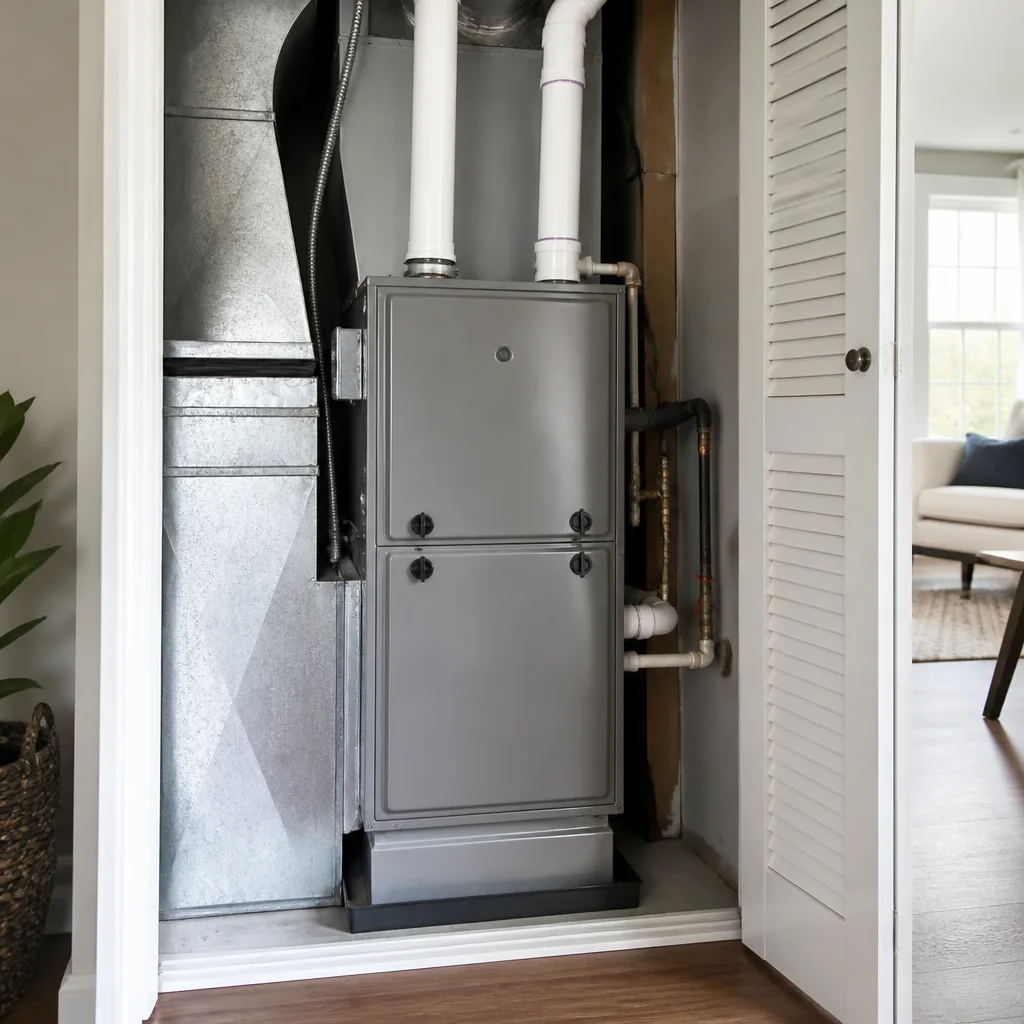 Furnace & heating
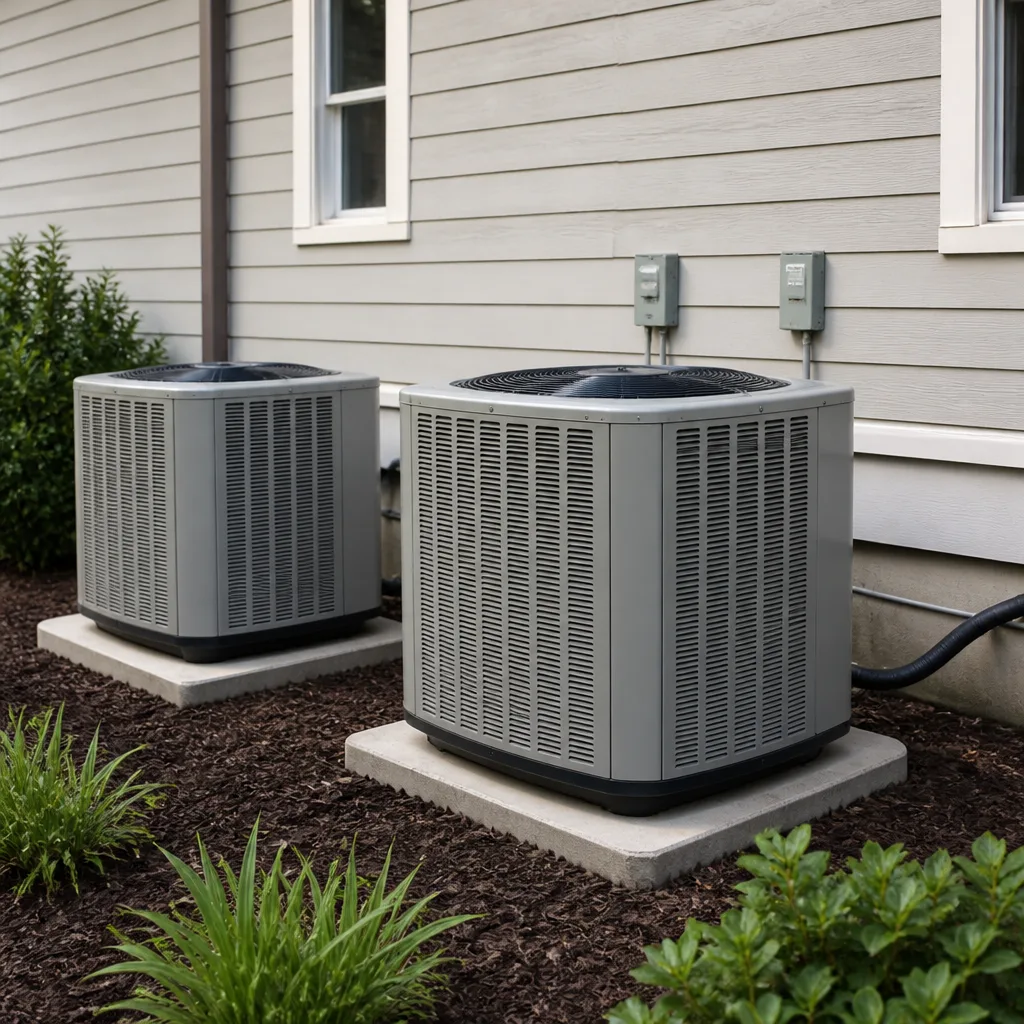 Heat pumps
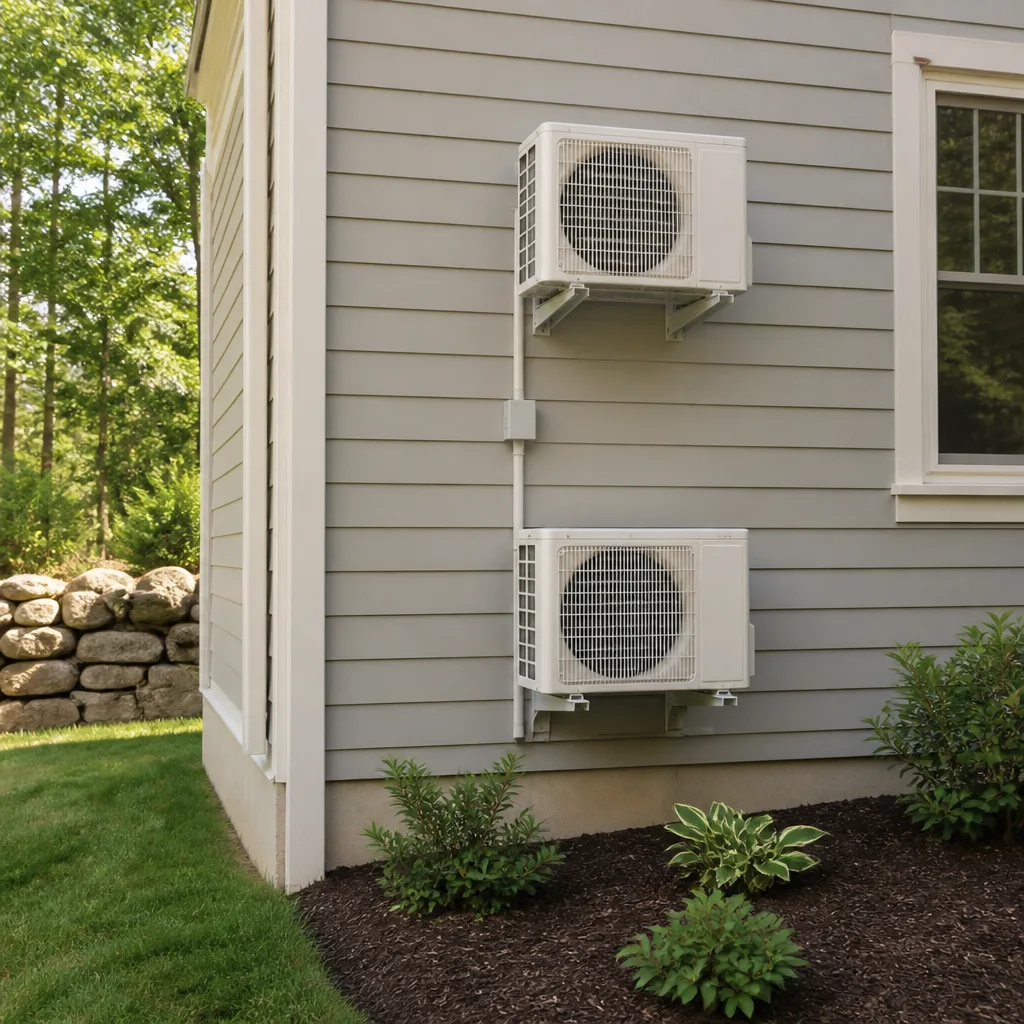 Ductless mini splits
 Goodman
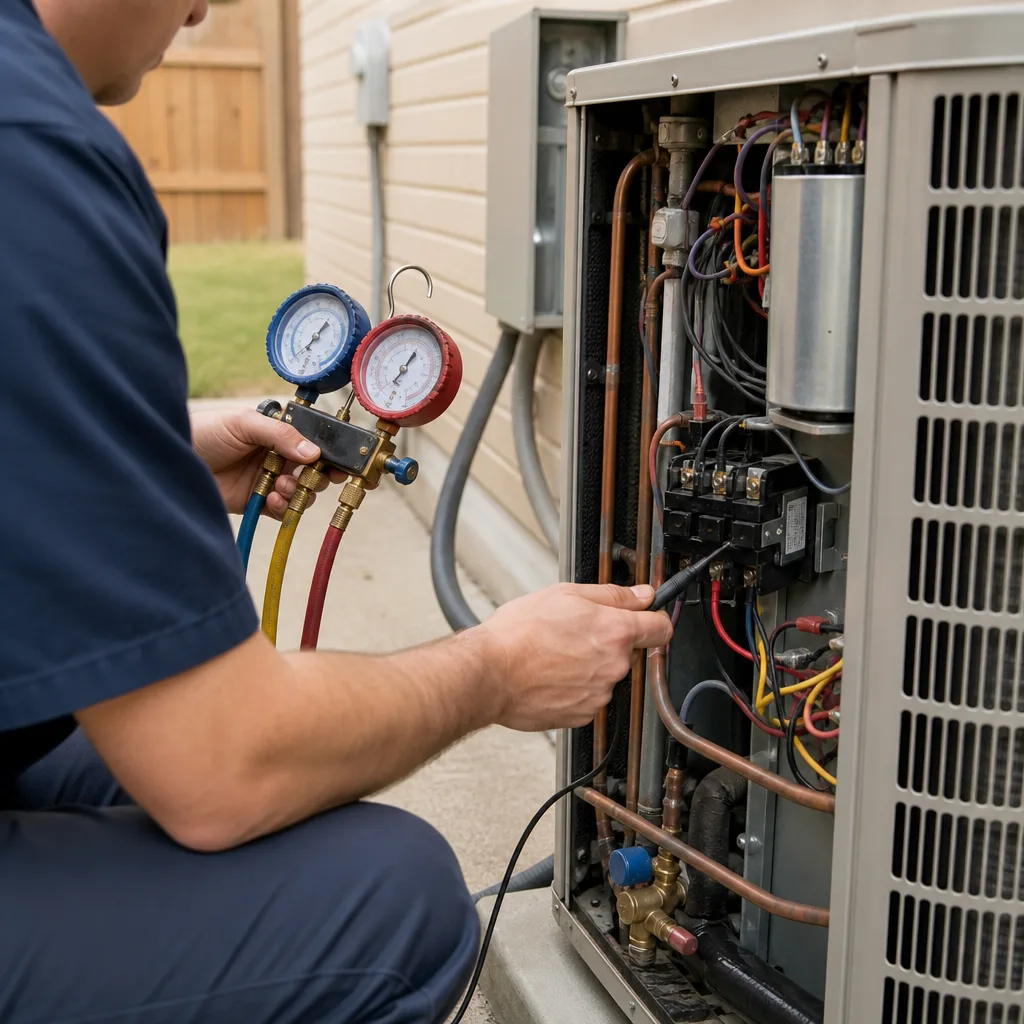
Seasonal tune-up and full diagnostic on your Carrier, Trane, or Goodman system - readings shown to you before any repair is proposed
Diagnosis first, numbers second - you approve the repair price before a single part goes in.
Get your free estimateHVAC Warning Signs: A Dallas Homeowner’s Reference Guide
Here’s a pattern we notice after two decades of service calls across Dallas: most homeowners don’t call because their system stopped working. They call because it started acting strange three weeks ago and they hoped it would sort itself out. The problem with that approach is that a Dallas AC doesn’t heal itself. It degrades. A capacitor that hums today is a compressor that dies in August. This guide is different from more guides & resources you’ll find elsewhere. For every warning sign, we’ll give you the most likely cause in Dallas specifically, the repair range you should expect, and what happens if you wait. That’s the information you need to make a real decision tonight, not a generic paragraph about “calling a professional.”
Quick Answer
The HVAC warning signs that matter most in Dallas are short-cycling (the system turns on and off every few minutes), warm air from the vents, unusual sounds tied to specific components, a sudden spike in your electric bill, and any burning or sulfur smell from the unit. Most of these get more expensive to fix the longer they’re ignored. A filter change costs $15 to $40. A refrigerant leak that a homeowner ignored for a season can pass $1,200 with the leak search included.
Styles & brands we work with
Table of Contents
- Short-Cycling: What It Is and What Causes It in Dallas
- Warm Air from Vents: The Decision Tree
- Unusual Sounds and the Component They Point To
- High Electric Bills as a Diagnostic Tool
- Smells: Which Ones Shut the System Down Tonight
- Water Stains and Drain Line Problems
- Weak or Uneven Airflow in a Dallas House
- Age-Related Warning Signs You Should Plan Around
Short-Cycling: What It Is and What Causes It in Dallas
Short-cycling is when your AC turns on, runs for only a few minutes, shuts off, then starts again a few minutes later. A normal Dallas cooling cycle on a hot afternoon runs 15 to 20 minutes. Anything consistently under 10 minutes is short-cycling, and anything under 5 minutes means the system is protecting itself from damage. The key distinction most guides miss: low refrigerant is rarely the cause of short-cycling. In our experience across North Dallas, Richardson, and Garland, the two most common causes are an oversized system and a dirty evaporator coil.
Here’s how to tell the difference by counting run times:
- Short cycles every 3 to 5 minutes from the day the system was installed: This points to an oversized unit. The system cools the house so fast it satisfies the thermostat before the coil has a chance to dehumidify. This is a design problem, not a repair problem.
- Short cycles that started recently on a system that used to run fine: This points to an evaporator coil covered in dust and pet hair, or a failed run capacitor. A dirty coil can’t absorb heat, so the refrigerant pressure climbs and the system’s high-pressure switch cuts power as a safety.
- Short cycles with a buzzing sound at the outdoor unit: This is a compressor pulling locked-rotor current through a weak capacitor. Every second it buzzes, the compressor windings are being damaged.
We replaced a Goodman system in a Lake Highlands home in 2023 that had been oversized by a full ton and a half. The family had lived with 6-minute cycles for six years. Their complaint was humidity, not temperature. The fix is not something a capacitor swap solves; it requires a load calculation and, in most cases, a properly sized unit. That’s a conversation worth having with a technician who will put the numbers in writing. Before you call anyone, check your run times for a full afternoon. Write down how many minutes on, how many minutes off. That single piece of data saves a diagnostic hour.
Warm Air from Vents: The Decision Tree
Warm air from the vents in a Dallas summer is not one problem. It’s a chain of four possible causes, and the difference between them ranges from $15 to $1,200 or more. The fastest way to narrow it down is a process of elimination that starts with the cheapest fix.
- Check the filter. A filter caked with dust chokes airflow across the evaporator coil. The coil gets cold but the air moving over it is too slow to pick up the cold. What comes out of the vents is lukewarm. A replacement filter costs $15 to $40 depending on the MERV rating. Fix this first.
- Check the thermostat. If someone switched the fan setting from AUTO to ON, the blower runs all the time. Between cooling cycles, the fan blows warm attic air through the ducts. Set it back to AUTO. This one costs nothing.
- Check the ductwork in the attic. Dallas attics in July run 130°F or hotter. A disconnected or torn duct pulls that attic heat into the airstream. Look for collapsed flex duct, detached takeoffs, or gaps at the plenum connection.
- Check the refrigerant level. If the filter is clean, the thermostat is set right, and the ducts are connected, the cause is low refrigerant. Low charge means a leak somewhere in the system. The repair involves finding the leak (a leak search with an electronic detector, usually $80 to $200), repairing the leak, then recharging the system with refrigerant. Total cost in Dallas for a refrigerant leak repair with recharge typically runs $800 to $1,200 or more depending on the leak location.
We tell Dallas homeowners to run through steps 1 through 3 before calling. It saves you a service fee on a filter swap and gives the technician a cleaner starting point. If you do reach step 4, this is where the AC Repair in Dallas call becomes worth it. Refrigerant work requires an EPA 608 certification, and a leak left unaddressed while the system is topped off will simply leak again. A written price before any work begins matters here, because a refrigerant repair should never start with an open-ended hourly rate.
Unusual Sounds and the Component They Point To
Every sound an HVAC system makes corresponds to a specific component doing a specific thing. Here are the sounds we get called about most in Dallas, matched to the part and the expected repair range.
- Hum from the outdoor unit that starts and stops every few minutes. This is usually a failing compressor capacitor. The compressor tries to start, can’t, and the thermal overload cuts power. The capacitor itself is a $20 to $60 part. The replacement call in Dallas typically runs $180 to $320 including the visit. If the capacitor isn’t replaced promptly, the compressor burns out, and that’s a $1,500 to $2,500 repair.
- Squealing or chirping from the indoor unit, especially on startup. This is a blower motor bearing that’s drying out. The noise gets higher-pitched as the bearing wears. Most of these blower motors are sealed units, so the fix is a motor replacement at $350 to $750 in Dallas depending on the model. A Rheem or York blower motor typically sits at the higher end of that range.
- Gurgling or bubbling sound from the refrigerant lines. This is refrigerant moving through the liquid line with air or moisture mixed in. It usually means a low charge and a leak. Treat it like the warm-air step 4 above. The gurgle is the system telling you there’s a leak before the system tells you it won’t cool.
- Clicking from the indoor unit when the system turns on, then nothing. This is often a failed relay or a control board that’s not sending signal to the blower. Control board replacements in Dallas run $400 to $700 on most Lennox and Carrier units, less on Goodman.
- Banging or slamming on startup. This comes from the ductwork, not the unit. The initial burst of air pressure pops a section of flex duct that’s too loose. It’s a cheap fix now (resealing that duct takes an hour) but if it goes unfixed it can tear completely.
The takeaway on sounds: a hum is urgent, a gurgle is urgent, and a squeal is a warning you have a few weeks to address. A clicking that kills the whole system is urgent if the house is occupied during a Dallas August. None of these resolve themselves.
High Electric Bills as a Diagnostic Tool
Your electric bill is not just a bill. It’s the cheapest HVAC diagnostic instrument you own. A Dallas home with a 3-ton AC system running under normal summer conditions should draw about 3.5 to 4.5 kilowatt-hours per hour of runtime. At an average Dallas electricity rate around 14 cents per kWh, that’s roughly 50 to 65 cents per hour of cooling.
Here’s how to use that number:
- Pull your last two summer bills. Note the total kWh for June, July, and August of this year versus last year.
- If this year’s July bill is 20% or more higher than last July with no major change in thermostat settings or number of occupants, the system is losing efficiency.
- The two most common efficiency losses we see in Dallas are a dirty condenser coil outside and a refrigerant level that’s 10 to 15% low. Both force the compressor to run longer to pull the same amount of heat out of the house.
- A condenser coil cleaning in Dallas typically costs $120 to $180. A system with a 15% low charge loses roughly 20 to 25% of its capacity, which means more runtime, which means every month you delay the repair is another month of paying for electricity you never got value from.
There’s a specific calculation we run for Dallas homeowners who call asking why their bill doubled. A normal 3-ton system cooling a 1,800-square-foot Dallas home runs about 8 to 10 hours per day in peak summer. If the bill shows consumption that suggests 14 to 16 hours of runtime, something is making the system work harder than it should. That’s when you schedule a diagnostic. The bill is the evidence. Don’t guess.
Smells: Which Ones Shut the System Down Tonight
Dallas homeowners should treat two smells as immediate-shutdown situations: sulfur or rotten-egg smell, and a sharp electrical burning smell. Here’s the distinction.
Sulfur or rotten-egg smell from the vents. This is not your HVAC. It’s natural gas being added to your supply line mixing with your furnace’s gas line or a leak at a fitting inside the ductwork area. Natural gas is odorless; the utility adds mercaptan to give it that sulfur smell, specifically so you notice it. Do not run the system. Do not flip light switches. Shut the system down at the thermostat, open windows, and call your gas utility’s emergency line. Once the utility has cleared the line, then call for a furnace inspection. The Furnace Repair in Dallas diagnostic will check the burner assembly and the gas valve for leaks with a calibrated detector.
Sharp, acrid burning smell that smells like hot plastic or electric motor windings. This is an electrical component overheating. It could be a blower motor, a contactor, or a wire connection at the breaker panel that’s arcing. Shut the system off at the thermostat and the breaker. This is not a “wait and see” situation. An overheated connection inside an air handler is a fire risk. The smell usually fades as the component cools, which is why people wait. Don’t.
Dusty smell on first startup of the season. This one is normal and harmless. It’s the dust that settled on the heat exchanger or coil over the winter burning off. It clears in 20 to 30 minutes. If it doesn’t clear, call.
Musty or sock-like smell from the vents. This one is fungus or mildew growing on the evaporator coil or in the drain pan. It’s not an emergency, but it does mean the drain line is probably not draining properly. We’ll cover that next.
Water Stains and Drain Line Problems
A Dallas AC in peak summer pulls 10 to 20 gallons of water out of the air per day. That water has to go somewhere, and in most Dallas homes it goes into a condensate drain line that runs to a bathroom sink, a floor drain, or outdoors. When that line clogs, water backs up.
The warning signs:
- A water stain on the ceiling below the attic unit.
- A small puddle forming under the indoor unit.
- The system shuts off entirely and won’t restart.
- A float switch (the small safety device in the drain pan) that keeps tripping.
Dallas has a particular problem with this because of our water. The city’s municipal supply is moderately hard, and when that water evaporates from the drain pan it leaves mineral scale behind. Over two or three seasons, that scale narrows the drain line until a blob of algae or dust plugs it completely. The fix is usually a drain line flush and clearing with a wet/dry vac plus a condensate line treatment tablet dropped into the pan. In Dallas, a drain line clearing typically runs $80 to $150. If the pan has rusted through or the float switch is burned out, expect closer to $200 to $350.
Here’s a step-by-step you can do before calling:
- Locate the indoor unit. In most Dallas homes it’s in the attic, a closet, or the garage.
- Find the drain line, which is the white PVC pipe coming off the side of the unit near the bottom.
- If there’s a vertical tee with an open cap, pour a cup of white vinegar down it. This kills the algae growing in the line. Do this once a month during cooling season.
- If the drain pan is full of water and the float switch has tripped, shut the system off and call. Don’t keep resetting the switch. It’s tripping for a reason.
Ignoring a drain line problem in a Dallas attic means water where water should not be: drywall, insulation, and eventually ceiling collapse. The $150 clearing now beats a $1,500 ceiling repair later.
Weak or Uneven Airflow in a Dallas House
Weak airflow from one or two vents while others blow fine is a duct problem. Weak airflow from every vent is a system problem. Here’s how to tell which one you have and what each costs to fix.
Weak airflow everywhere. This is usually a clogged filter, a failing blower motor, or a collapsed section of ductwork near the plenum. Check the filter first. If that’s clean, listen to the blower. If it sounds like it’s running slower than usual or making the squealing noise described above, the blower motor is the prime suspect. A blower motor replacement in Dallas runs $350 to $750. If the motor is running fine but the airflow is still weak, the evaporator coil itself may be packed with dust and pet hair from years of Dallas pollen and dander, and that requires a professional coil cleaning.
Weak airflow in one or two rooms. This is a duct issue. The flex duct that feeds that room has either a tear, a kink, or a collapsed inner liner. The repair is almost always less than $300 and can often be done in one visit. What we see in older Dallas homes, especially those built before 1990 in neighborhoods like Casa View and Preston Hollow, is that the original metal duct run has rusted through at a seam, or the flex duct that was added during a renovation is too small for the room it’s feeding. The fix is straightforward.
The distinction matters because the wrong diagnosis costs real money. If you call and ask for a “system replacement” because one room is hot, an honest technician will tell you you have a duct problem and a $250 repair solves it. A dishonest one will sell you a new unit. The written-price-before-work rule protects you from the second one.
Age-Related Warning Signs You Should Plan Around
In Dallas, the average residential AC system lasts 12 to 15 years. The heat and humidity take a real toll. A system that would last 20 years in a milder climate ages faster here. If your system is 10 years or older, here’s what to watch for and what it means for your budget, drawing from our Complete Guide to HVAC in Dallas.
The repair-call frequency test. Count how many repair calls you made this year. If you’ve had two or more, or if this year’s repair cost is more than 50% of the system’s current value, it’s time to start planning for replacement. That doesn’t mean replace it today. It means don’t be surprised when the repair call comes in August and the decision is forced on you in a heat wave.
The refrigerant type. If your system was built before 2010, it likely runs on R-22 refrigerant. That refrigerant is no longer manufactured in the US. The remaining supply is recycled, and the price per pound has gone up dramatically. A full R-22 recharge in Dallas can now cost more than the system is worth. If your older system needs refrigerant, a Heat Pump Installation in Dallas is often the better long-term financial decision, and a good contractor will tell you that plainly.
The outdoor unit condition. Walk outside and look at the condenser. Rusted fins, a compressor that’s been replaced once already, or a unit that rattles when the fan starts are all signs that the next repair is getting closer. A compressor replacement on a 12-year-old Dallas system is $1,800 to $2,800. Putting that into a 12-year-old system is what our industry calls “feeding a dead horse.”
The honest planning conversation. Marco Benitez, who runs Dalton Heating & Air Dallas, tells homeowners the same thing he tells his own family: plan replacement on your calendar, not in the middle of an emergency. You’ll get a better price, a wider choice of equipment, and a properly scheduled installation instead of a rushed job in 105° heat. The brands that hold up best in Dallas conditions, in our experience, are Lennox and Goodman for value, and Rheem and York for mid-range reliability. All four are brands we service, so we see how they hold up after five and ten years in this climate.
See the difference
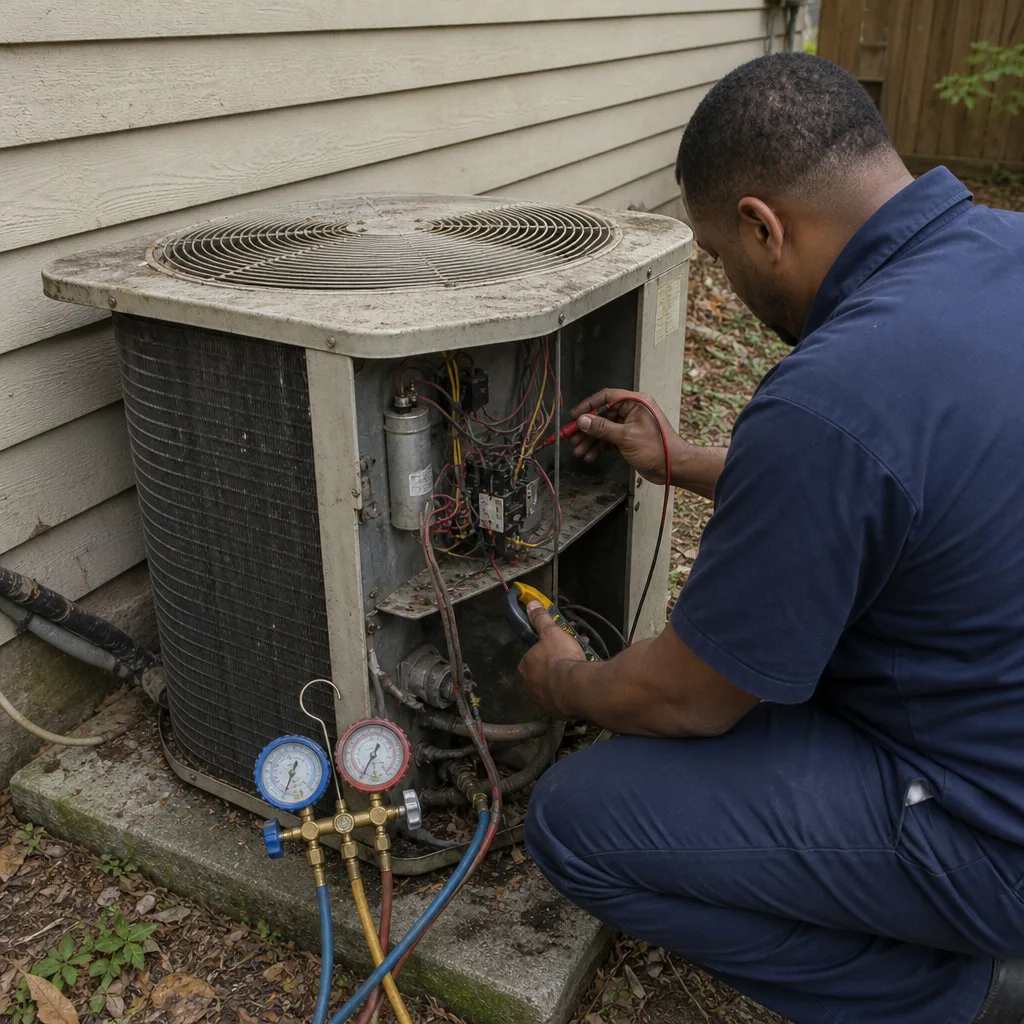 Before
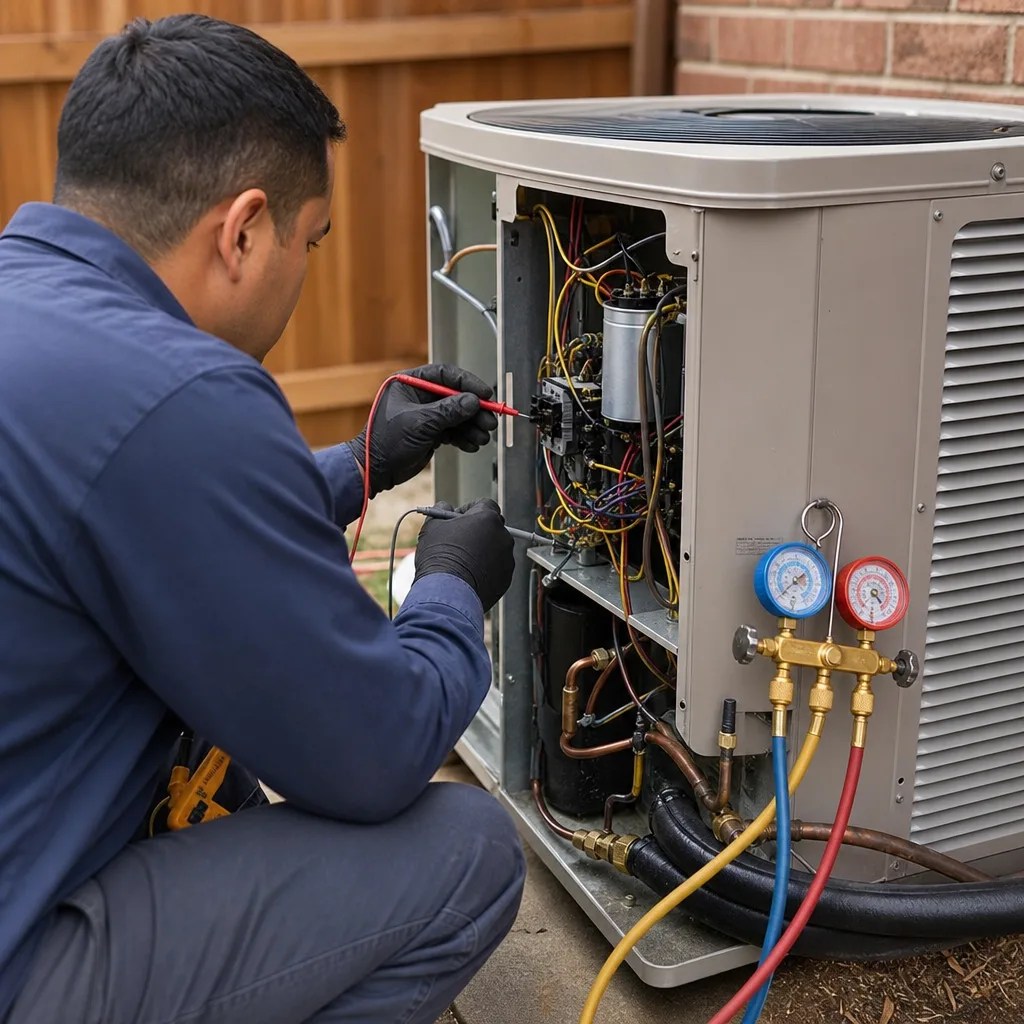 After
After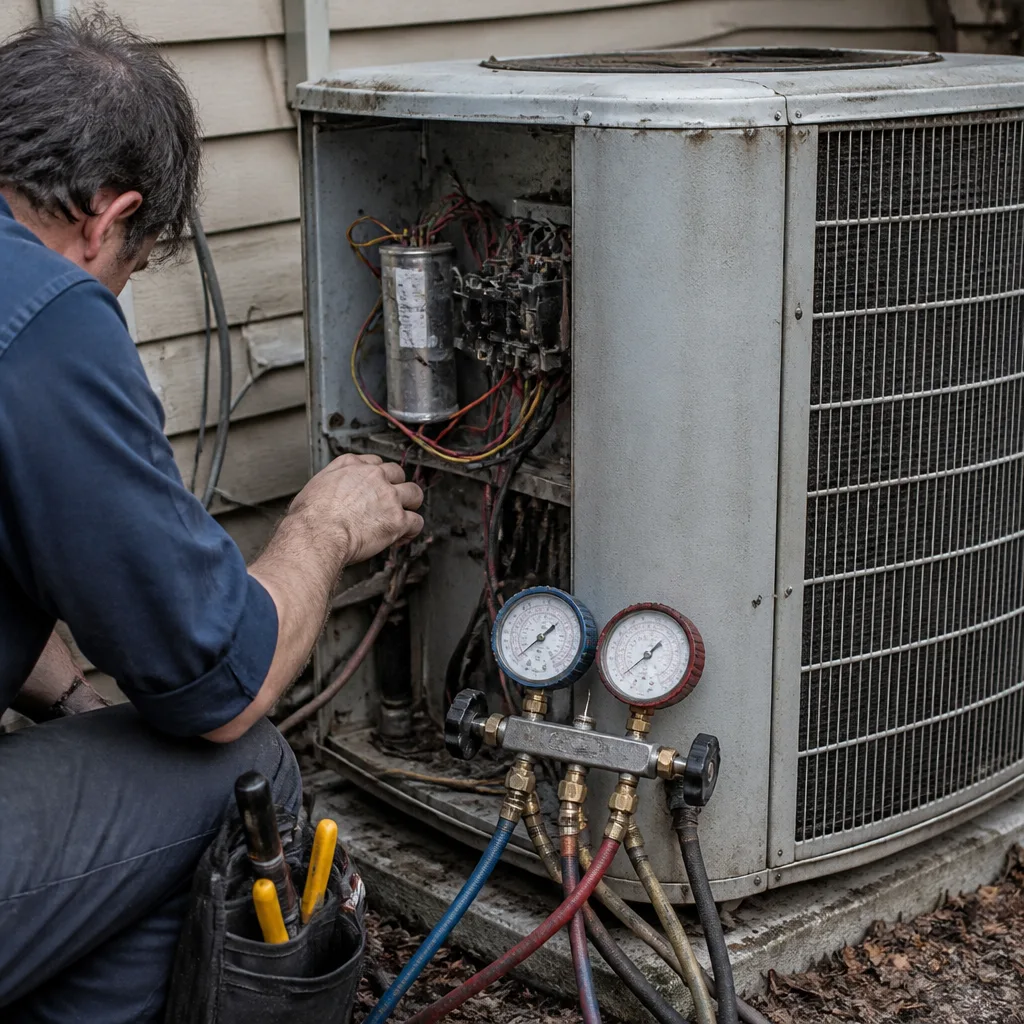 Before
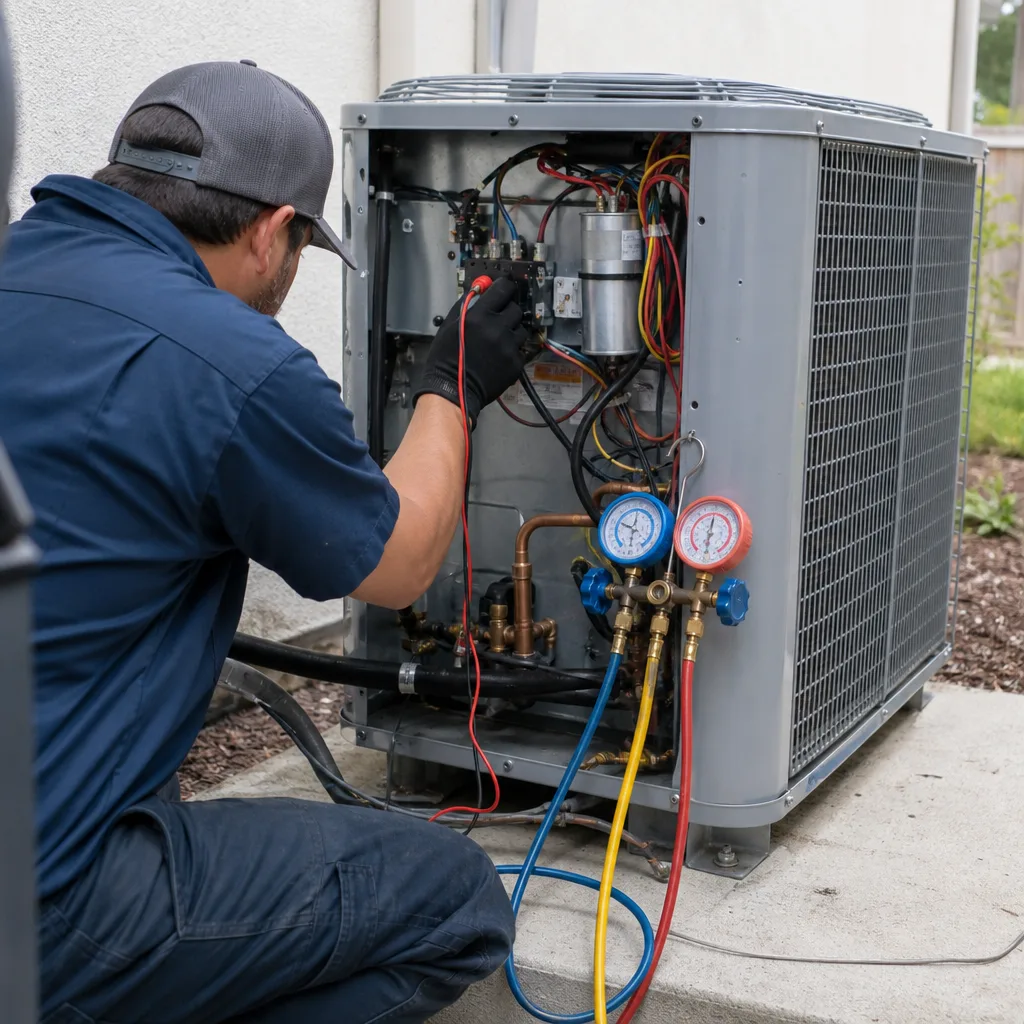 After
After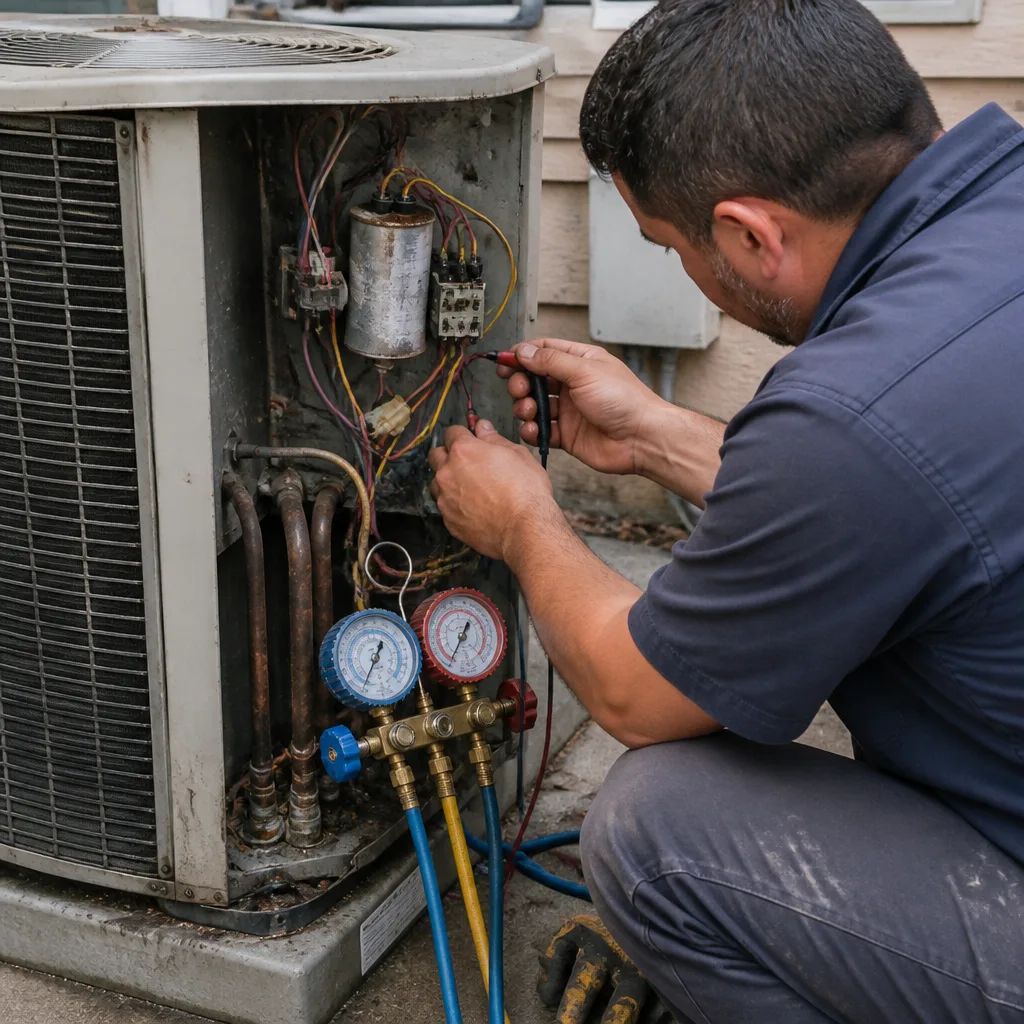 Before
 After
AfterCommon Mistakes to Avoid
- Repeatedly resetting a tripped breaker or float switch. The breaker trips because something is drawing too much current. Resetting it six times doesn’t fix the arc; it just gives the problem six more chances to start a fire in the attic.
- Ignoring a sulfur smell because “it’s probably nothing.” It’s never nothing. Mercaptan is added to natural gas specifically so you notice it. Treat it as a gas leak until the utility says otherwise.
- Topping off refrigerant without finding the leak. An EPA 608 technician who adds refrigerant without leak-testing is breaking the law and charging you for refrigerant that will leak out again. Refrigerant is not consumed during normal operation; if it’s low, there’s a leak.
- Closing too many vents to “force air” into one hot room. Closing vents increases static pressure, which makes the blower work harder, which shortens its life. It also makes the system less efficient overall. If one room is hot, fix the duct to that room.
- Waiting until August to schedule a repair. Every Dallas HVAC company sees call volume triple in July and August. If your system is making a new sound in May, schedule the diagnostic in May when technicians have time and parts are stocked.
- Choosing a contractor based on the lowest phone quote. A phone quote is not a diagnosis. Any price given before a technician has looked at the system is a guess. The written price you get after a diagnostic is the one that matters.
When to Call a Professional
Call a professional when the symptom points to a component you cannot reach safely or a repair that requires a license. Refrigerant work requires EPA 608 certification. Any electrical work inside the air handler or condenser carries shock risk from a capacitor that can hold a charge even with the power off. Gas line work requires a licensed plumber or HVAC technician with gas certification. And any time you have a high-tension spring, a heavy compressor, or a rooftop unit, the danger of DIY outweighs any savings. If you’re in Dallas and seeing any of the warning signs above, Dalton Heating & Air Dallas offers free estimates to homeowners across the area. Call (254) 280-5320 and we’ll put a diagnostic time on the calendar, arrive inside the stated window, and put the price in writing before any work begins. We’ve been doing it that way since 2003, and we don’t know another way to do it.
Most of the warning signs in this guide are not emergencies today, but they become emergencies on the schedule they choose, not yours. The Garland homeowner whose capacitor hummed for three weeks in June had to replace a compressor in August for $1,900. The Highland Park homeowner who called on the first hum spent $240. Same symptom, same component, two very different outcomes. That’s what a warning sign is for: deciding which outcome you want.
The full guide covers short-cycling diagnostics, the warm-air decision tree, sound identification by component, bill analysis as a diagnostic tool, the two smells that require immediate shutdown, drain line maintenance, airflow diagnosis, and aging equipment planning, as detailed in our Seasonal HVAC Care for Dallas: Year-Round Homeowner’s Guide. If you read nothing else, remember this: check your filter, write down your run times, and don’t reset a breaker more than once. Those three habits prevent more Dallas HVAC failures than anything else we could tell you.
Written by Marco Benitez, Owner at Dalton Heating & Air Dallas, serving Dallas since 2003.