
Last updated October 16, 2026
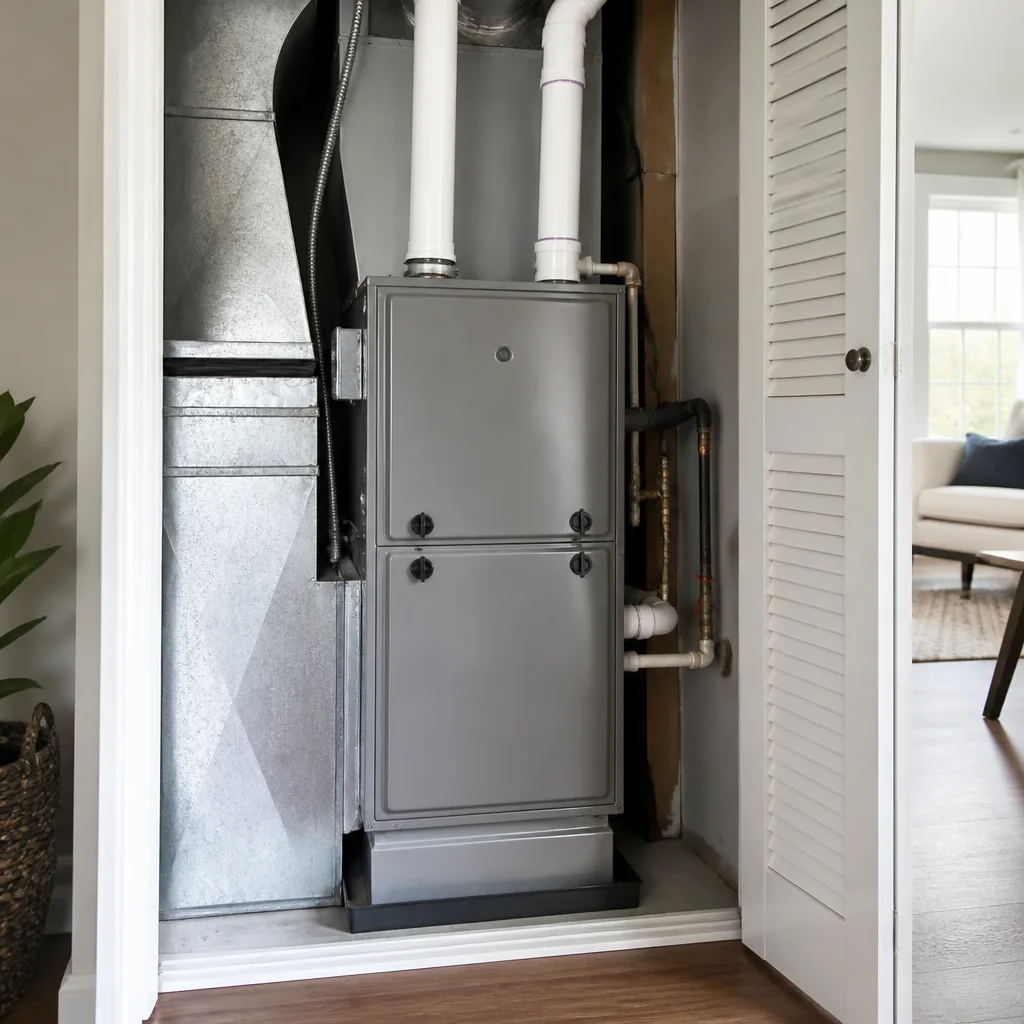 Furnace & heating
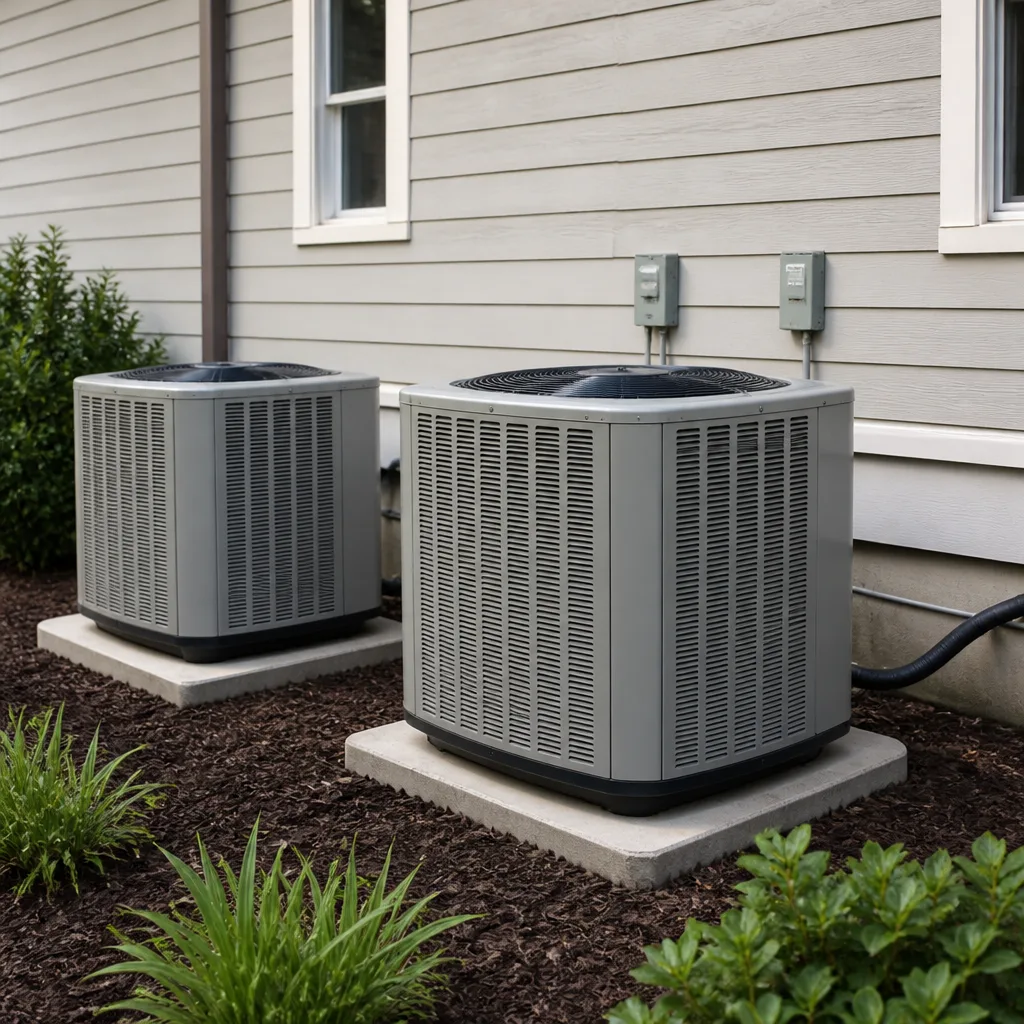 Heat pumps
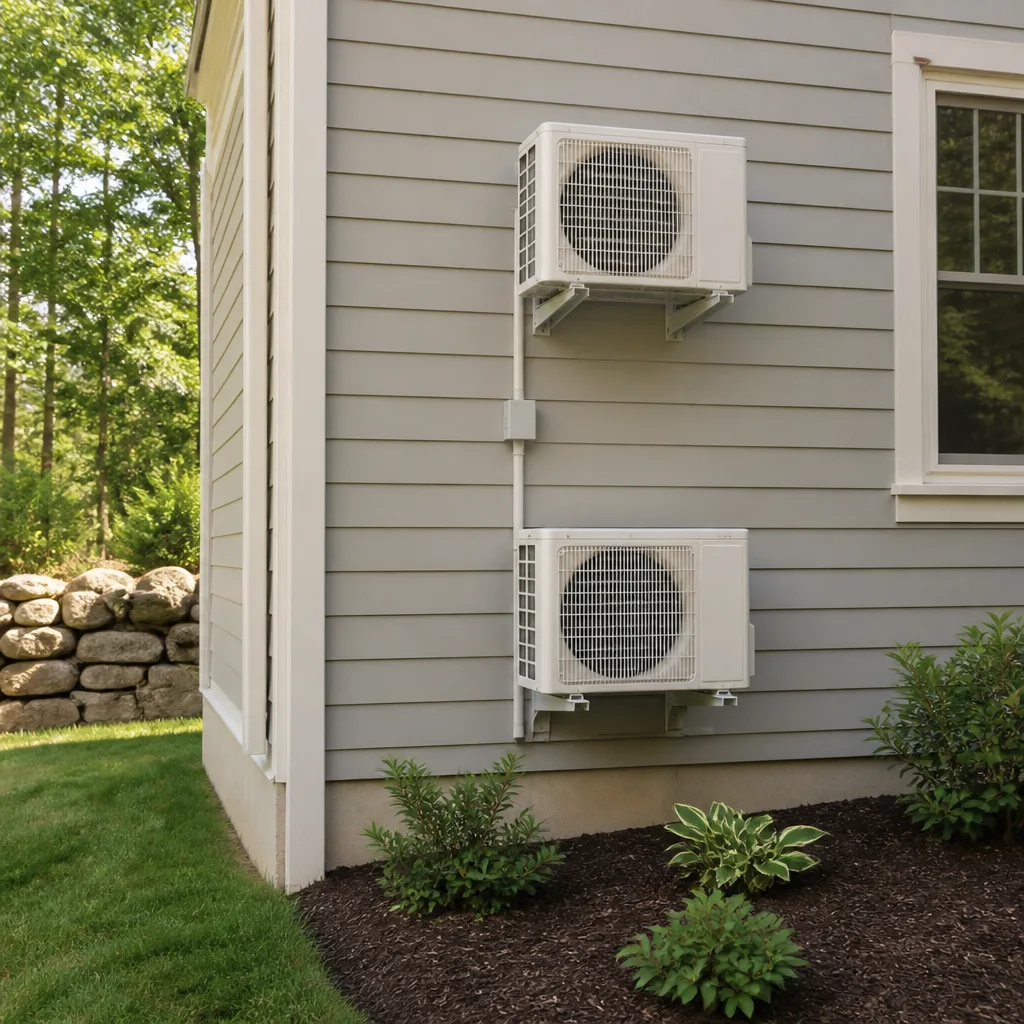 Ductless mini splits
 Goodman
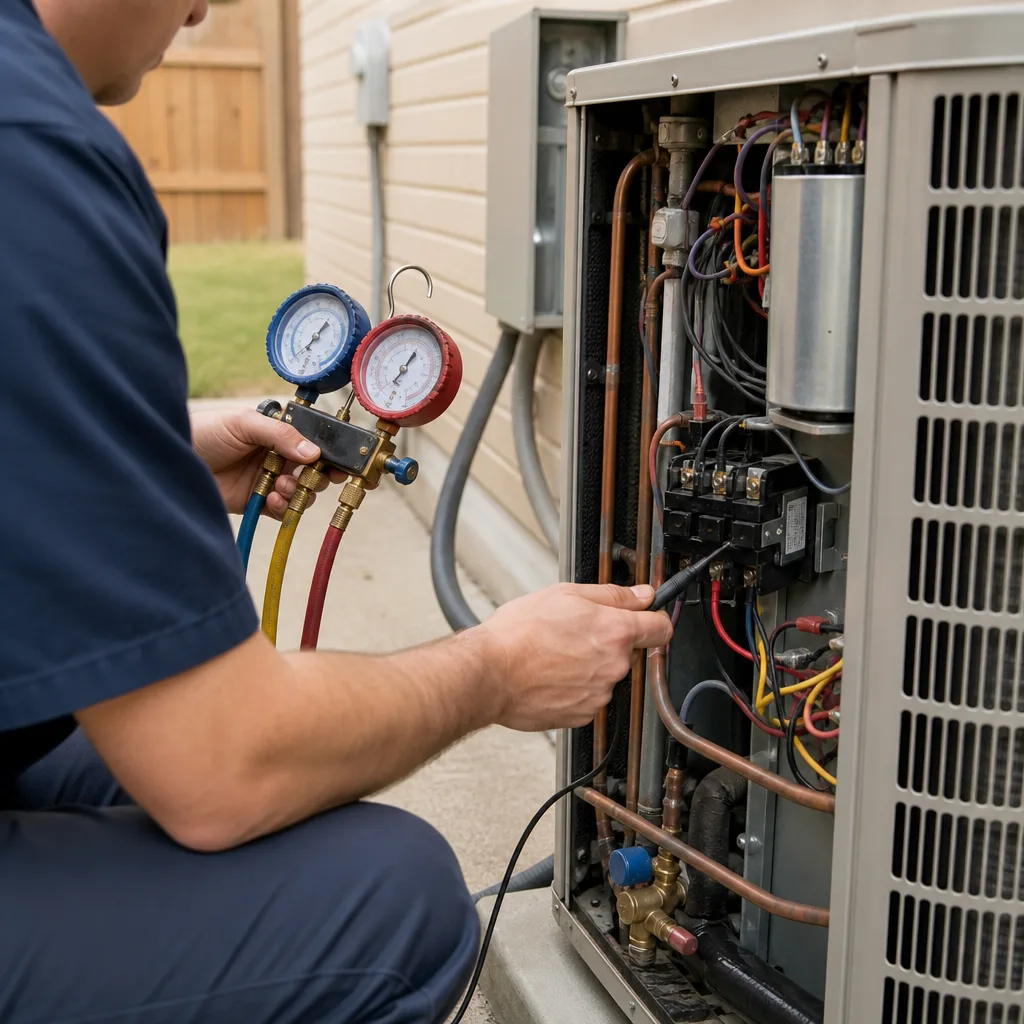
Seasonal tune-up and full diagnostic on your Carrier, Trane, or Goodman system - readings shown to you before any repair is proposed
Diagnosis first, numbers second - you approve the repair price before a single part goes in.
Get your free estimateThe Complete Guide to HVAC in Dallas
A Dallas attic hits 160°F in July. Most HVAC sizing calculators don’t account for that, which is why so many local systems short-cycle and die early. This guide doesn’t recycle national advice. It maps every major HVAC decision, from equipment sizing to refrigerant choice to seasonal maintenance, directly to North Texas conditions. You’ll learn what actually fails in Dallas homes, what repairs should cost, and how to avoid paying for work that doesn’t match how this city’s climate stresses your system.
Styles & brands we work with
Quick Answer
HVAC in Dallas means sizing equipment for 100°F summers, clay soil that shifts ductwork, and attics hot enough to cook a heat pump’s electronics. Homeowners need a load calculation specific to their house, a contractor who puts pricing in writing before work starts, and a maintenance schedule built around North Texas weather patterns, not generic seasonal advice. Repairs typically run $150 – $650 in Dallas, full system replacements range $7,500 – $14,500 depending on size and efficiency, and the biggest local mistakes are undersized equipment and skipped spring tune-ups.
Table of Contents
- Why Dallas Conditions Break HVAC Systems Differently
- Clay Soil, Slab Movement, and Ductwork Failure
- Why Manual J Load Calculations Matter More in Dallas
- R-410A vs R-454B: What the 2025 Refrigerant Phasedown Means for Dallas Homeowners
- How to Read a Texas TDLR HVAC Contractor License
- The North Texas Seasonal HVAC Calendar
- What HVAC Repairs Actually Cost in Dallas
- When to Replace vs Repair: A Dallas Homeowner’s Decision Guide
- Common Mistakes to Avoid
- When to Call a Professional
- Frequently Asked Questions
- The Bottom Line
Why Dallas Conditions Break HVAC Systems Differently
Dallas sits in a climate zone that doesn’t play by national rules. We get 100°F days in summer, ice storms in winter, and humidity that swings from swampy to bone-dry inside a week. Your system is not fighting one enemy. It’s fighting three at once: heat load, humidity, and temperature swings that force equipment to cycle between extremes.
The numbers tell the story. Dallas averages 17 days per year above 100°F and roughly 90 days above 90°F. Summer design temperature for HVAC sizing in Dallas is 100°F dry bulb with a mean coincident wet bulb around 75°F. That means your air conditioner is sized to hold 75°F indoors when it’s 100°F outside, while also pulling enough moisture out of the air to keep you comfortable, not just cool. A system sized for Phoenix’s dry heat will leave a Dallas house clammy. A system sized for Chicago’s mild summers will not hold temperature here at all.
Winter adds a separate load. Dallas winter design temperature is 23°F, and we regularly see swings of 50+ degrees in a single day. A furnace sized for a Minnesota winter burns too much fuel and short-cycles here. A heat pump sized only for cooling will struggle to produce heat on a 25°F January morning. The point: equipment selection in Dallas has to be matched to both extremes, not one season.
What we see most often in Dallas homes is equipment that was never load-calculated in the first place. A contractor eyeballs the square footage, divides by 400 or 500 square feet per ton, adds a half ton “for good measure,” and calls it done. That oversized system cools the house fast, shuts off, leaves humidity behind, and cycles itself to death inside eight to ten years. The homeowner blames the brand. The real problem is the sizing math, or lack of it.
Clay Soil, Slab Movement, and Ductwork Failure
Here’s something most national HVAC guides never mention: Dallas sits on expansive clay soil. The same Blackland Prairie clay that cracks foundations also breaks HVAC ductwork. When the soil swells after rain and contracts during drought, a slab foundation moves, often by fractions of an inch, sometimes more. Ductwork run under that slab or connected at rigid points absorbs the movement. Over years, connections loosen, flex duct pulls away from plenum boxes, and conditioned air starts leaking into the attic instead of your living room.
The result is a system that runs constantly, delivers weak airflow, and drives utility bills up while rooms stay uneven. We’ve opened attic access doors in Lake Highlands and Mesquite homes and found duct collars completely separated, pumping 55°F air into a 150°F attic. The homeowner’s AC was working overtime to cool dead space while the thermostat never reached setpoint.
What you can do about it:
- Look for signs of slab movement beyond the HVAC system: cracks in brick veneer, doors that stick seasonally, tile that pops loose. These often correlate with duct stress.
- Have ducts inspected after drought years. Dallas’s 2022 and 2023 summer droughts caused unusually high clay shrinkage. Homes with previously fine ductwork suddenly had leaks.
- Ask for a duct leakage test when you have major HVAC work done. A licensed contractor can measure leakage and locate the worst connection failures before they cost you another summer of high bills.
- Reconnect, don’t always replace. If flex duct has pulled loose but the duct itself is sound, a proper collar, mastic seal, and zip tie will fix it for a fraction of replacement cost.
This is a Dallas-specific failure mode. Guides written for Phoenix or Houston homeowners don’t mention it because their soil behaves differently or ductwork runs differently. Here, it’s a first-line suspect when airflow drops and bills climb.
Why Manual J Load Calculations Matter More in Dallas
Manual J is the industry standard calculation for determining how much heating and cooling a specific house needs. It factors in square footage, window orientation, insulation levels, air infiltration, ceiling height, and, critically, the heat gain from your attic. In Dallas, attic radiant heat is the variable that breaks rule-of-thumb sizing.
A Dallas attic can hit 160°F on a July afternoon. That heat does not stay in the attic. It radiates down through the ceiling into the living space. A Manual J calculation accounts for this by assigning a heat transfer multiplier based on your attic insulation R-value and the roof’s solar exposure. Skip the calculation and guess at size, and you get a system that is either too small to handle the real load or so oversized that it short-cycles and leaves humidity behind.
Here’s the step-by-step of what a proper Manual J load calculation involves:
- Measure the house: square footage of conditioned space, ceiling heights, wall dimensions, and window sizes are collected room by room.
- Inspect insulation: attic R-value, wall insulation type, and any gaps or compression are recorded.
- Account for orientation: south-facing and west-facing windows in Dallas get hammered by afternoon sun. Manual J treats each orientation differently.
- Factor in infiltration: how much outside air leaks into the house, which depends on age, construction quality, and weatherstripping.
- Calculate the load: the software produces a heating and cooling load measured in BTUs per hour, typically converted into tons for cooling (1 ton = 12,000 BTUs).
- Select equipment to match the calculated load, not exceed it by more than about 15% for cooling.
The hard truth: many Dallas homes have never had a Manual J done. The original system was sized by a builder’s rule of thumb, and every replacement has simply matched the old unit. If the old unit was wrong, the new one will be wrong too. That’s why we insist on a load calculation before any full system replacement. It’s the difference between a system that holds temperature on a 105°F day and one that runs all afternoon and never satisfies the thermostat. For more on how we approach this in Dallas, see our guide to Heat Pump Installation in Dallas.
R-410A vs R-454B: What the 2025 Refrigerant Phasedown Means for Dallas Homeowners
On January 1, 2025, the U.S. Environmental Protection Agency began enforcing new rules under the AIM Act that phase down the production and import of high-global-warming-potential refrigerants. For residential HVAC, that means new equipment can no longer be manufactured using R-410A. The replacement is R-454B, which has a global warming potential roughly 78% lower.
Here’s what that actually means for your Dallas home:
- If your system uses R-410A and works fine, nothing changes today. R-410A is still available for servicing existing units. Prices have risen as supply tightens, and they will continue to rise over the next decade.
- If you need a repair that requires a refrigerant recharge, expect the cost of R-410A to keep climbing. A full recharge that cost $400 in 2020 might run $700 – $1,000 in 2025 and beyond depending on system size and leak location.
- If you’re replacing a system, you’ll likely be quoted R-454B equipment. New systems are designed for it. They’re slightly more efficient in some configurations and the refrigerant itself is cheaper than the dwindling R-410A supply.
- R-410A and R-454B are not interchangeable. You cannot top off an R-410A system with R-454B. The oils, seals, and pressures are different. The systems are not cross-compatible.
The practical advice for Dallas homeowners: if your R-410A system is losing refrigerant and the leak is in an expensive component like the evaporator coil, run the math on replacement sooner rather than later. A $2,500 coil repair on a 12-year-old R-410A system with a compressor that might be next to fail is often money better spent on a new R-454B unit. We walk through that math on our AC Repair in Dallas page.
What we tell customers in Dallas: don’t panic-buy a new system just because refrigerant regulations changed. But also don’t sink major repair money into an aging R-410A unit without comparing the cost of replacement first. The economics have shifted.
How to Read a Texas TDLR HVAC Contractor License
Texas requires HVAC contractors to hold a license issued by the Texas Department of Licensing and Regulation (TDLR). Checking a license is free, takes five minutes, and will save you from hiring an unlicensed operator who may be cheaper but carries no insurance, no bond, and no accountability when something goes wrong.
Here’s how to verify a contractor:
- Go to the TDLR license search page at tdlr.texas.gov and select “Air Conditioning and Refrigeration Contractors” from the license type dropdown.
- Enter the company name or license number. The number will look like a letter followed by five to six digits, for example TACLB12345.
- Read the license class. A “Class A” license allows work on any size system. A “Class B” license limits the contractor to cooling systems of 25 tons or less and heating systems of 1.5 million BTUs or less, which covers virtually all residential work. Both are legitimate for homes.
- Check the status. It should say “Active.” Anything else, “Expired,” “Inactive,” or “Revoked,” is a red flag.
- Check the insurance box. TDLR requires licensed contractors to carry commercial general liability insurance. The license lookup confirms it’s on file.
In Dallas, you’ll also encounter unlicensed side work. A handyman who “does AC” for $75 an hour will not have a TDLR license, will not pull permits, and will not be accountable when a braze joint fails and leaks refrigerant into the attic. The license is the floor, not the ceiling. Dalton Heating & Air Dallas is a Garrison Partners company held to The Garrison Standard, with written pricing and a written guarantee on every repair, whether it’s a furnace repair or a full system replacement.
One more Dallas-specific note: the city of Dallas requires permits for HVAC equipment replacement. A licensed contractor will pull the permit and schedule the inspection. An unlicensed operator will not, which can surface as a problem when you sell the house and the buyer’s inspector flags the unpermitted work.
The North Texas Seasonal HVAC Calendar
National maintenance advice says “tune up your AC in spring and your furnace in fall.” That’s directionally correct but not specific enough for North Texas. Here’s the calendar we follow for our own customers in Dallas:
March: This is the AC tune-up window. Dallas heat arrives fast, usually by early May, and the first 90°F day is not the time to discover your capacitor is dead. A March tune-up catches failed capacitors, weak contactors, low refrigerant, and clogged condensate drains before the first real heat wave. Book this in early March and you’ll beat the rush that starts the first week of 90°F weather.
June: Check your condensate drain line. Dallas humidity plus a running AC produces gallons of condensate daily, and those drains grow algae fast. A clogged drain trips a float switch and shuts the system down, usually on a Saturday night. Pour a cup of white vinegar down the drain line once in June and once in August. If the drain is already clogged, call before water damage spreads to the ceiling below the attic unit.
October: This is the furnace and heat pump heating check. Dallas’s first freeze typically arrives in late November, but October is when you want the system inspected. We check heat exchangers for cracks (a carbon monoxide risk), test igniters and flame sensors, and verify the system produces proper temperature rise. For heat pumps, we test the reversing valve and defrost cycle, both of which fail without warning.
December: Check your air filter and your carbon monoxide detector. Dallas winter means the house is sealed tight against cold air, and a furnace running nonstop in a sealed house demands good airflow and a working CO detector. Change the filter monthly during heavy run seasons, and replace CO detector batteries when you change your smoke detector batteries. A cracked heat exchanger in a sealed Dallas house is a serious health risk, not a comfort issue.
To review the calendar at a glance:
- March: book AC tune-up before the first heat wave
- June: clean or clear condensate drain line
- October: furnace or heat pump heating inspection
- December: replace filter, test CO detector, monitor heating performance
What HVAC Repairs Actually Cost in Dallas
Repair pricing in Dallas varies by part, system age, and time of year, but the ranges are stable enough to plan around. Here’s what we see across the metro in 2025:
| Repair | Typical Dallas Cost Range | Notes |
|---|---|---|
| Capacitor replacement | $150 – $300 | Most common summer failure. 20-minute job. |
| Contactor replacement | $150 – $250 | Often found failed with the capacitor. |
| Condensate drain clearing | $125 – $250 | Higher if line needs flushing or re-routing. |
| Refrigerant leak repair + recharge | $500 – $1,200 | Depends on leak location. R-410A prices are climbing. |
| Evaporator coil replacement | $1,800 – $3,200 | Often on systems 8-12 years old. |
| Condenser fan motor | $350 – $600 | Includes labor and part. |
| Thermostat replacement | $200 – $450 | Basic programmable models. Smart thermostats run higher. |
| Furnace igniter or flame sensor | $150 – $350 | Most common winter repair. |
| Heat exchanger replacement | $1,200 – $2,500 | When not covered under parts warranty. |
These are realistic Dallas market prices, not national averages. The same capacitor replacement that runs $150 in Arlington might be $220 in Highland Park. Labor rates vary by area.
Three things to know about Dallas repair pricing. First, the cheapest quote is rarely the cheapest repair. A $99 service fee with a lowballed repair estimate usually masks a second, bigger charge later. Second, written pricing before work begins is non-negotiable. If a technician won’t put the number in writing, find another company. Third, warranties matter more than pennies. At Dalton Heating & Air Dallas, every repair is guaranteed in writing for a full year under the 365-Day Done Right Promise. If the repair fails in that time, we return at no charge. That’s the Garrison Standard, and it applies to every job we do.
For an exact quote on your specific system, call (254) 280-5320. Estimates are free, and the price you get is in writing before any work starts.
When to Replace vs Repair: A Dallas Homeowner’s Decision Guide
Here’s the rule we teach our Dallas customers: if the repair will cost more than 50% of the system’s remaining value and the system is past 12 years old, replacement usually makes more sense. It’s a math problem, not a loyalty decision.
Start with the age. In Dallas, a cooling system lasts 12 to 15 years with proper maintenance. A system older than 12 that needs a major repair, compressor, evaporator coil, heat exchanger, should be evaluated for replacement. A system under 8 years old with the same repair is almost always worth fixing.
Then run the math on the repair:
- Get the repair quote in writing. A $2,800 evaporator coil repair on a 14-year-old R-410A system is a bad investment, statistically. The compressor and condenser will likely fail within 2 – 4 years anyway.
- Compare it to replacement cost. A new 3-ton system in Dallas runs $7,500 – $10,500 for a mid-range unit with a 10-year parts warranty. If the repair is half the cost of the new system and the old one is past its life expectancy, replace.
- Factor in refrigerant economics. An R-410A system needing a recharge plus repair is doubly expensive. The refrigerant itself is climbing in price. An R-454B replacement eliminates that long-term liability.
- Do the efficiency math. A 14-SEER system from 2010 is running at maybe 10 – 11 SEER in real conditions. A new 16 – 18 SEER2 system cuts cooling bills by 20 – 30% in Dallas’s long cooling season. That savings compounds in May through September.
The replacement decision is when you need a fixed price and a written install date, not a same-day promise. System replacements require load calculation, equipment ordering, permit pulling, and a full day of work. A company that promises a same-day full system replacement is cutting corners you will pay for later.
We’re factory-trained on nine major residential brands including Carrier, Trane, Lennox, Goodman, Rheem, York, Daikin, Bryant, and American Standard. When you’re ready to compare replacement options, the Dalton Heating & Air Dallas home page walks through what a Garrison Partners installation includes.
Common Mistakes to Avoid
- Skipping the load calculation and matching the old unit’s size. The old unit may have been wrong for the house. Now you’ve paid for a new system that repeats the same mistake. In Dallas’s heat, that mistake shows up as high bills and short equipment life.
- Replacing only the outdoor unit. Mixing a new outdoor condenser with a 12-year-old indoor coil reduces efficiency and voids most manufacturer warranties. Matched systems are essential.
- Ignoring ductwork during a system replacement. New equipment on leaking, disconnected ducts in a Dallas attic is still broken. Sealing and testing ducts is as important as the unit itself.
- Buying the biggest system you can afford. Oversized equipment short-cycles, leaves humidity behind, and wears out sooner. A correctly sized system from a Manual J calculation outperforms a larger one.
- Not taking the written guarantee seriously. If a contractor won’t put a repair guarantee in writing, walk away. A verbal promise is worth the paper it’s printed on. A full-year written guarantee, like the 365-Day Done Right Promise, is the real thing.
- Putting off refrigerant decisions. R-410A prices climb every year. Waiting to replace a system that is already leaking refrigerant means spending more on the repair and more on the eventual replacement.
- Hiring based on the lowest quote without checking the TDLR license. Unlicensed work may be cheaper up front, but it’s not insured, not permitted, and not guaranteed. In Dallas, that risk lands on the homeowner, not the handyman.
When to Call a Professional
Some things you handle yourself: changing filters, clearing debris from around the outdoor unit, checking the thermostat batteries. Other things demand a licensed tech. You smell gas or suspect a cracked heat exchanger. Your system is blowing warm air in July or cold air in January. Your outdoor unit is making a screeching, grinding, or banging sound. Your indoor coil is frozen over. Your condensate pan is leaking into the ceiling below. Your system is tripping the breaker more than once. Any of those means stop guessing and call someone with the tools and the training to diagnose the problem properly. Dalton Heating & Air Dallas offers free estimates in Dallas, call (254) 280-5320 and you’ll get a live person, 24/7, with a written price before any work starts.
Frequently Asked Questions
A full system replacement in Dallas typically runs $7,500 – $14,500 depending on system size, efficiency rating, and the condition of your existing ductwork. A basic 3-ton, 14-SEER system on existing ducts may run $7,500 – $9,000, while a 4-ton, 18-SEER2 unit with modifications runs $11,000 – $14,500. Prices in Dallas trend higher than national averages due to attic installations and the longer cooling season requiring more durable equipment selection. Call (254) 280-5320 for a written fixed price, no charge for the estimate.
Service your AC once a year in Dallas, in March or early April, before the heat arrives. The long cooling season, often 6+ months of use, demands a clean condenser coil, a charged capacitor, and verified refrigerant pressures before summer. A March tune-up prevents most of the failure calls we see in July and August.
There is no rule-of-thumb answer. The correct size comes from a Manual J load calculation that factors in your home’s square footage, insulation, window orientation, air leakage, and attic heat gain. In Dallas, attic heat gain is the dominant variable, and a 160°F attic changes the calculation dramatically. A properly calculated 2-ton system will outperform a guessed 3-ton unit every summer.
Three causes dominate in Dallas: low refrigerant from a leak, a failed compressor capacitor that prevents the outdoor unit from running at full capacity, or duct leaks in the attic that dump conditioned air into hot dead space. A technician with gauges and a leak detector can isolate the cause in about an hour.
Repair if the system is under 10 years old and the fix is a minor part like a capacitor, contactor, or drain line issue. Replace if the system is over 12 years old, needs a major repair like a coil or compressor, and runs on R-410A, making refrigerant costs a rising liability. The 50% rule is a good starting point: if the repair costs more than half the system’s remaining value, replace.
Most common repairs, capacitor, contactor, drain line, fan motor, can be completed same day if we diagnose early enough. Major repairs like coil replacement or refrigerant leak repair may require parts or equipment ordering. Dalton Heating & Air Dallas answers calls with a live person 24/7, so call (254) 280-5320 and we’ll give you an honest arrival window, not a callback promise.
The Bottom Line
HVAC in Dallas is a different game than the rest of the country. Clay soil moves ductwork, attics cook equipment, and humidity demands systems that are sized and sealed correctly. The homeowners who get the most from their systems are the ones who insist on a load calculation before replacement, verify the TDLR license, demand written pricing, and follow the North Texas seasonal calendar instead of generic advice. For more guides & resources, explore our blog. The ones who oversize, skip spring tune-ups, and chase the lowest quote end up replacing systems twice as often. A written guarantee, a written price, and a crew that shows up inside the window, that’s how you get an HVAC system that actually works in Dallas. That’s how we’ve operated since 2003.
Written by Marco Benitez, Owner at Dalton Heating & Air Dallas, serving Dallas since 2003.
See the difference
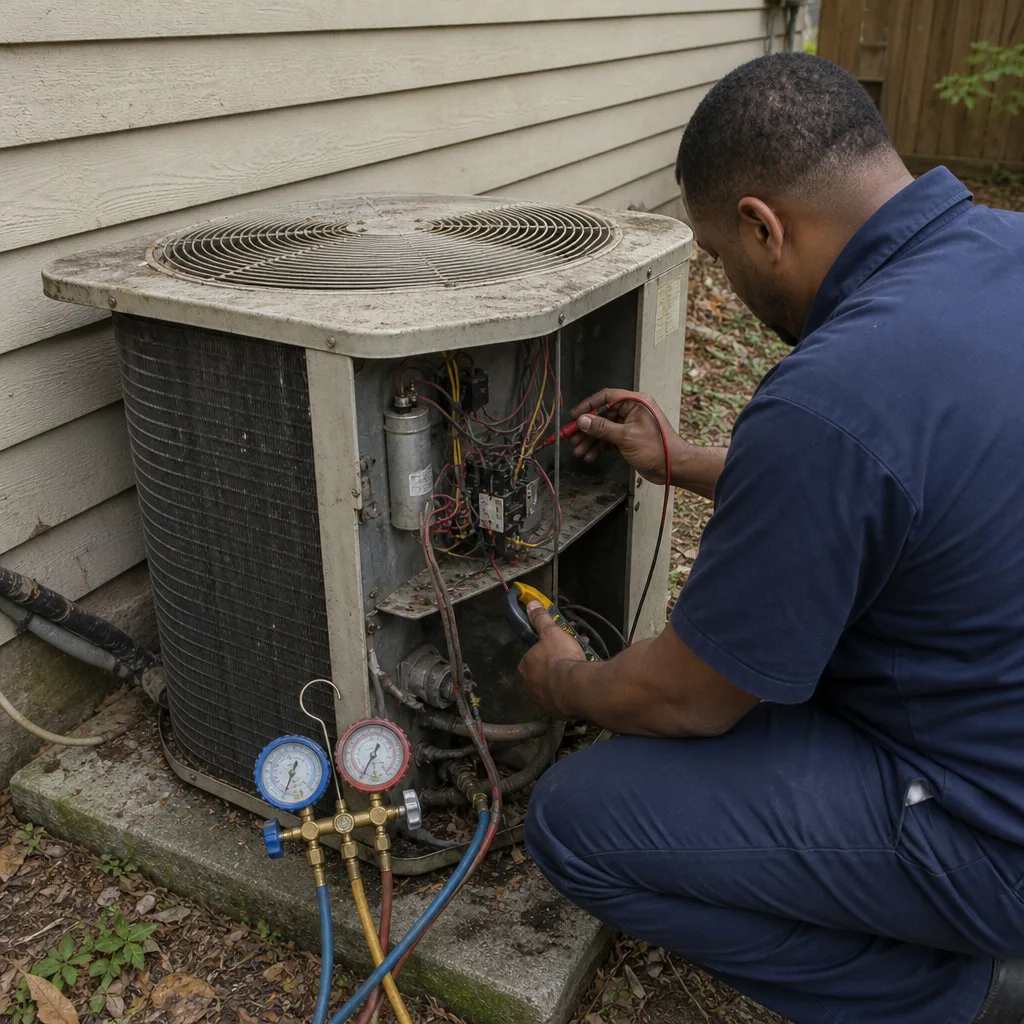 Before
 After
After Before
 After
After Before
 After
After