
 Furnace & heating
 Heat pumps
 Ductless mini splits
 Goodman
Seasonal tune-up and full diagnostic on your Carrier, Trane, or Goodman system - readings shown to you before any repair is proposed
Diagnosis first, numbers second - you approve the repair price before a single part goes in.
Get your free estimateCarrier Capacitor Replacement: The Dallas Owner’s Guide
We stock Carrier-compatible capacitors on our trucks and typically replace them same-day across Dallas, with most installed jobs running $180 – $340 depending on the capacitor’s rating and your condenser model. A failed capacitor is the most common reason a Carrier outdoor unit hums but won’t start, or runs and then trips its breaker when the compressor tries to kick on. You’ll usually discover it on the first hot afternoon of the season, when the thermostat calls for cooling and nothing happens.

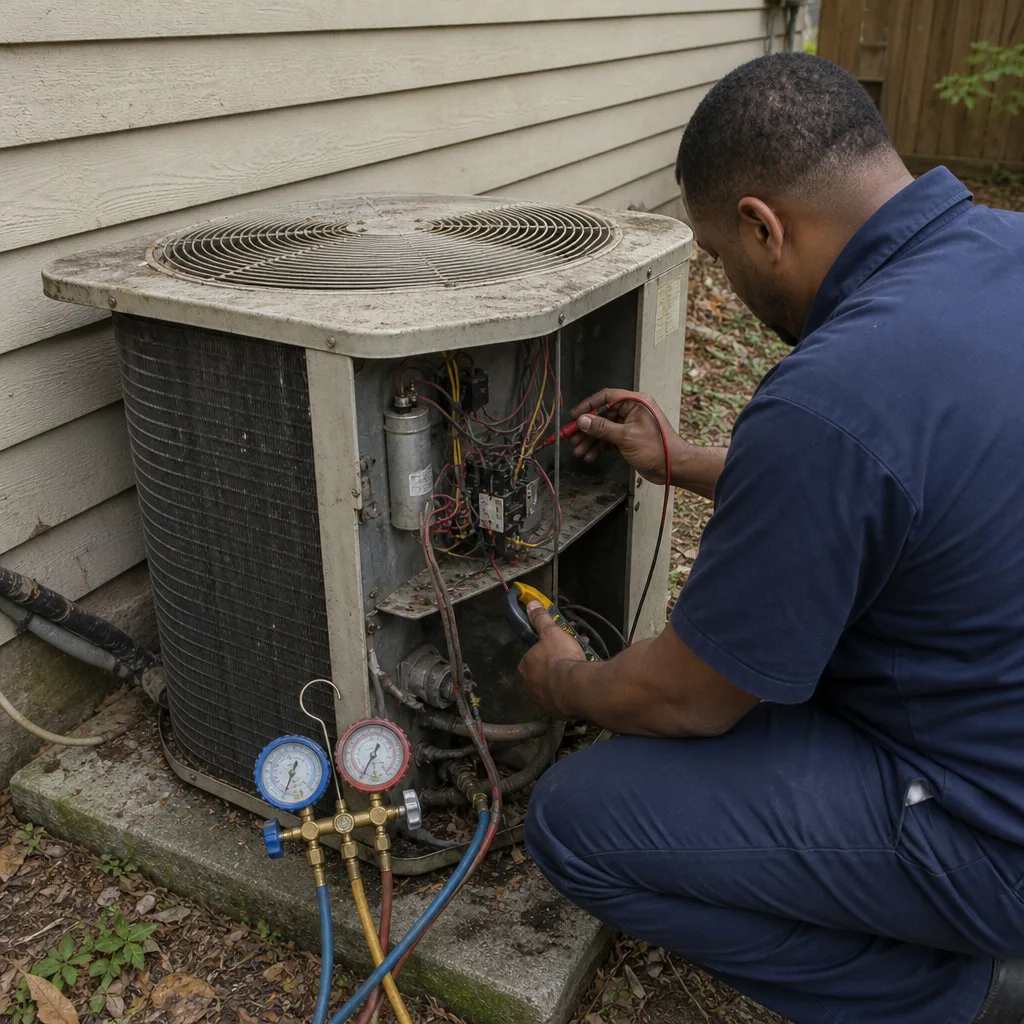
Here’s the short version: the capacitor is a small metal cylinder inside your outdoor condenser that stores and releases the electrical jolt needed to start the compressor and the fan motor. When it weakens, the motor strains. When it dies, the motor sits there and draws locked-rotor amps until a safety switch trips. In Dallas, where condensers run hard from May through September, capacitors rarely reach their printed service life. Heat kills them early. We see it constantly.
Which Carrier Models This Applies To
We replace capacitors across every major Carrier residential line running in Dallas: the Infinity series (24ANB, 25VNA, 24VNA), Performance series (24ACC, 24APB, 24ABC), and Comfort series (24AAA, 24ACA). The part itself is not model-exclusive. Carrier uses dual-run capacitors rated 35/5, 40/5, 45/5, 50/5, 55/5, 60/5, or 70/5 microfarads, depending on condenser tonnage. The first number feeds the compressor; the second feeds the fan motor.
The compatibility gotcha: the rating is what matters, not the brand printed on the shell. A dual-run capacitor marked 45/5 at 440 VAC will work in a Carrier, a Trane, or a Lennox condenser rated for that spec. What changes is mounting hardware and terminal orientation. We carry OEM Carrier replacements when a homeowner wants the exact part number, and we also stock AmRad and Titan HD equivalents, which are American-made and often outlast the factory part. Marco Benitez will tell you plainly: the factory capacitor that came with your Carrier was built to a cost. A quality aftermarket replacement at the same microfarad rating will typically run longer in Texas heat.
Styles & brands we work with
Signs Your Carrier Capacitor Replacement Is Failing
- The outdoor unit hums but the fan doesn’t spin. The compressor is getting a weak start signal, or none at all. The hum is the motor pulling current it can’t use. If you hear this, cut power at the breaker immediately and call us.
- The condenser starts, runs a few minutes, then shuts off. A failing capacitor builds internal resistance when it heats up. The motor loses torque and trips a thermal overload. It’ll work again once it cools, which is why intermittent failures fool people for weeks.
- Your electric bill spiked in the last two months. A weakening capacitor forces the compressor to work harder to start and to hold RPM. It draws more amperage than the nameplate rating. You’re paying for electricity that isn’t cooling your house.
- The fan spins slowly or you can hear it change speed. The fan side of the capacitor is losing its ability to hold and release a consistent charge. The motor is hunting for torque. That inconsistency is damaging the motor windings every hour it runs.
- The outdoor unit has a swollen, leaking, or corroded capacitor top. A capacitor that vents electrolyte has already failed, even if the unit is still limping. The top of the cylinder should be flat. If it’s domed, it’s done.
See the difference
 Before
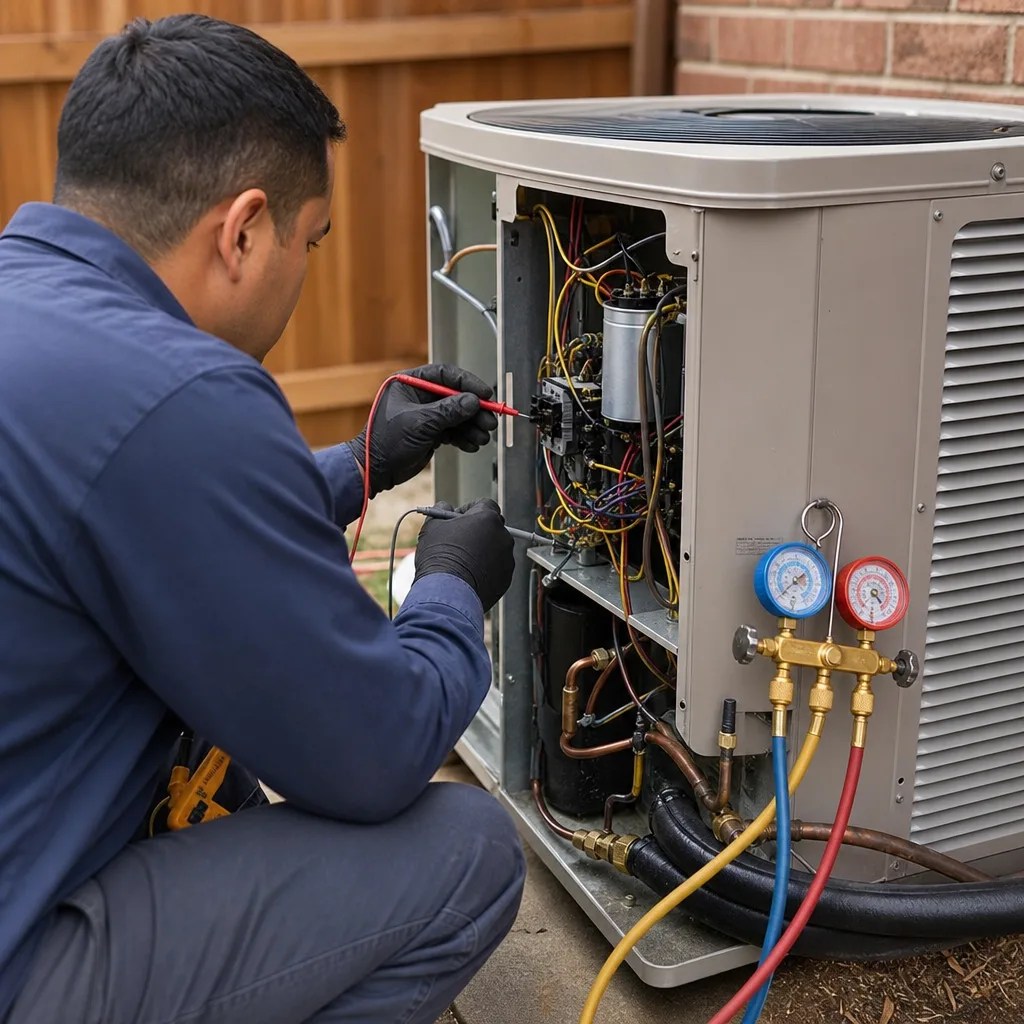 After
After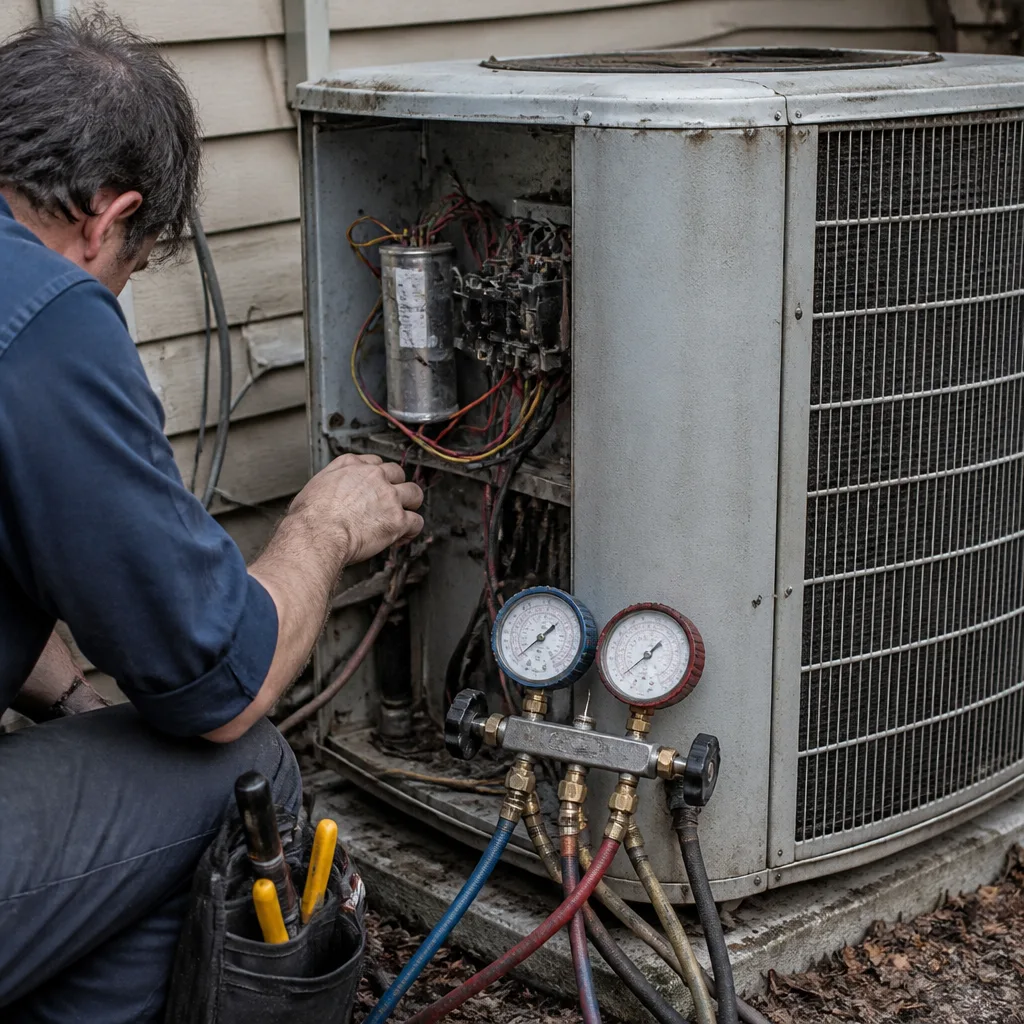 Before
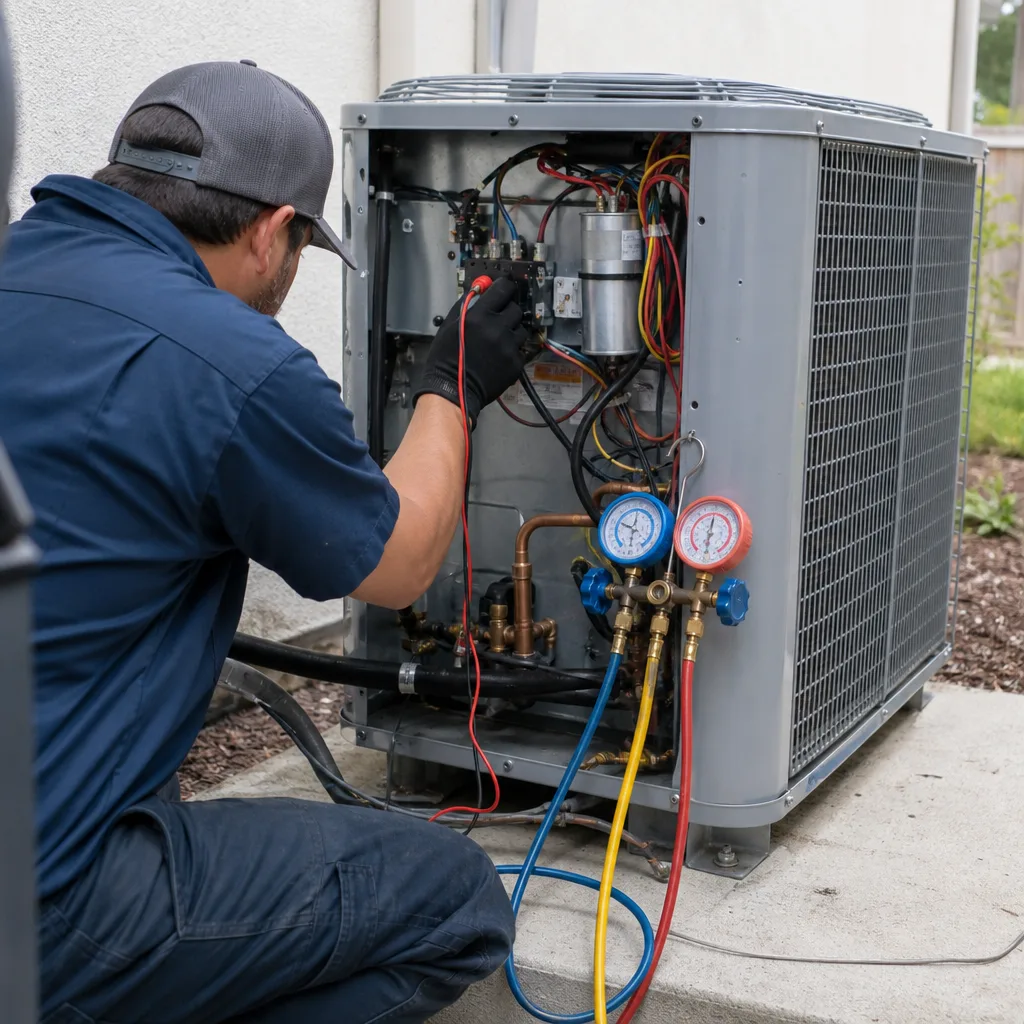 After
After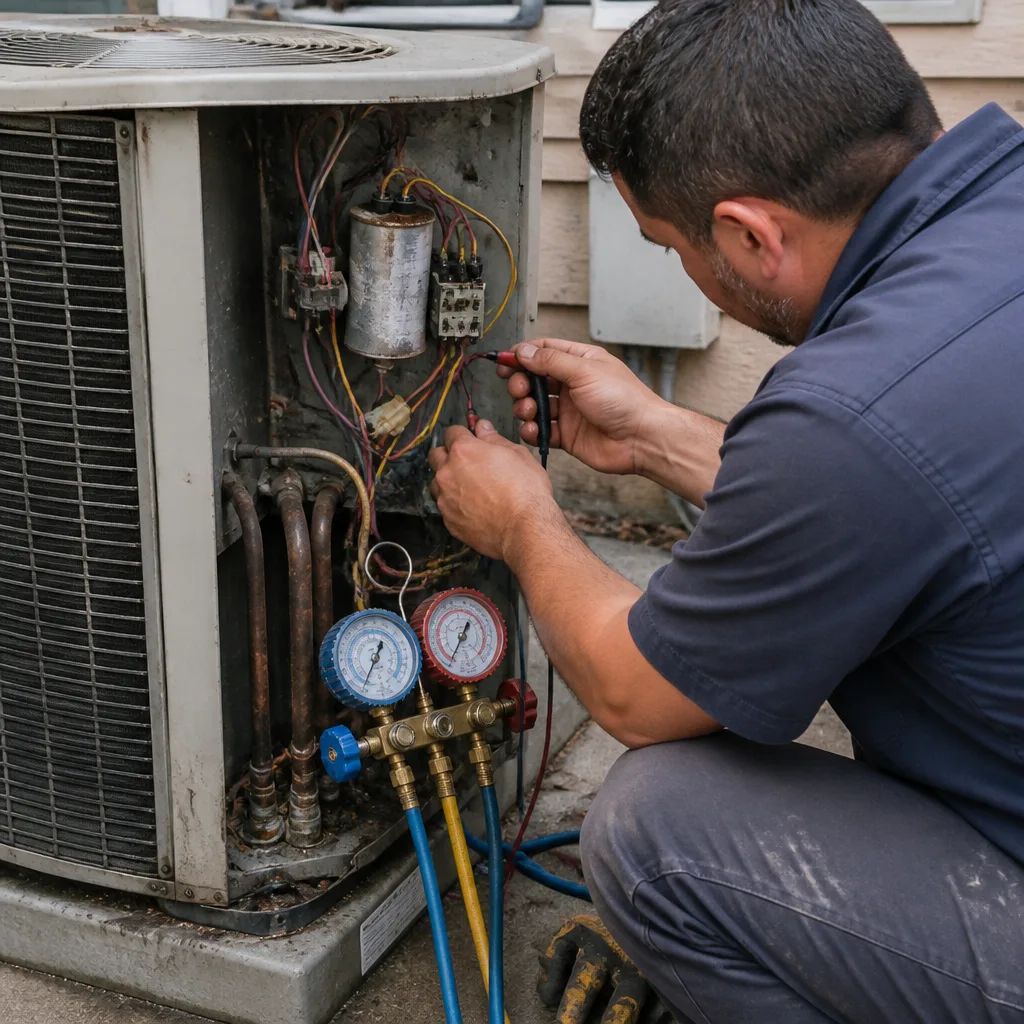 Before
 After
AfterReplacement Cost & What’s Included
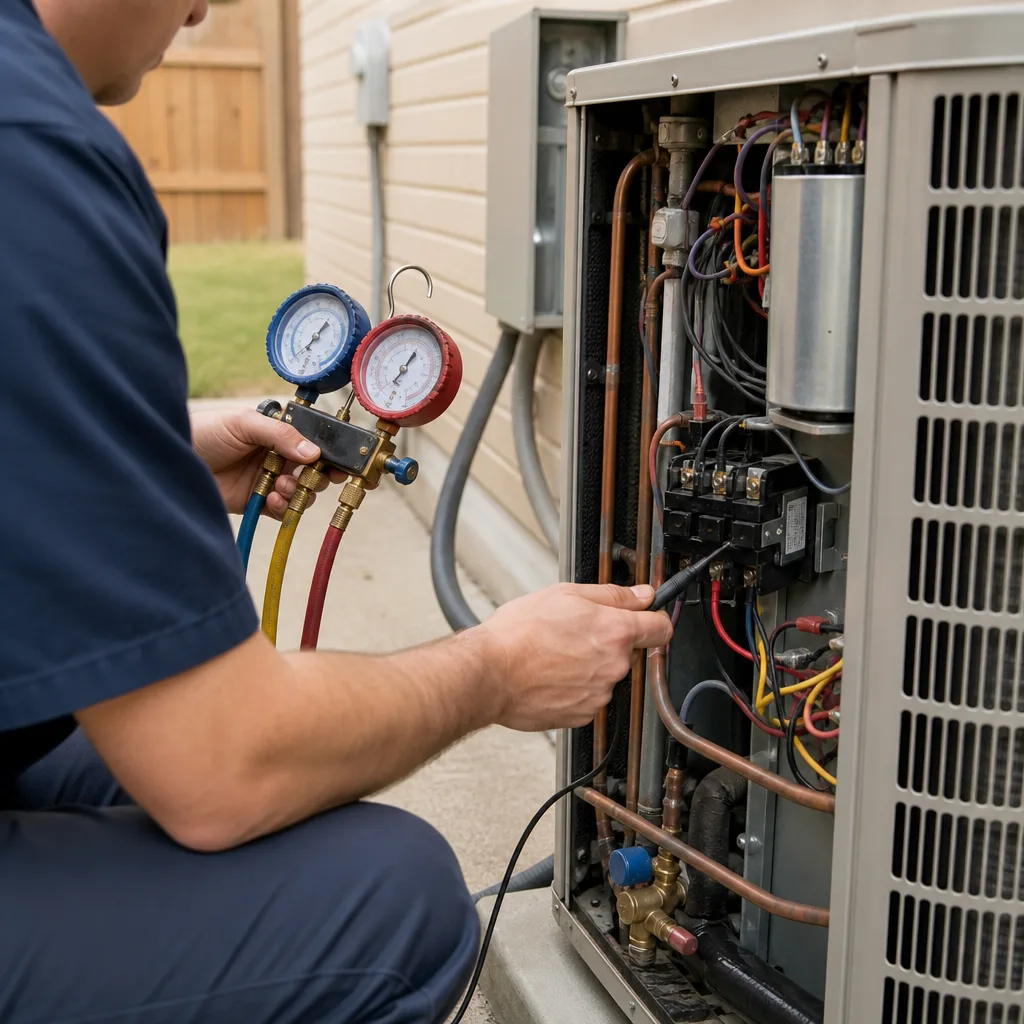
A Carrier capacitor replacement in Dallas runs $180 – $340 installed, with the capacitor itself typically $25 – $80 depending on rating and whether you want OEM Carrier or a premium aftermarket equivalent. Labor is the balance. You are paying for a technician who arrives stocked, diagnoses the capacitor specifically rather than guessing, tests the new part before it goes in, and verifies the compressor and fan amp draw after startup.
Every capacitor job from Dalton Heating & Air Dallas includes the written price before any work starts, the written one-year guarantee on the repair, and a no-charge return visit if the part or the work fails inside that year. That’s The Garrison Standard, and it’s how this company has operated since 2003. You’ll know the total before a screw comes off the service panel.
DIY or Call Us?
This is where we give you the honest split. A capacitor stores voltage even with the unit unplugged, and a charged capacitor can deliver a serious shock. If you don’t know how to safely discharge one, don’t open the condenser cabinet. The risk is not worth the $25 part cost. We are not trying to scare you off your own equipment. We are telling you what every tech carrying a burn scar would tell you.
What you can check without touching the cabinet: is the breaker tripped, is the filter clogged, is the thermostat calling correctly. Listen for the hum, note when the unit fails and when it runs. That information helps us diagnose faster. If the fan isn’t spinning on a Dallas afternoon and the house is climbing past 80, call (254) 280-5320. Marco’s signature applies here: tell us what’s wrong, we’ll tell you what it costs, in writing, before we start.
FAQs
Figure 5 to 8 years in this climate, not the 10 to 15 printed in the manufacturer’s literature. Sustained heat above 100 degrees degrades the dielectric fluid inside the capacitor faster than design assumptions. If your condenser is in direct west-facing sun without shade, expect the lower end of that range.
No. A capacitor is a sealed component. Once the electrolyte breaks down or the internal foil shortens, there is no repair path. Replacement is the only correct repair, and it should always be done with a part rated for the exact microfarad and voltage printed on the old unit or the condenser nameplate.
Thirty to forty-five minutes at your condenser, assuming the diagnosis is straightforward. Most of that time is discharging the old capacitor safely, verifying the new one matches spec, and checking amp draw after startup to confirm the compressor and fan are running within manufacturer tolerance. Call (254) 280-5320 if you want an exact appointment window.
Yes. We carry 35/5, 40/5, 45/5, 50/5, 55/5, 60/5, and 70/5 dual-run capacitors rated at 440 VAC, in both OEM Carrier and AmRad/Titan HD equivalents. We also stock Trane and Lennox parts for multi-brand households. In most Dallas neighborhoods, we have the part on site within the same visit.
Written by Marco Benitez, Owner & Lead Technician, Dalton Heating & Air Dallas at Dalton Heating & Air Dallas, serving Dallas and nearby areas.