
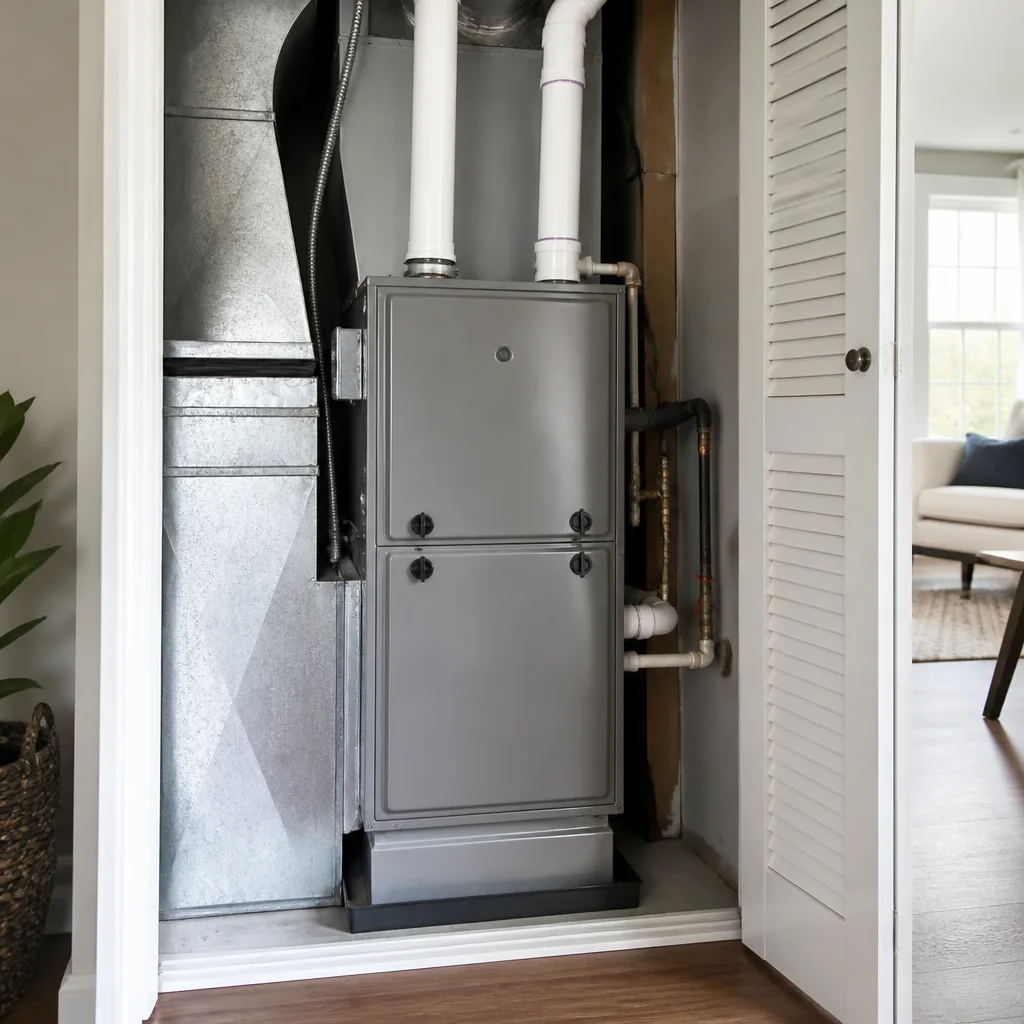
 Furnace & heating
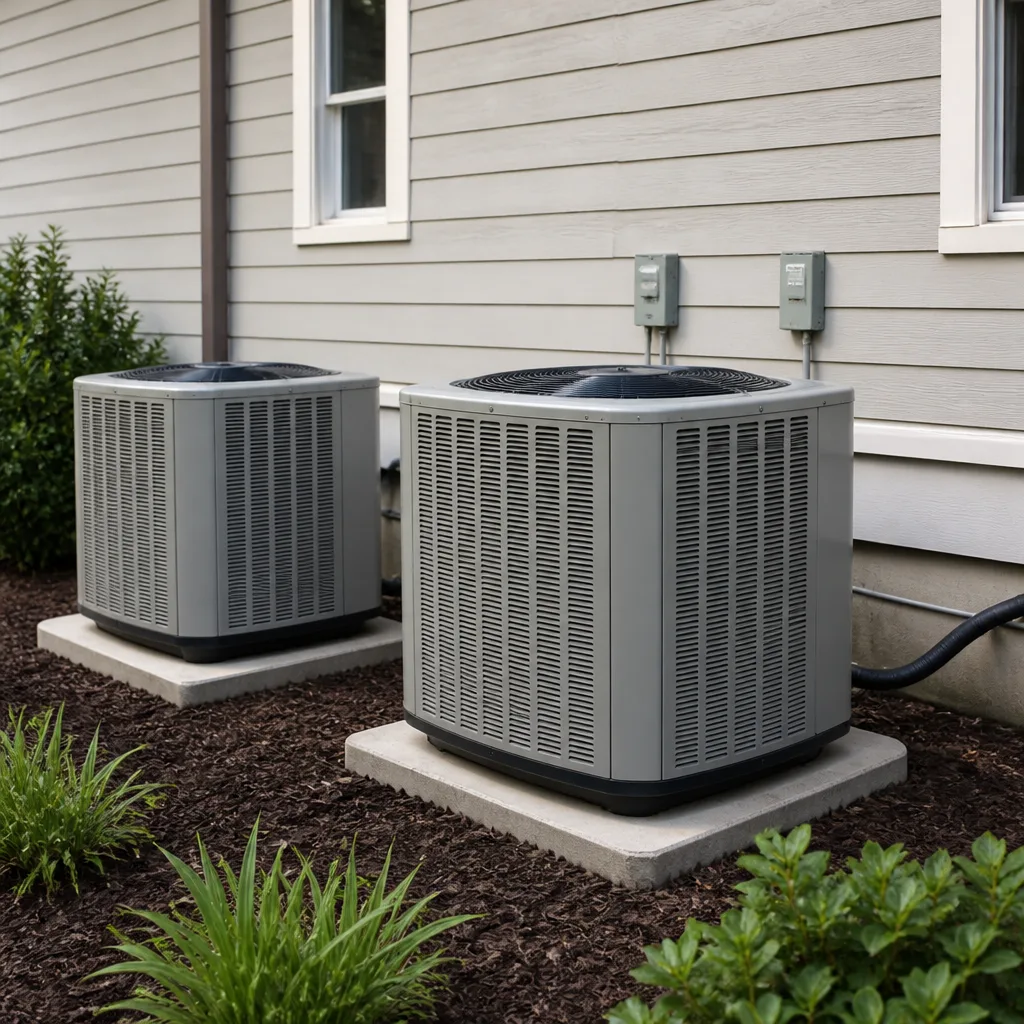 Heat pumps
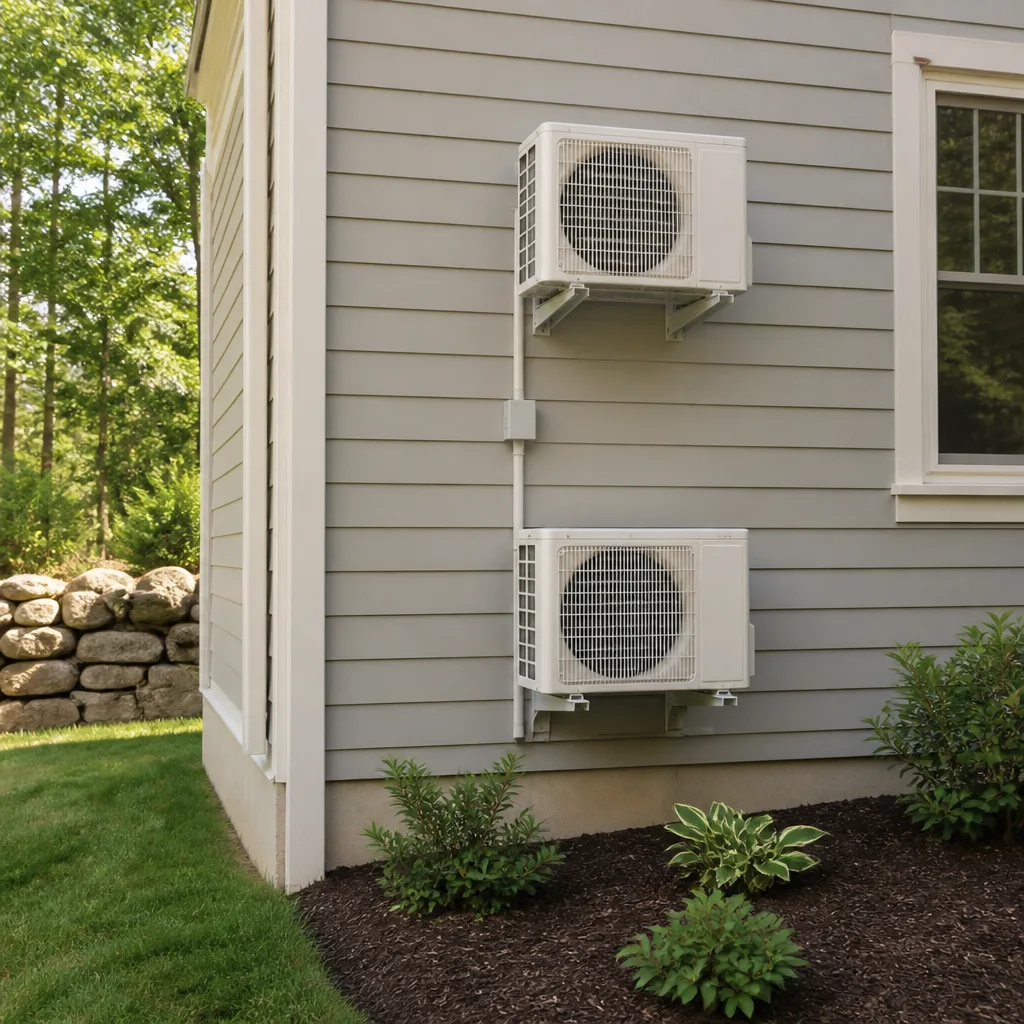 Ductless mini splits
 Goodman
Seasonal tune-up and full diagnostic on your Carrier, Trane, or Goodman system - readings shown to you before any repair is proposed
Diagnosis first, numbers second - you approve the repair price before a single part goes in.
Get your free estimateBryant Capacitor Replacement: The Dallas Owner’s Guide
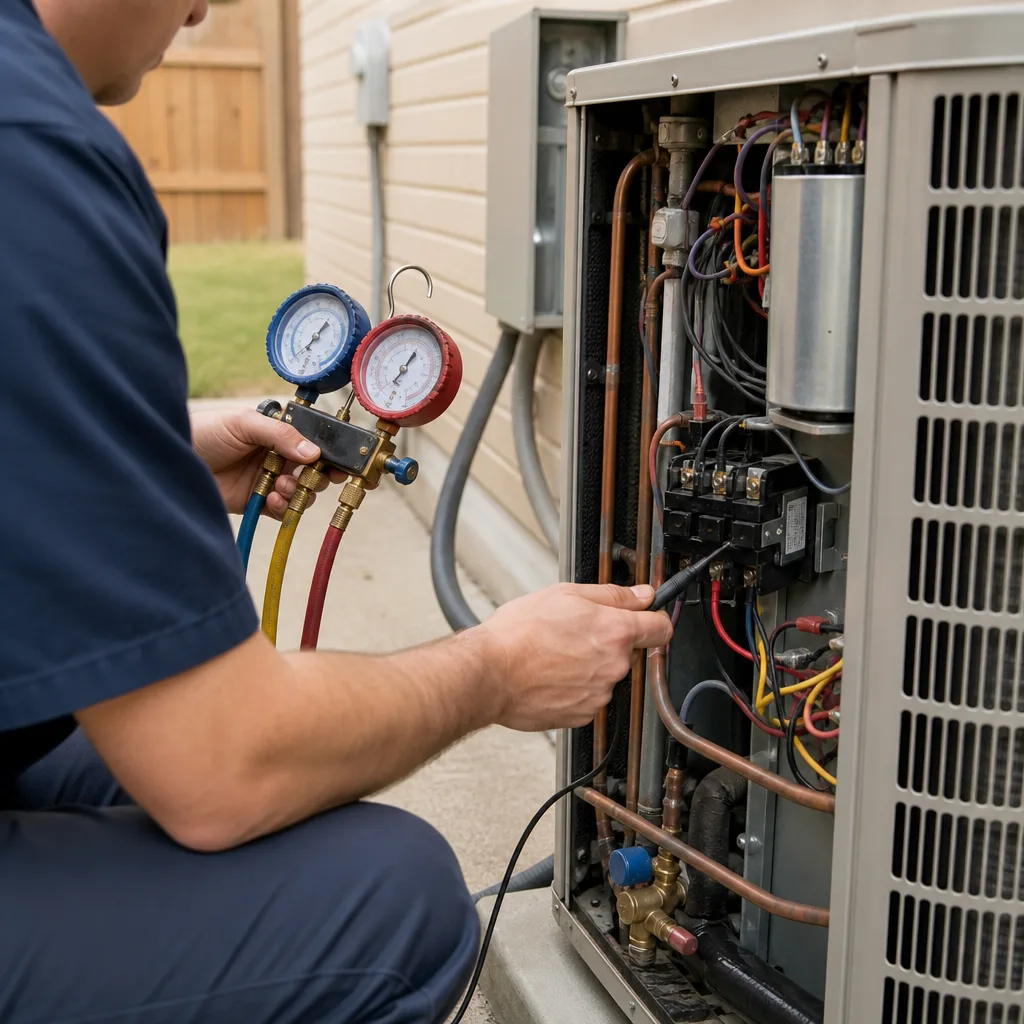
Most Bryant capacitor replacements in Dallas run $185 to $385 installed, including the part, labor, and a written one-year guarantee on the work. We stock Bryant-compatible capacitors on our trucks, so in most cases we can diagnose a failed cap, confirm the replacement, and have your system running the same day we come out. The capacitor is a small cylinder inside your outdoor condenser or indoor air handler that stores and releases electrical energy like a battery. It gives the compressor and fan motor the extra push they need to start spinning. When it dies, your Bryant unit either won’t start at all, hums and clicks, or the fan runs but the compressor never kicks in. In a Dallas July, that’s not something you want to sit on.

Which Bryant Models This Applies To
Nearly every Bryant residential AC and heat pump built in the last 25 years uses at least one capacitor. The most common Bryant lines we swap caps on in Dallas are the Legacy Series, Preferred Series, and Evolution Series condensers, along with matching Preferred and Evolution air handlers. Bryant uses both single-stage and dual-run capacitors. A dual-run cap is one cylinder with two capacitor values inside, one for the compressor and one for the fan motor. Single-stage systems typically use a dual-run capacitor rated between 35/5 and 45/5 microfarads (uF). The microfarad rating is the capacitor’s energy storage capacity, and it’s stamped right on the side of the metal can. The voltage rating on Bryant caps is usually 370 or 440 volts. A 440-volt capacitor can handle a 370-volt application, but never the reverse. If a tech tries to put a 370-volt cap where a 440-volt belongs in a Dallas heat wave, that capacitor will fail early, sometimes within one summer. We match the uF rating exactly and the voltage rating at or above what Bryant specifies for your model. On the OEM-versus-aftermarket question: Bryant’s factory capacitors are solid parts, but brands like Titan (now AmRad) and Genteq make equivalent or better units that we install regularly. For Bryant owners, the aftermarket Titan HD line often lasts longer than the factory cap, because they’re built to handle higher temperatures. In Dallas attic installations, that matters. Attics hit 130°F regularly, and heat is the number-one capacitor killer.
Styles & brands we work with
Signs Your Bryant Capacitor Is Failing
- The outdoor unit hums but the fan doesn’t spin. This is the classic dead-capacitor symptom. The capacitor can’t deliver the starting jolt, so the motor just sits there and vibrates. If you hear this, shut the system off at the thermostat and the breaker, because a motor locked in this state can overheat and damage itself.
- The compressor clicks on and off rapidly, or short-cycles. A weak capacitor can’t hold enough charge to keep the compressor running, so the system starts, stumbles, and cuts out. Short-cycling is when the unit turns off before reaching set temperature. It stresses the compressor and drives up your electric bill.
- The AC is blowing air, but it’s warm. The fan capacitor may be fine, but the compressor side of the dual-run cap is dead. The outdoor fan spins, so the unit looks normal from a distance, but the compressor never starts. This is easy to miss when you’re not staring at the outdoor unit.
- You spot a bulging or leaking capacitor. If the top of the metal can is domed upward or you see a brown or yellowish fluid leaking from it, the capacitor has ruptured internally and should be replaced. This can happen after a Dallas lightning storm or a severe voltage spike.
- The system runs fine in the morning but struggles in the afternoon. Capacitors degrade gradually. A cap that measures 40 uF today may read 31 uF in a few months. As the stored charge drops, the system works until the outdoor temperature climbs high enough that the compressor needs full starting torque. Then it fails to start. This is why Dallas owners often first notice the problem during the hottest weeks of the year.
See the difference
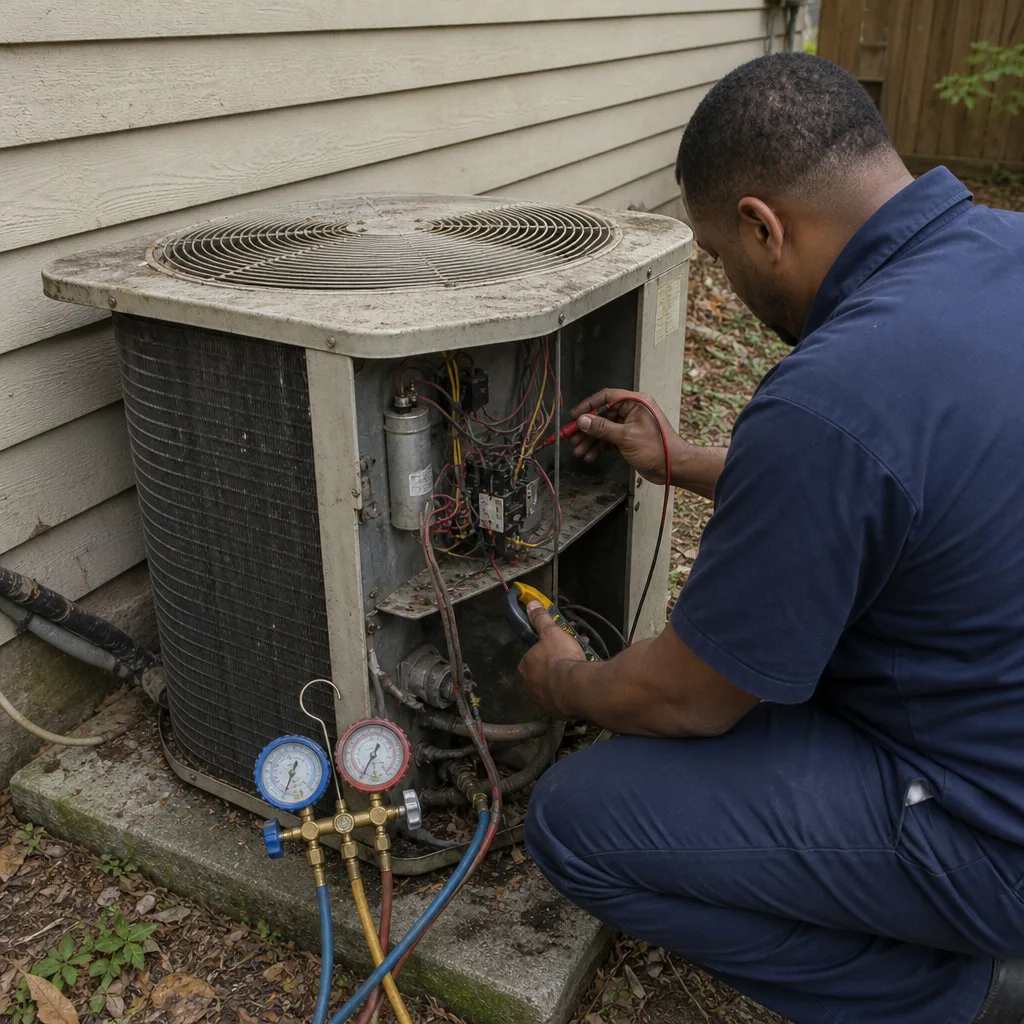 Before
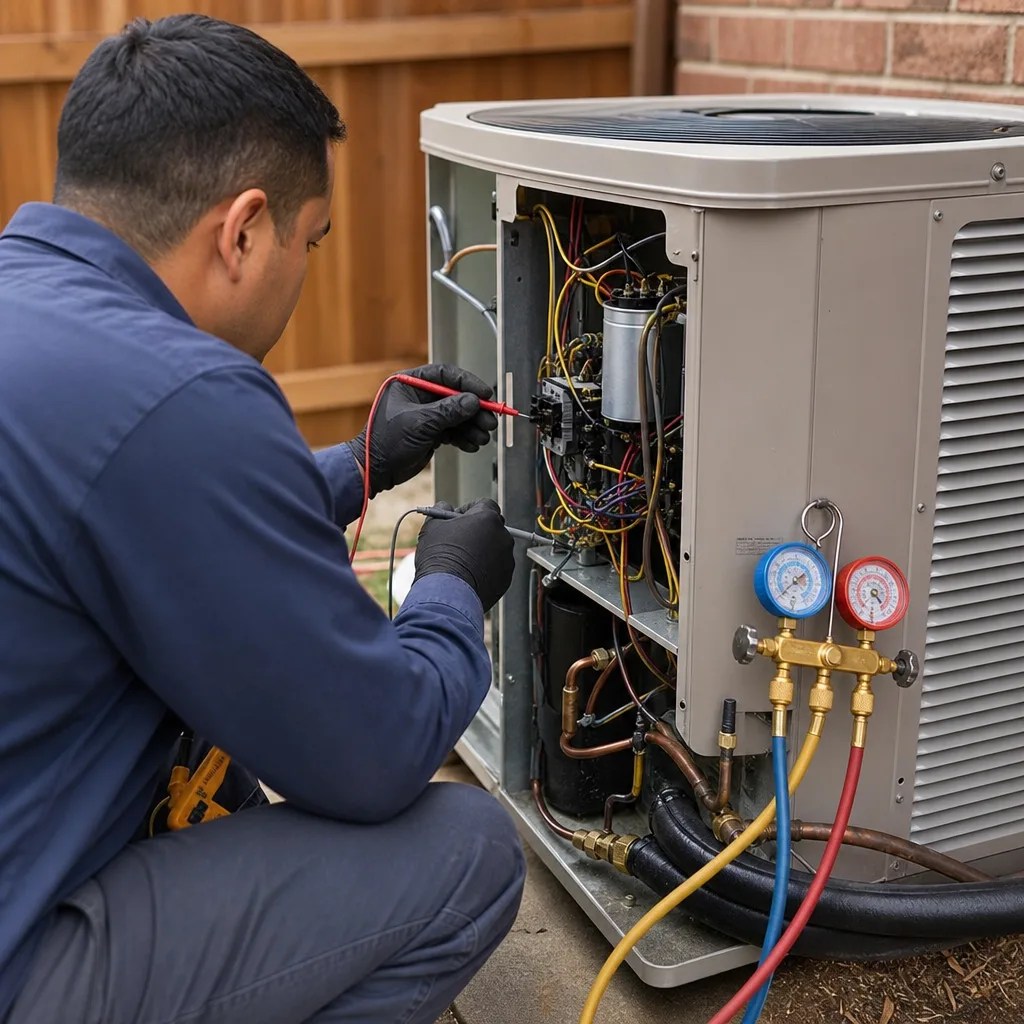 After
After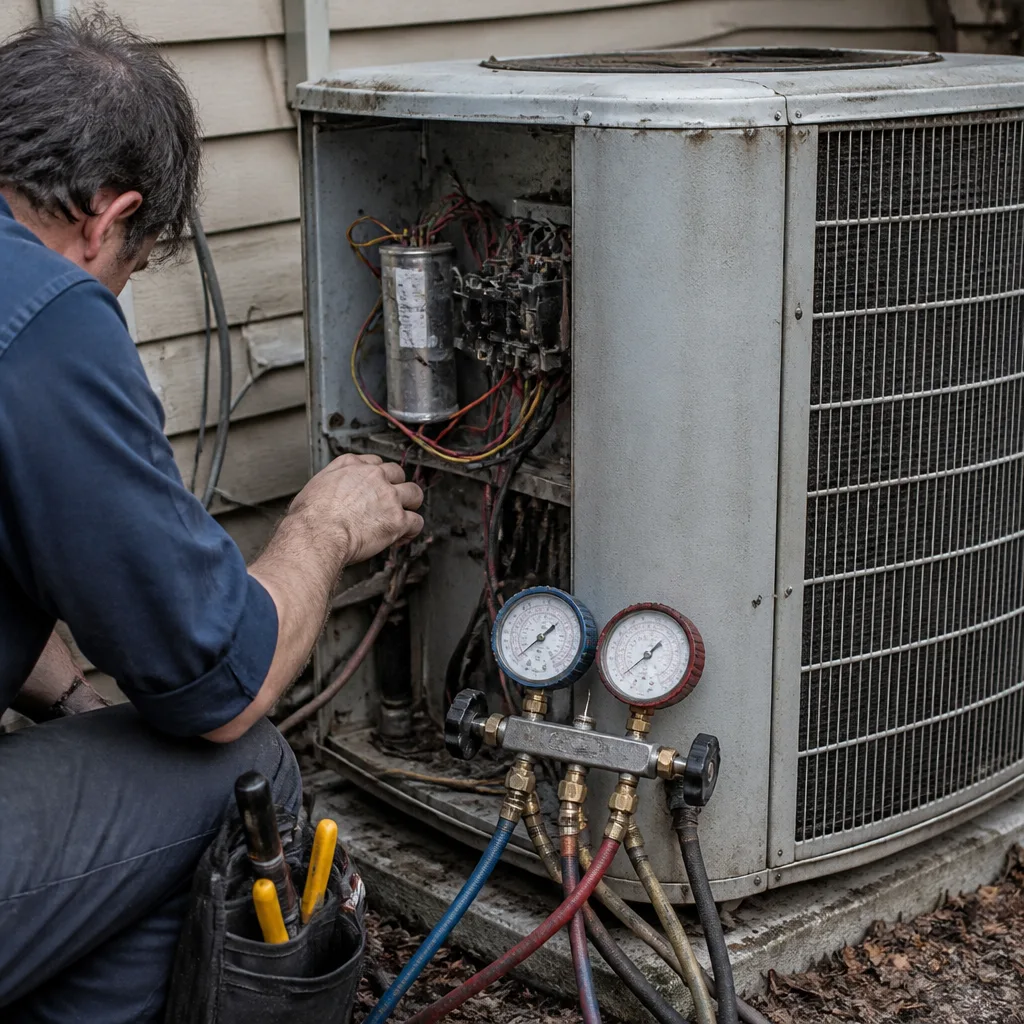 Before
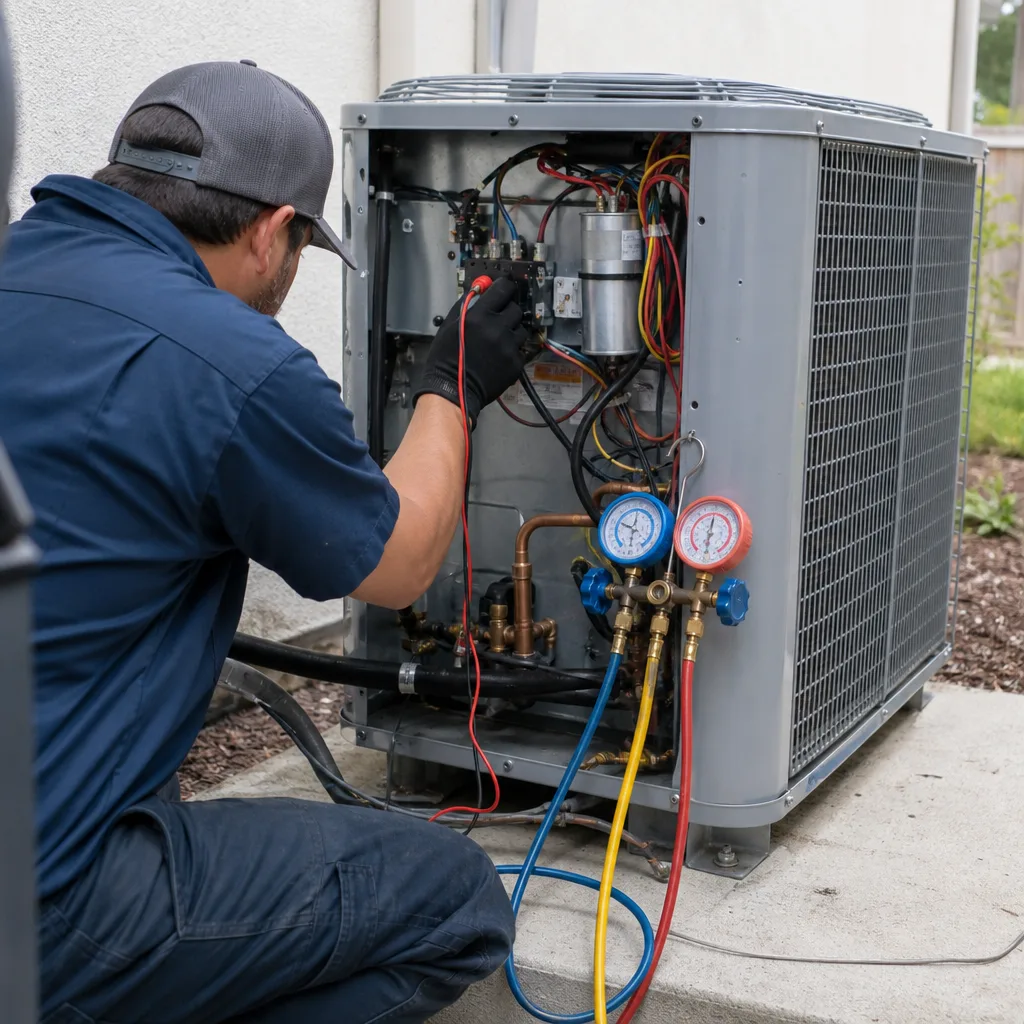 After
After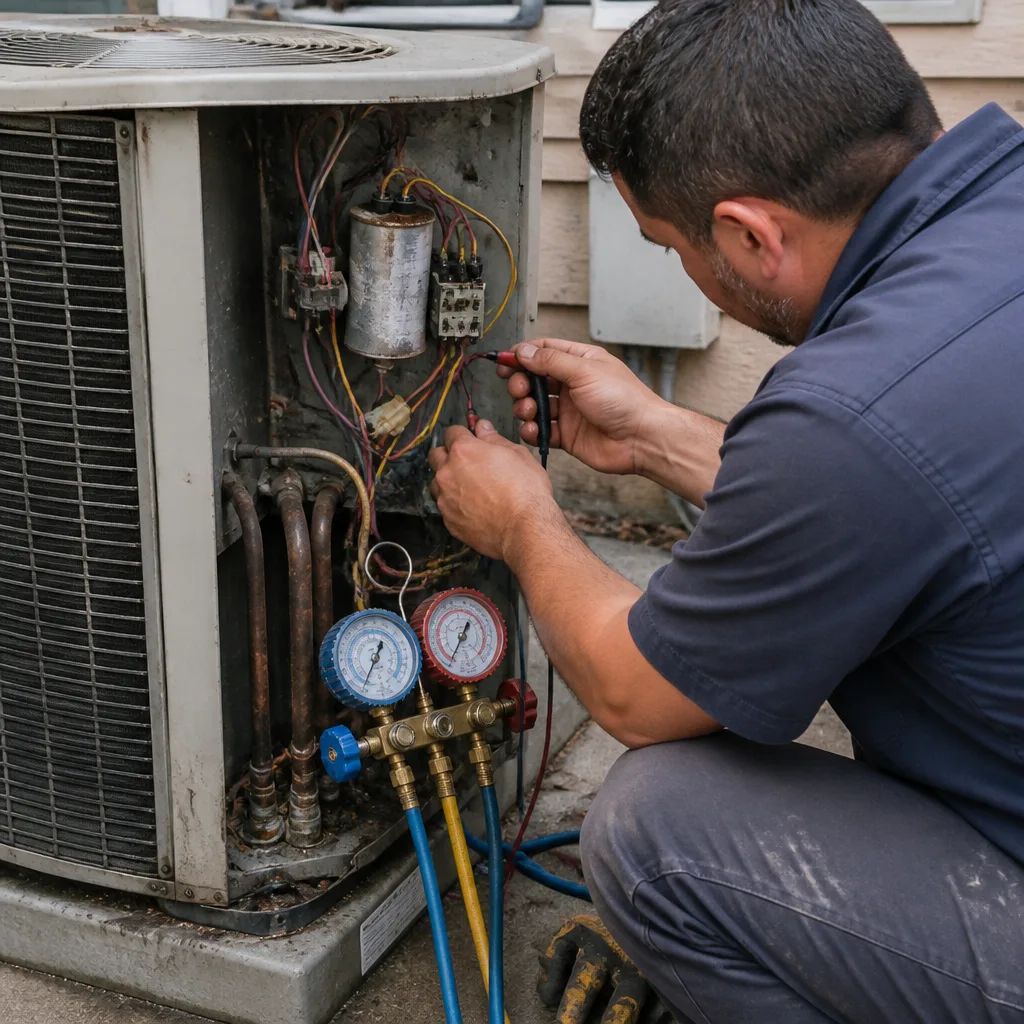 Before
 After
AfterReplacement Cost & What’s Included
For a Bryant capacitor replacement in Dallas, expect to pay $185 to $385 installed. The part itself is typically $25 to $60, whether it’s a factory Bryant capacitor or a Titan HD equivalent. The rest is labor, the service call, and the guarantee. A simple single-capacitor swap on an easily accessible condenser is on the lower end of that range. A dual-capacitor replacement in a tight attic air handler, or a job where we’re also testing a hard-start kit because the compressor is aging, lands higher. Hard-start kits are add-on components that give the compressor a stronger starting jolt, and in some Dallas heat pumps with original compressors, we recommend adding one while the cap is out. Every quote is in writing before any work starts. The repair carries our written one-year guarantee. If that capacitor fails inside a year, we come back and replace it at no charge. That’s the 365-Day Done Right Promise, and it’s standard on every Bryant capacitor replacement we do in Dallas.
DIY or Call Us?
Here’s the honest answer. You can visually inspect the capacitor yourself. Shut the breaker off at the panel, remove the condenser’s access panel, and look at the metal can. If the top is bowed outward or there’s fluid leaking, you know it’s bad. That’s where the DIY path ends. Capacitors store a lethal electrical charge even after power is cut. Touching the terminals without properly discharging the capacitor can cause a serious shock, burns, or worse. This is not a part to experiment with. The actual replacement takes a technician about 20 to 30 minutes, and the technician will verify the new capacitor’s microfarad reading with a meter before and after installing it. The diagnostic trip also catches problems that look like a failed cap but aren’t, like a failing contactor, a bad fan motor, or a compressor drawing locked-rotor amps. If you’re in Dallas and suspect a capacitor problem, call us at (254) 280-5320. Marco Benitez will tell you what’s wrong, then quote a flat price in writing before any tools come out.
FAQs
In the Dallas climate, a Bryant capacitor typically lasts 5 to 10 years. Heat is the biggest factor, and attic-mounted air handlers see the shortest lifespans. Power surges from Texas thunderstorms also shorten capacitor life. If you have a surge protector on your condenser, your odds of getting the longer end of that range improve.
No. A failed capacitor cannot be repaired. The internal dielectric material breaks down, and once it’s gone, the only fix is a new unit. The good news is that capacitors are one of the least expensive parts in a Bryant system to replace, which makes them a rare bright spot in an AC repair bill. Call (254) 280-5320 for an exact quote, and we’ll have it in writing before we begin.
A standard Bryant capacitor replacement takes 20 to 30 minutes once the technician is on site. Add diagnostic time if the capacitor isn’t the only problem, and expect the full visit to run about 45 to 90 minutes. Most Dallas capacitor replacements are done the same day the call comes in.
Yes. Our Dallas service trucks carry a range of common Bryant-compatible capacitor sizes, including 35/5, 40/5, and 45/5 dual-run units in both 370 and 440 volt ratings. We also stock compatible parts for Carrier, Trane, and Lennox systems, because plenty of Dallas homes have mixed-brand equipment. If your Bryant takes an uncommon spec, we can usually source it same day from a Dallas supply house.
Written by Marco Benitez, Owner & Lead Technician, Dalton Heating & Air Dallas at Dalton Heating & Air Dallas, serving Dallas and nearby areas.