
 Furnace & heating
 Heat pumps
 Ductless mini splits
 Goodman
Seasonal tune-up and full diagnostic on your Carrier, Trane, or Goodman system - readings shown to you before any repair is proposed
Diagnosis first, numbers second - you approve the repair price before a single part goes in.
Get your free estimateGoodman Capacitor Replacement: The Dallas Owner’s Guide
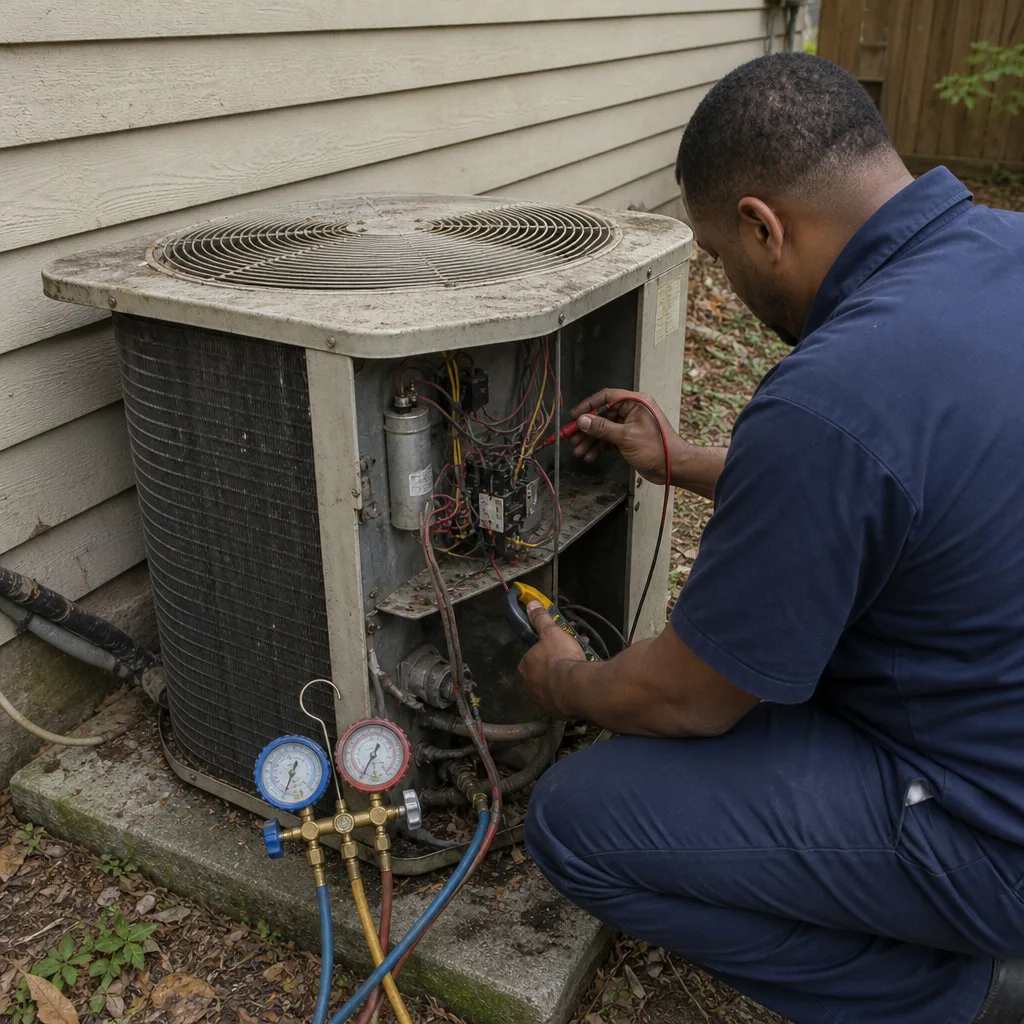
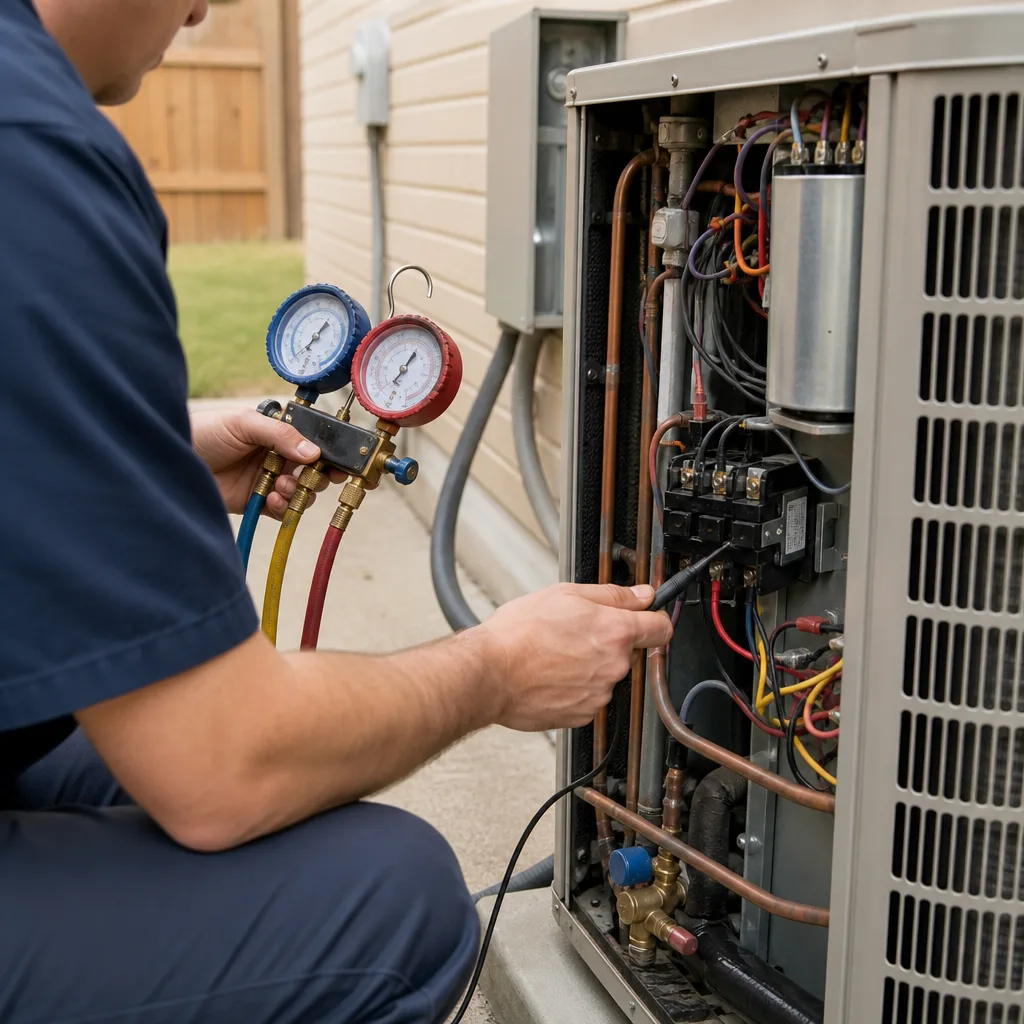
Replacing a failed capacitor on a Goodman air conditioner or heat pump in Dallas typically runs $150 – $275 installed, and we keep common Goodman capacitor specs on our service trucks so most swaps happen same-day. A capacitor is the small cylinder inside your condenser unit that stores and releases the voltage needed to start the compressor and fan motor. When it goes bad, the system either won’t start at all or it hums and tries to kick on before tripping a breaker. Here’s how to know what you’re dealing with, what it should cost, and what happens on the repair visit.

We see this failure pattern nearly every week in Dallas between May and September, when systems run hard during triple-digit afternoons. The capacitor is often the first part to give out under sustained stress. At Dalton Heating & Air Dallas, Marco Benitez and our techs replace these on Goodman units throughout Oak Cliff, East Dallas, Richardson, Mesquite, and the rest of the metro.
Which Goodman Models This Applies To
Goodman uses either round or oval run capacitors across its GSX, GSZ, GSC, and SSZ series condensing units, as well as the ARUF and AVPTC air handlers. The dual-run capacitor, found in most Goodman outdoor units made since the late 1990s, serves both the compressor and the condenser fan motor from a single housing. The critical values on the label are the microfarad (µF) rating, usually printed as two numbers like 45/5, plus the voltage rating, typically 370 or 440 VAC.
The compatibility gotcha with Goodman: the spec can change between production years even within the same series. A GSX13 built in 2012 does not always use the same capacitor as a GSX13 built in 2019, because Goodman switched condenser fan motor suppliers several times. The only reliable way to match the part is to read the µF and voltage values off the old capacitor’s label, or cross-reference the complete model and serial number from the unit’s data plate. We do not guess at this. Wrong capacitance can cause the compressor to run hot and shorten its life by years.
On the OEM-versus-aftermarket question: Goodman capacitors are made for Goodman by third-party suppliers like Titan HD and AmRad, and those same brands sell functionally identical replacements through supply houses across Dallas. We install AmRad and Titan HD as standard on Goodman units, because the quality is consistent and the ratings match the unit’s spec exactly. That’s not a downgrade from an OEM-stamped part – it’s usually the same part minus the Goodman ink. What actually matters is the µF tolerance: ±5% or better. A +10% capacitor, sold cheap by a supply house, is never worth the risk to the compressor.
Styles & brands we work with
Signs Your Goodman Capacitor Replacement Is Failing
- Unit hums but won’t start. You hear a low buzz from the outdoor unit, but the fan isn’t spinning and no cold air is moving. That’s the compressor trying to start without enough stored voltage. The capacitor is the prime suspect.
- Fan spins slowly or not at all while the unit runs. The compressor side of the capacitor can still be functioning while the fan side has failed. The system may cool weakly at first, then overheat and shut down entirely within an hour.
- The top of the capacitor is domed or bulging. Dallas heat expansions cause the internal dielectric oil to break down. When it fails, the can swells at the vent seam. A bulging capacitor is a dead capacitor, no testing needed.
- System tripped the breaker once and now won’t restart. A capacitor failing under load can draw excess current. If the breaker trips again after a reset, stop resetting it and call us. Repeated resets risk damage to the compressor windings, and that’s a $1,800-plus repair instead of a $200 one.
- AC runs, but the outdoor fan occasionally stops and reverses direction. This odd behavior shows the fan-side capacitor is losing its charge. The motor hunts for direction when the voltage isn’t stable. Left unchecked, the fan motor itself burns out, and that’s a much larger labor bill.
See the difference
 Before
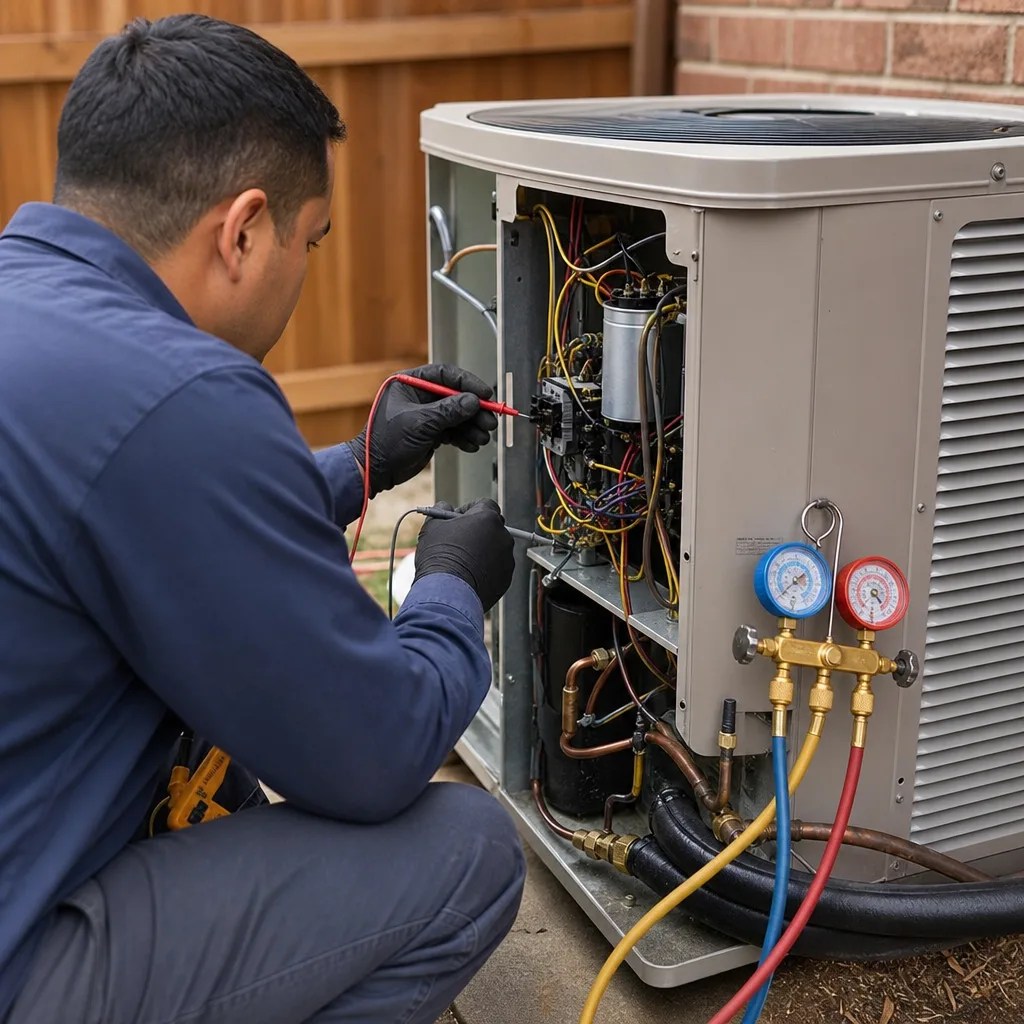 After
After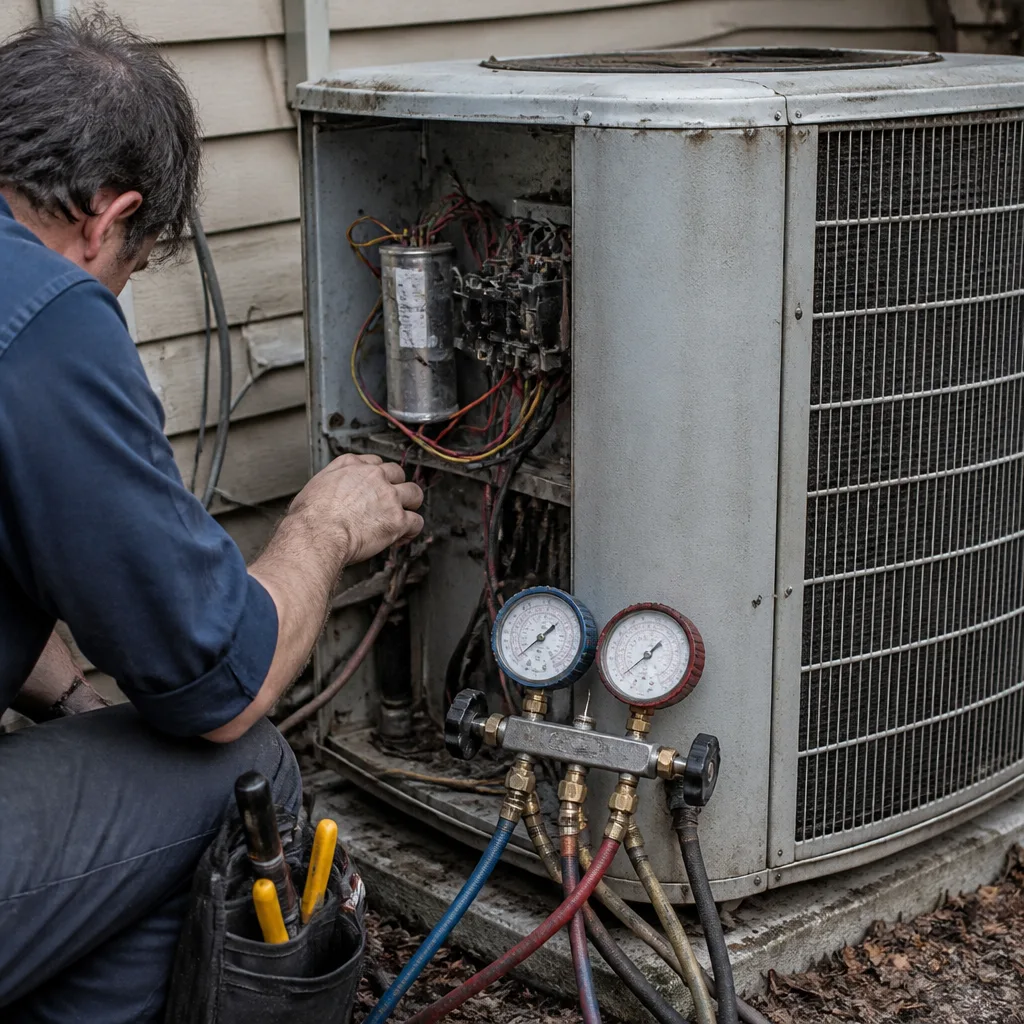 Before
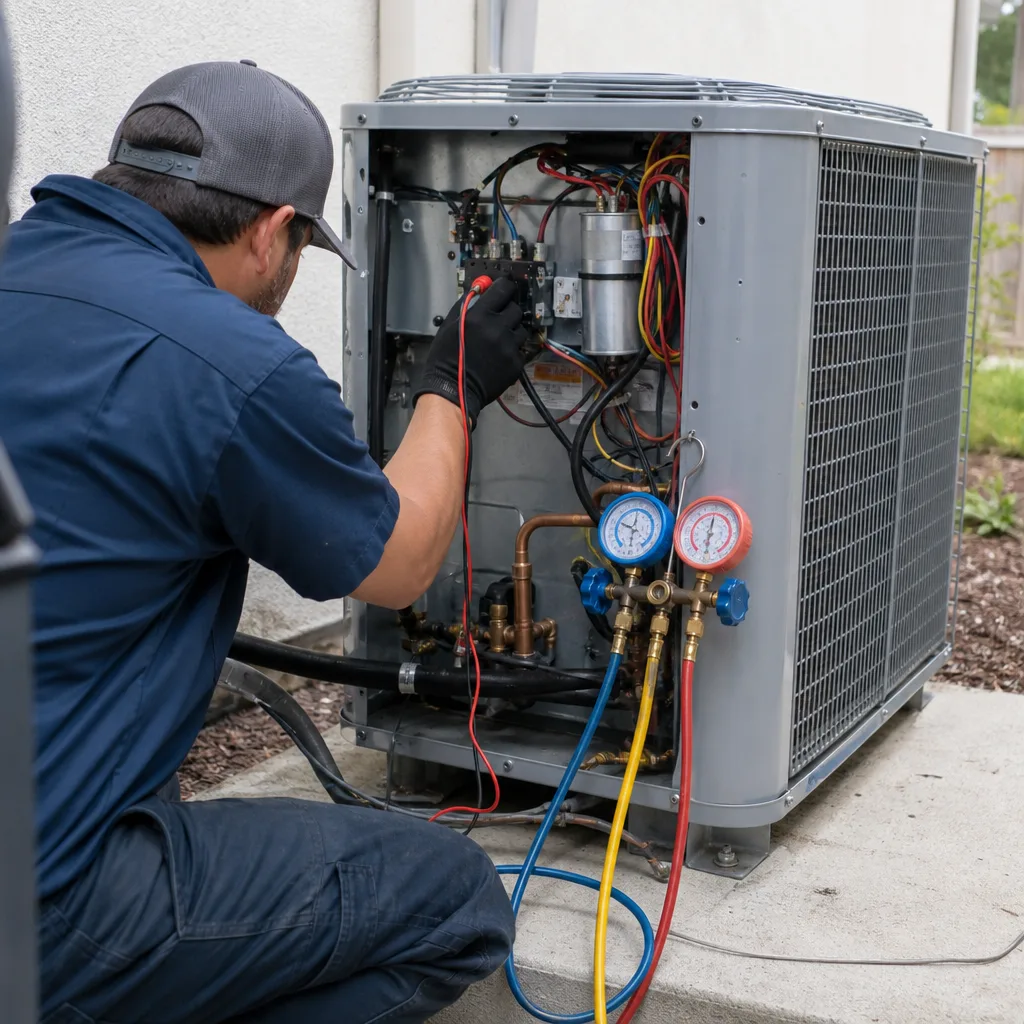 After
After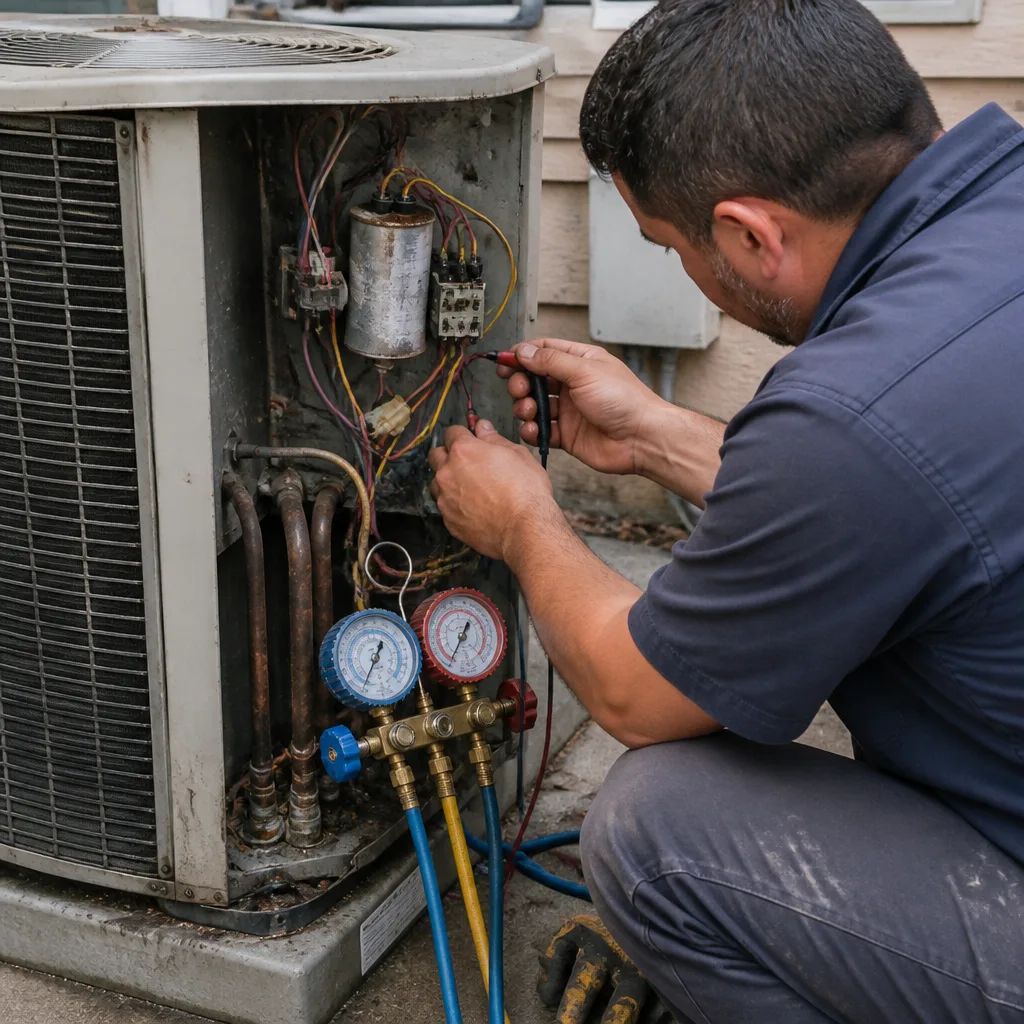 Before
 After
AfterReplacement Cost & What’s Included
A Goodman capacitor replacement in Dallas costs $150 – $275 installed, part and labor together. The capacitor itself runs $15 – $45 depending on the µF value and whether it’s a single or dual-run. The rest is time at your home: diagnosis, confirming the old part’s spec, pulling the old capacitor, installing the new one, testing run amperage and start-up, and cleaning the condenser coil while we’re in there if it’s plugged with cottonwood or grass clippings.
No-hassle upfront pricing applies the same way here as on every Dalton visit. The price is in writing before any work starts, and it covers the swap including the electrical checks afterward. Every repair carries the 365-Day Done Right Promise: if it fails in that year, we return and make it right at no charge. That’s the whole repair guarantee, written on the invoice, not an optional add-on.
DIY or Call Us?
Some parts of an AC system give room for a capable homeowner to work safely. A capacitor is not one of them. The capacitor stores charge even when the unit is powered down, and it can deliver a serious electric shock if you touch the terminals without discharging it properly. Add that to a hot Dallas afternoon, a condenser cabinet full of live wiring, and a compressor that’s been struggling all season, and the risk isn’t worth it. We’ve seen DIY’d capacitor jobs where the new part’s terminals were barely tightened, creating arcing that cooked the control board a month later.
What you can safely check: whether the breaker’s tripped, whether the thermostat is actually calling for cooling, whether the outdoor disconnect switch near the unit got switched off by mistake. That’s a ten-minute check. After that, call us at (254) 280-5320. Tell me what’s wrong, I’ll tell you what it costs – in writing, before we start.
FAQs
A Goodman capacitor in Dallas typically lasts 5 to 10 years, but the city’s heat and grid voltage swings during summer peak demand can shorten that to as little as 3 years. Capacitors degrade faster with every 10 degrees of sustained ambient temperature above 95°F. We check capacitor condition on every tune-up visit for exactly this reason, because the difference between a weak capacitor and a dead one in Dallas is often just a matter of weeks, not months.
No. A capacitor is a sealed, oil-filled component and cannot be repaired once the dielectric has broken down. Replacement is the only correct repair. Anyone offering to “patch” or “recharge” a capacitor is guessing, and in 20 years of turning wrenches across Texas, Marco has never seen that work for longer than a week.
Most Goodman capacitor swaps take 30 to 45 minutes on site, including the start-up test and amp check afterward. Add a little time if the condenser coil needs cleaning or if the contactor shows pitting and should be replaced at the same visit. We’ll tell you that before we do it, with the price in writing.
Yes. Our Dallas trucks carry the most common dual-run values for Goodman, including 30/5, 35/5, 40/5, 45/5, and 50/5 in 370 and 440 VAC ratings. For less common single-run or specialty Goodman capacitors, we can typically have the part in hand same day from our Dallas supply houses. We also stock replacement parts for Carrier, Trane, and Lennox gear for our multi-brand service work. Call (254) 280-5320 with your model number and we’ll confirm availability before we head your way.
Written by Marco Benitez, Owner & Lead Technician, Dalton Heating & Air Dallas at Dalton Heating & Air Dallas, serving Dallas and nearby areas.