
Last updated October 16, 2026
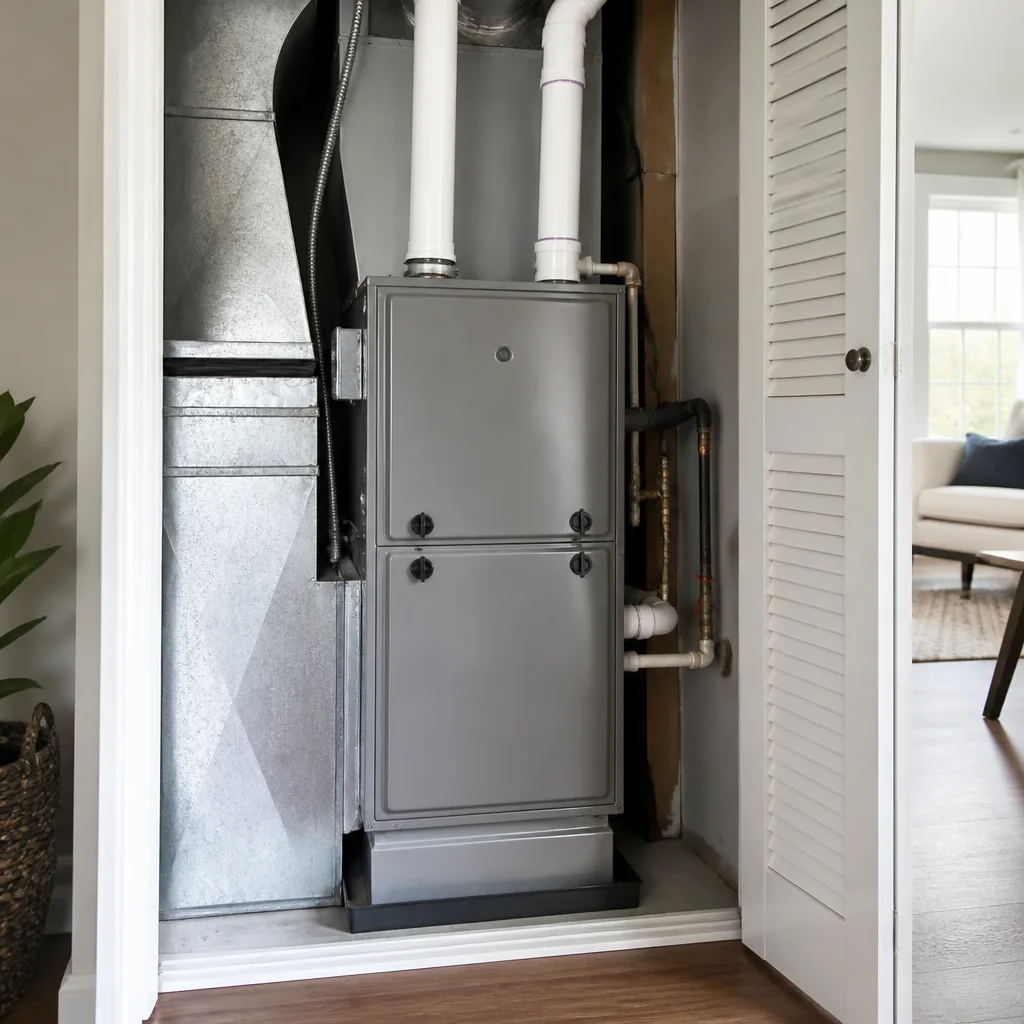 Furnace & heating
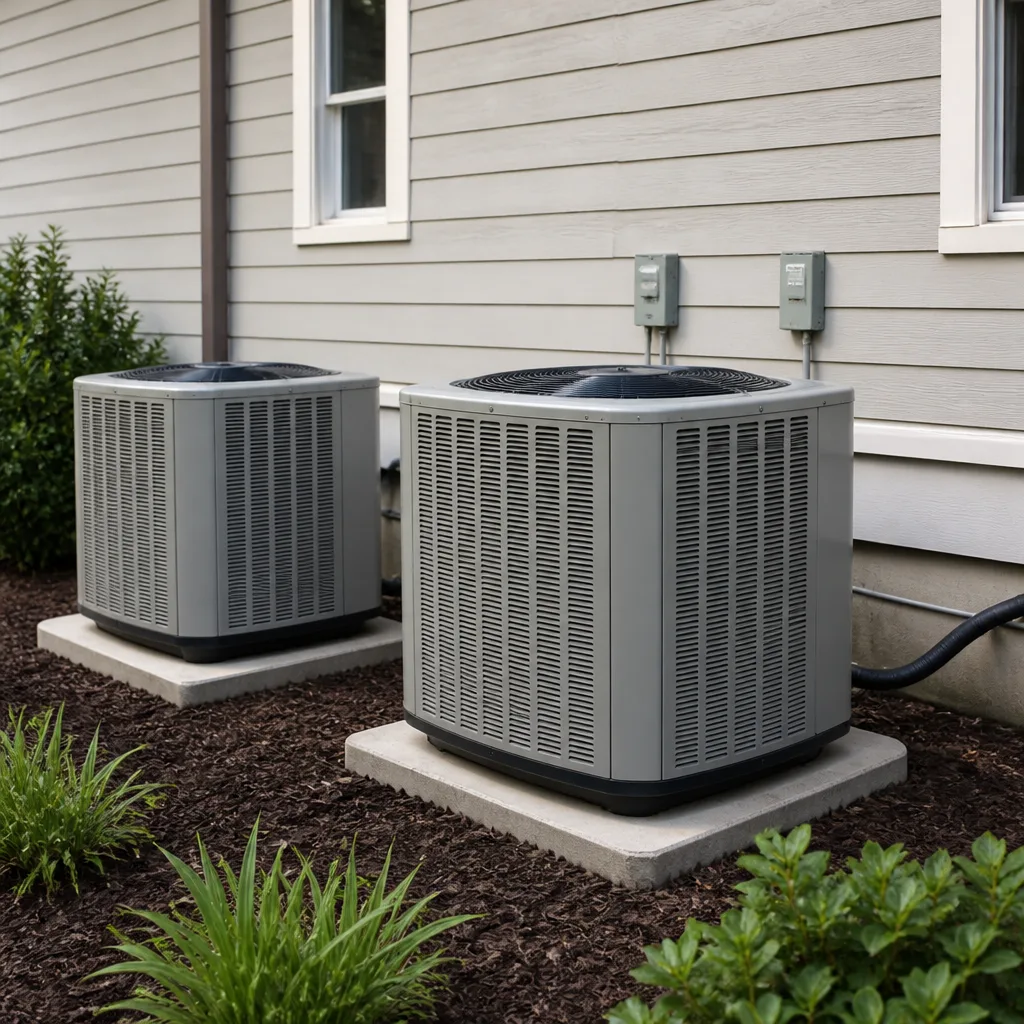 Heat pumps
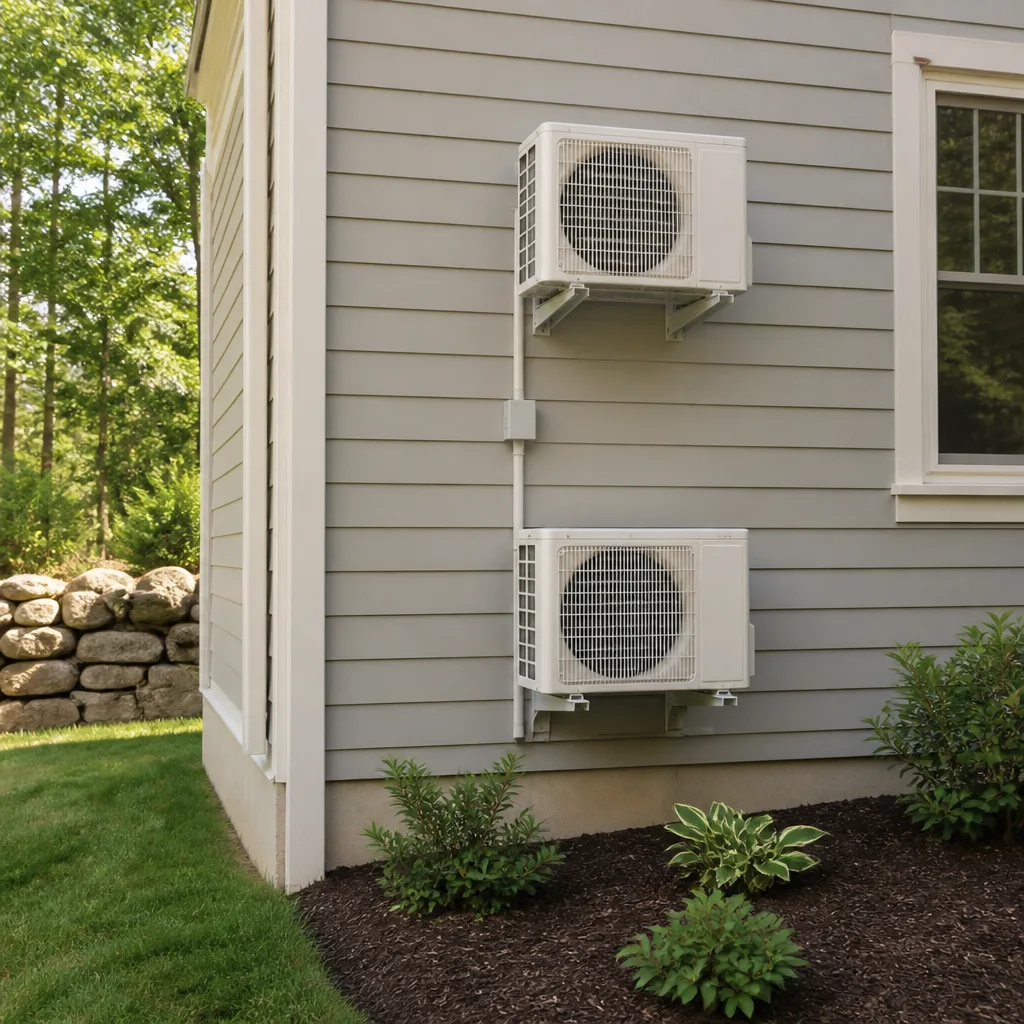 Ductless mini splits
 Goodman
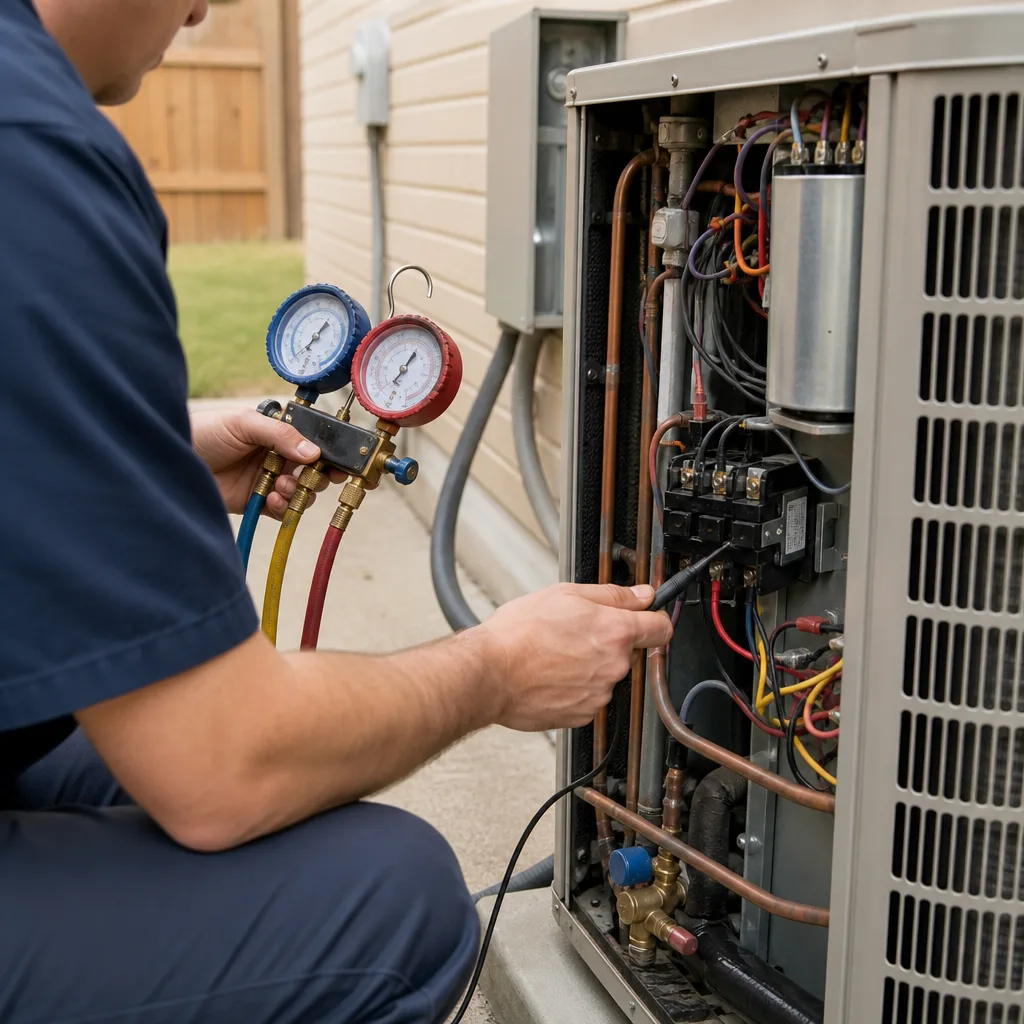
Seasonal tune-up and full diagnostic on your Carrier, Trane, or Goodman system - readings shown to you before any repair is proposed
Diagnosis first, numbers second - you approve the repair price before a single part goes in.
Get your free estimateAC Repair Maintenance Checklist for Dallas Homeowners
Here is a number most Dallas homeowners don’t expect: a clogged condensate drain line causes more August service calls across Dallas-Fort Worth than any other single failure, and the fix often takes 90 seconds with a wet-vac if you catch it before the pan overflows. Most AC maintenance checklists get this backwards. They’re written by technicians, for technicians: a list of tasks with no explanation of what failure actually looks like from the homeowner’s side of the closet door, and no honest accounting of what each skipped item costs you by September. This guide is different. We’ll walk through every item on a proper Dallas maintenance list, tell you why it matters in our specific climate, show you what a failing component looks and sounds like before it strands you in 100°F heat, and put a real dollar figure on the cost of ignoring it.
Quick Answer
An AC maintenance checklist for Dallas homeowners should include monthly filter checks during peak cooling season, condensate drain flushing every 60 to 90 days, capacitor visual inspection twice per year, evaporator and condenser coil cleaning annually, thermostat calibration each spring, and a AC Repair services inspection before summer by a licensed technician. Skipping these items costs Dallas homeowners between $400 and $1,800 per incident in avoidable repairs, water damage, and efficiency loss across a typical cooling season.
Styles & brands we work with
Table of Contents
- Condensate Drain Maintenance: The 90-Second Task That Prevents $400 Water Damage
- Capacitor Inspection: Spotting the Bulge Before It Strands You
- Coil Cleanliness: What a Dirty Evaporator Coil Actually Costs in Dallas
- Filter MERV Ratings: Trading Air Quality Against Airflow in Dallas Dust Season
- Which Checklist Items Void Manufacturer Warranties in Texas
- Thermostat Calibration and Setpoint Discipline
- The Seasonal Checklist: Spring Startup and Fall Shutdown
Condensate Drain Maintenance: The 90-Second Task That Prevents $400 Water Damage
In Dallas humidity, your AC pulls roughly 5 to 20 gallons of water out of the air every day it runs. All that moisture flows through a narrow PVC pipe called the condensate drain line. Over weeks of continuous operation, algae and airborne dust form a sludge inside the pipe because Dallas air carries enough organic matter to feed biological growth fast. When that line clogs, the water backs up into the drain pan, and when the pan overflows, it soaks the ceiling below, the closet floor, or the insulation in your attic. In our experience across Dallas, the bill for water mitigation and drywall repair after an overflow runs between $400 and $900, and that’s before we address the AC itself.
Here’s what a homeowner can do safely:
- Locate the drain line. In most Dallas homes, it exits the indoor unit near the air handler in a closet, attic, or garage. It is typically 3/4-inch white PVC with an open vertical vent tee near the unit.
- Once every 60 days during cooling season, pour one cup of distilled white vinegar down the vent tee. Vinegar is acidic enough to slow algae growth but gentle enough not to damage the pipe. Do not use bleach. Bleach corrodes the PVC and the drain pan, and the fumes travel into your supply air.
- If water has already pooled in the secondary drain pan, shut the system off at the thermostat and the breaker. Call a licensed technician. A full overflow near the furnace control board or heat strips is an electrical hazard.
- If you have a wet-vac, hold the hose tightly against the drain exit outside the house and pull suction for 30 to 60 seconds. This clears accumulated sludge that vinegar alone will not move.
One Dallas-specific detail most guides miss: cement board, found in many mid-century Dallas homes as a siding material or interior wall substrate, wicks water far more aggressively than drywall. A condensate overflow onto cement board can mean sill rot and mold that stays hidden for months. The $400 repair is your best-case scenario.
During our seasonal inspections, we flush the line with pressurized nitrogen, not just vinegar, and we check the float switch. The float switch is the backup device that should shut the system down when the pan fills. If it is not tested, you will not know it failed until the water is already on your floor. If you need this done properly, call AC repair in Dallas and we’ll handle the full flush, the switch test, and the written inspection report.
Capacitor Inspection: Spotting the Bulge Before It Strands You
Every time your AC starts, a capacitor gives the compressor and fan motor a jolt of stored electricity to get them spinning. In Dallas, capacitors fail at roughly double the rate of cooler climates because the metal cylinder sits inside a condenser unit that bakes at 130°F or hotter on a summer afternoon. Heat degrades the dielectric fluid inside the capacitor. When it fails, the fan stops, the compressor stops, or both, and your home heats up fast.
The telltale physical sign of a failing capacitor is a bulging top or a swollen side. A healthy capacitor is a perfect cylinder with a flat top. A dying one starts to dome upward like a soda can left in a hot car. You can inspect this safely without touching any wiring:
- Turn the thermostat to OFF and flip the breaker for the outdoor unit to OFF. Confirm there is no power with a non-contact voltage tester.
- Remove the condenser’s access panel, usually held by four or six screws.
- Look at the capacitor. It is a small cylinder, typically silver or black, with two or three terminals on top.
- If the top is domed, the sides are bowed, or you see any brown fluid leaking, it is failing or already failed.
- Replace the panel, restore power, and call a licensed technician if you saw any of those warning signs.
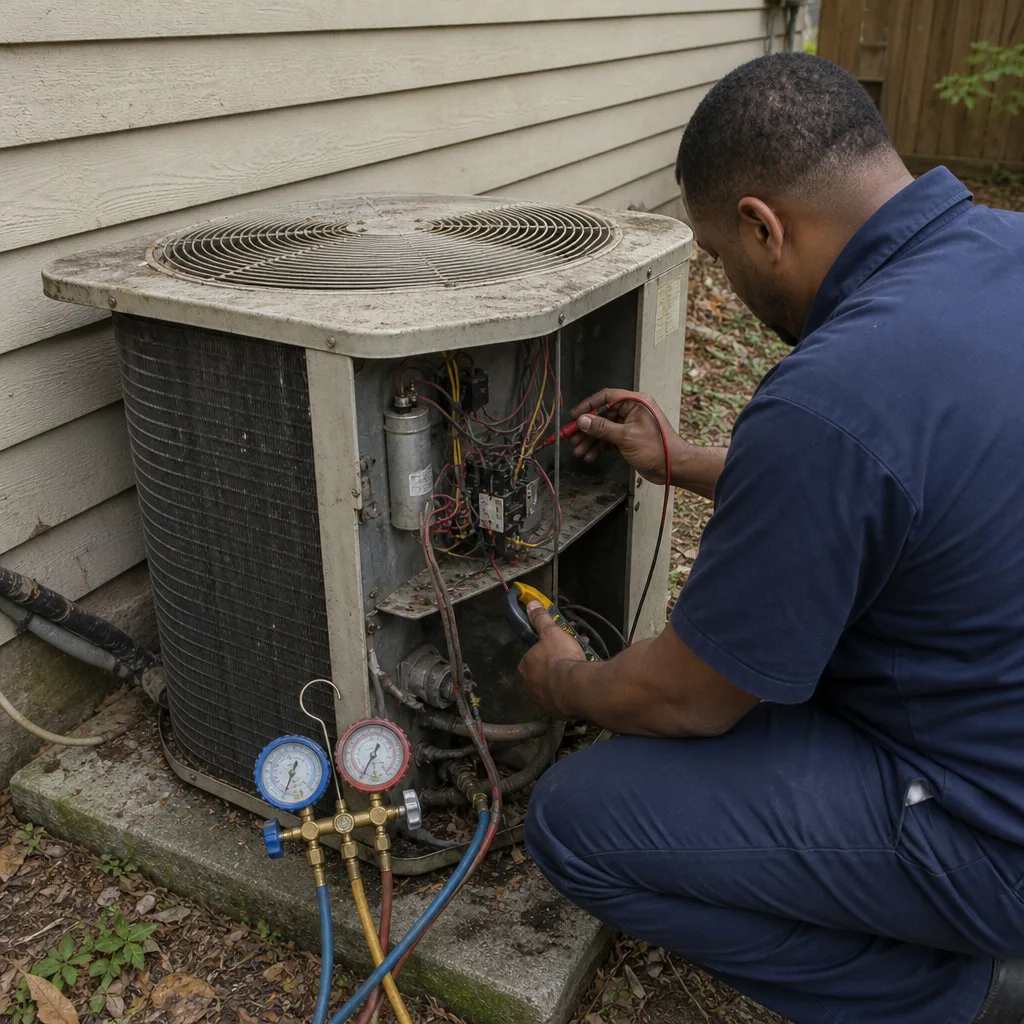
Do not attempt to replace a capacitor yourself. A capacitor stores enough voltage to seriously injure or kill even with the system powered down, because it holds its charge. We discharge it with a dedicated resistor and test it with a multimeter under load. This is one area where the DIY instruction ends at visual inspection.
What does a capacitor replacement cost in Dallas? Most residential capacitor replacements run between $150 and $300, including the part and the service call. The alternative is a compressor that burns out trying to start without enough torque, which becomes a $1,800 to $3,500 decision between repair and replacement. You want to catch this early.
Dalton Heating & Air Dallas includes a capacitor test on every maintenance visit, and our written price before any work starts means you know exactly what that replacement costs before we touch a wire.
Coil Cleanliness: What a Dirty Evaporator Coil Actually Costs in Dallas
The evaporator coil is the cold surface inside your air handler that air passes over before it enters your ducts. In Dallas, two things load that coil up faster than most places: clay dust from our soil, and pollen from oak, cedar, and ragweed seasons that run nearly year-round. A thin layer of grime on the coil acts like insulation: it slows heat transfer between the air and the refrigerant, which means your system runs longer to hit the same setpoint.
Here is what the numbers look like in our Dallas market. A dirty evaporator coil reduces system efficiency by 10 to 30 percent, depending on thickness of fouling. For a 3-ton system in a 2,000-square-foot Dallas home, that translates to an extra 2 to 4 hours of runtime per day during peak summer. At Dallas electricity rates, roughly 14 to 16 cents per kilowatt-hour depending on your plan, that is $35 to $70 per month in wasted energy. Over a six-month cooling season, a dirty coil costs you $200 to $420 just in electricity that never makes your house any cooler. The cleaning itself costs $150 to $300, which means skipping it loses money even if nothing breaks.
There is a second failure mode we see all the time in Dallas: a coil so fouled that condensation freezes on it. The ice insulates the coil completely, the system short-cycles, and liquid refrigerant can flood back to the compressor and destroy it. A compressor replacement is the single most expensive repair an AC can need.
Can a homeowner clean their own evaporator coil? In a strict sense, yes, but with big caveats. The coil sits inside the air handler, often behind a metal panel held with screws. Getting access without damaging the drain pan, the wiring, or the coil fins requires care and a non-acidic cleaner. Most of our Dallas customers are better served having the coil inspected and cleaned by a factory-trained tech who can also check the refrigerant charge at the same time. But if you decide to do it yourself, use a no-rinse foaming coil cleaner, never a pressure washer, and never wire brushes. Bending the aluminum fins reduces airflow permanently. If you want an expert to handle this before the next heat wave, our team covers Dallas and surrounding areas with written pricing on every coil cleaning call.
Filter MERV Ratings: Trading Air Quality Against Airflow in Dallas Dust Season
The filter question is the one we get most in Dallas, especially from homeowners in older neighborhoods with mature trees and heavy spring pollen. The instinct is to buy the highest MERV filter on the shelf and install it. That instinct can cost you a blower motor.
MERV stands for Minimum Efficiency Reporting Value. A MERV 8 filter catches roughly 70 to 85 percent of particles between 3 and 10 microns: pollen, dust mites, some mold spores. A MERV 13 filter catches 90 percent or more of those particles plus finer ones down to 1 micron. The trade-off is pressure drop: the finer the filter, the harder your blower motor works to pull air through it.
In Dallas, here is our guidance. If your system was installed in the last ten years and the blower is an ECM variable-speed motor, a MERV 11 or MERV 13 filter is generally fine during pollen season, provided you check it monthly. If your system is older, or you have a standard PSC blower motor, stay at MERV 8, or MERV 11 at most. The older motor is not designed for the static pressure of a dense filter, and we replace more PSC blower motors in Dallas homes between April and June than any other time of year. A blower motor replacement runs $450 to $900 installed, and in almost every case the homeowner had upgraded to a MERV 13 filter the prior season.
During Dallas dust season, which runs roughly March through May and can be brutal when west winds blow in from the plains, check your filter every two weeks. Even a high-quality filter loads up with clay dust faster here than in most U.S. metros. Change it when you can no longer see the filter media through the accumulated gray-brown coating. A clogged filter restricts airflow, which makes the evaporator coil freeze, which sends liquid refrigerant toward the compressor. That is a $1,800 problem caused by a $15 part.
Our techs service all nine major residential brands: Carrier, Trane, Lennox, Goodman, Rheem, York, Daikin, Bryant, and American Standard. If your filter strategy has already caused a blower failure or frozen coil, we can diagnose it and give you a written price before any repair begins.
Which Checklist Items Void Manufacturer Warranties in Texas
Most Dallas homeowners do not realize their AC’s 10-year parts warranty can disappear because of a maintenance choice. Under Texas law, warranties are contracts, and manufacturers enforce their terms. Here is what voids a residential HVAC warranty across major brands we service, including York, Daikin, Bryant, and American Standard:
- Refrigerant handling by an unlicensed person. Federal EPA Section 608 requires certification to handle refrigerant. If a homeowner or an unlicensed handyman opens the sealed system and adds or removes refrigerant, the compressor warranty is void. This is the most common warranty rejection we see in Dallas.
- No documentation of annual professional maintenance. Many manufacturers require a licensed HVAC contractor to inspect the system at least once per calendar year. If you file a compressor warranty claim and cannot produce a dated invoice from a licensed Texas contractor, the claim is often denied.
- Use of non-OEM parts for repair. A generic run capacitor or contactor generally does not void the whole warranty, but if a non-OEM part causes a downstream failure, that downstream component is excluded. A cheap contactor that welds shut and burns out the compressor means the compressor claim is denied.
- Coil cleaning with acidic chemicals. Harsh coil cleaners that are not approved by the manufacturer can corrode the aluminum fins and voids the coil warranty. This applies to evaporator and condenser coils.
- Modifying ductwork without a Manual J or Manual D calculation. A homeowner who closes off half their supply registers or installs a oversized filter rack without proper airflow calculations can create static pressure the blower is not rated for, and blower motor failures resulting from that modification are excluded.
- Failure to register the unit within 60 to 90 days of installation. This one is procedural, not mechanical, but in Texas the 10-year parts warranty often drops to a 5-year base warranty if the homeowner never registered the unit with the manufacturer. We always handle that paperwork at installation.
The short version: do the filter changes and drain flushes yourself. Leave refrigerant work, electrical work, and coil cleaning to a licensed Texas contractor who gives you written documentation. For repairs that protect your warranty, call Dallas furnace repair when it is the heating side, or our AC repair line when it is cooling. Every repair includes a written guarantee for a full year, and if the work fails in that window, the return visit is free.
Thermostat Calibration and Setpoint Discipline
A thermostat that reads the room temperature wrong by three degrees can waste more energy than a dirty filter. In Dallas, where summer daytime highs routinely exceed 95°F, every degree of setpoint below 78°F adds about 6 to 8 percent to your cooling bill. If your thermostat thinks the room is 78°F but it is actually 75°F, you are paying that premium without getting the comfort you set.
We recommend checking thermostat accuracy every spring. The method is straightforward. Place an inexpensive digital thermometer on a table away from windows and supply registers, let it settle for 15 minutes, and compare it to the thermostat reading. A variance above 2°F suggests either a miscalibrated sensor or poor thermostat placement. Thermostats mounted in direct afternoon sun, near a supply register, or opposite a kitchen that generates heat will always read wrong. Relocating a thermostat in Dallas typically costs $150 to $300, depending on wire runs and wall access.
Setpoint discipline deserves a blunt word. In Dallas, a properly maintained 3-ton AC can hold 76°F to 78°F through most of our summer without running non-stop, provided the coil is clean, the filter is fresh, and the refrigerant charge is correct. If your system cannot hold 78°F on a 100°F day, the problem is not your thermostat; it is the system. Crank the thermostat down to 68°F and you double your runtime, freeze your coil if airflow is marginal, and accelerate compressor wear without fixing the underlying issue.
Programmable thermostats deserve a mention because Dallas has a real opportunity for homeowners with time-of-use electricity plans. Setting a 5°F setback during weekday work hours and a 3°F setback overnight can reduce cooling energy use 15 to 20 percent. But do not turn the system off entirely. In Dallas heat, a full shutdown means the home’s thermal mass loads up with heat, and the system must run for hours to pull it back down. A setback of 72°F to 76°F during summer, not an off switch, is the right discipline.
The Seasonal Checklist: Spring Startup and Fall Shutdown
Here is the complete Dallas seasonal checklist, organized by what you do and what we do. It is not a 40-item drill. It is the eight items that actually prevent the failures we see in Dallas every summer.
Spring Startup (March or before first 85°F day)
- Replace the air filter. Use MERV 8 if you have an older PSC blower; MERV 11 or 13 if you have a newer ECM blower.
- Pour one cup of white vinegar down the condensate drain vent tee.
- Check the outdoor condenser for debris: leaves, cottonwood fluff, grass clippings. Clear a two-foot perimeter around the unit.
- Check the thermostat against a known-accurate thermometer.
- Have a licensed technician inspect the refrigerant charge, capacitor, contactor, coils, and float switch. In Dallas, this visit typically runs $89 to $160, and it catches the issues that strand you in August.
Mid-Summer (July or August)
- Check the filter weekly during peak dust and pollen weeks.
- Visually inspect the condensate drain exit outside the house. If you do not see water dripping while the AC runs, the line may be clogged.
- Look at the outdoor condenser fan while the system runs. If the fan is not spinning or spins slowly, shut the system off and call us.
- Keep the area around the indoor unit clear. Storing boxes against the air handler in a Dallas attic or garage closet reduces airflow and causes freeze-ups.
Fall Shutdown (October or November)
- Switch the thermostat to heat and verify the furnace or heat pump fires before you need it. A Dallas cold snap arrives fast, and HVAC schedules fill up in the first week of November.
- If you have a heat pump, clear leaves from around the outdoor unit. Our fall leaf drop in Dallas, particularly in neighborhoods with established oaks, is enough to choke a condenser coil in three weeks.
- Replace the filter again before heating season.
- Consider a maintenance agreement. A scheduled spring and fall visit from a licensed contractor in Dallas means you have the documentation warranty claims require and the early warning that prevents mid-summer emergencies.
We also install and service heat pumps in Dallas, and the fall checklist is where a heat pump’s reversing valve and defrost cycle get their annual check. If you have a heat pump and switch it to heat for the first time, a small puff of vapor from the outdoor unit on a cool morning is normal defrost; continuous ice accumulation is a service call.
Common Mistakes to Avoid
- Using bleach in the condensate drain. Bleach corrodes PVC and the drain pan, and the fumes get distributed through your home’s supply air. Vinegar is the right tool for a homeowner.
- Closing too many supply registers. Dallas homeowners who close off spare bedrooms think they are saving energy. They are increasing static pressure, which strains the blower motor and can freeze the coil. Close at most 10 to 15 percent of registers, never more.
- Installing a MERV 13 filter in an old system. The filter is cheap. The blower motor it kills is not. Match the filter to your blower, not to the pollen forecast.
- Not registering the unit with the manufacturer. In Texas, an unregistered 10-year parts warranty often drops to five years. This single paperwork step costs nothing and is worth thousands.
- Hosing down the outdoor condenser while it is running. Water and live electrical components inside the condenser are a serious shock hazard. Kill the breaker first, and use a garden hose with gentle pressure from the outside, never a pressure washer through the coil.
- Waiting for the first 100°F day to schedule maintenance. Dallas HVAC schedules fill fast when the heat arrives. A March inspection is cheaper, calmer, and schedules around your workday.
- Ignoring a frozen coil. A coil coated in ice is a symptom, not a personality quirk. It means low refrigerant, low airflow, or both. Running the system while frozen sends liquid refrigerant back to the compressor and shortens its life dramatically.
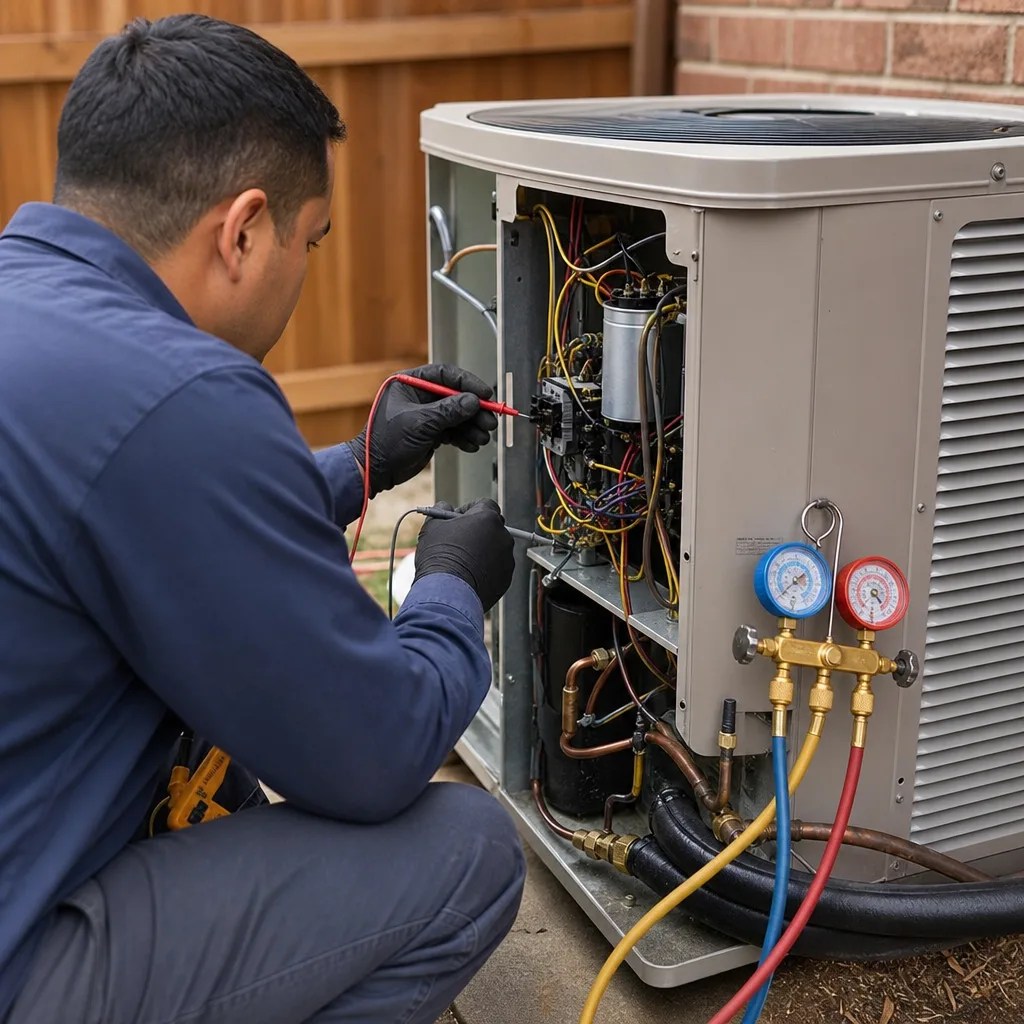
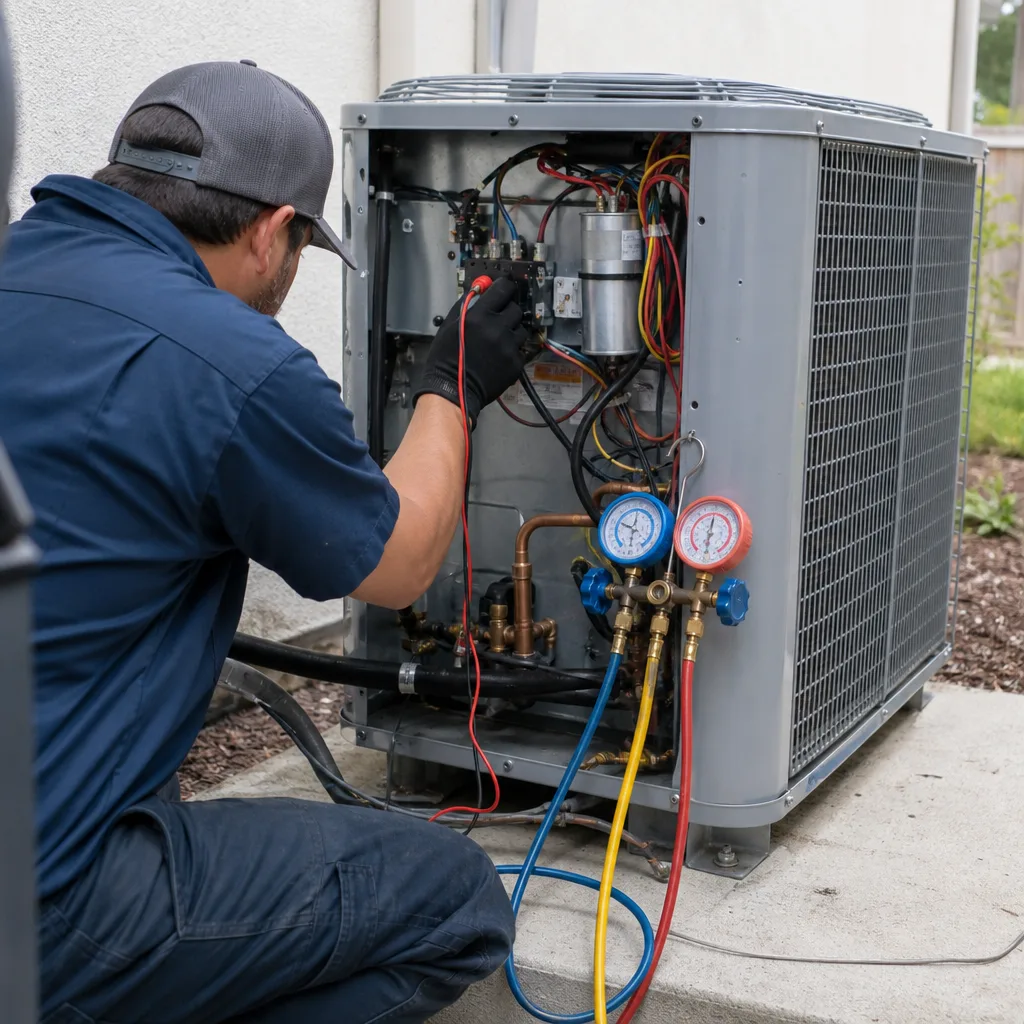
See the difference
 Before
 After
After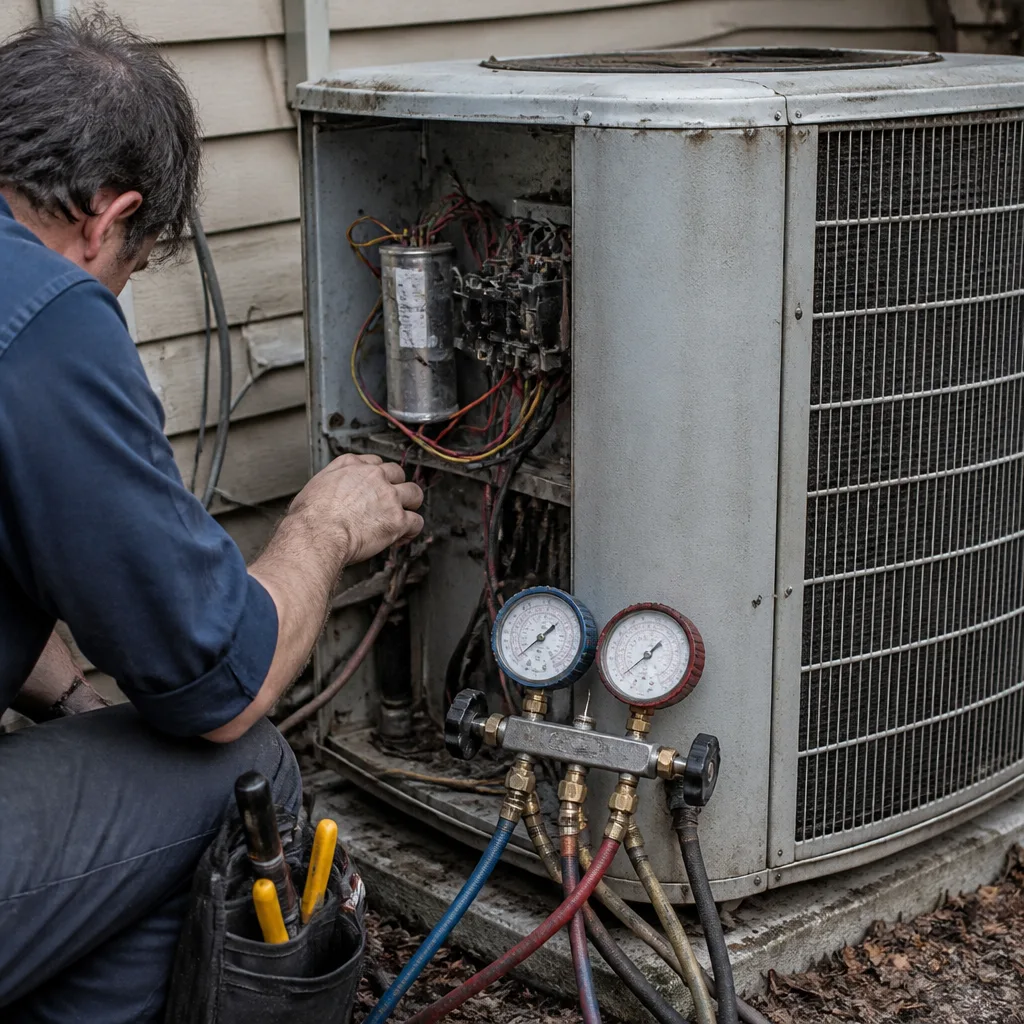 Before
 After
After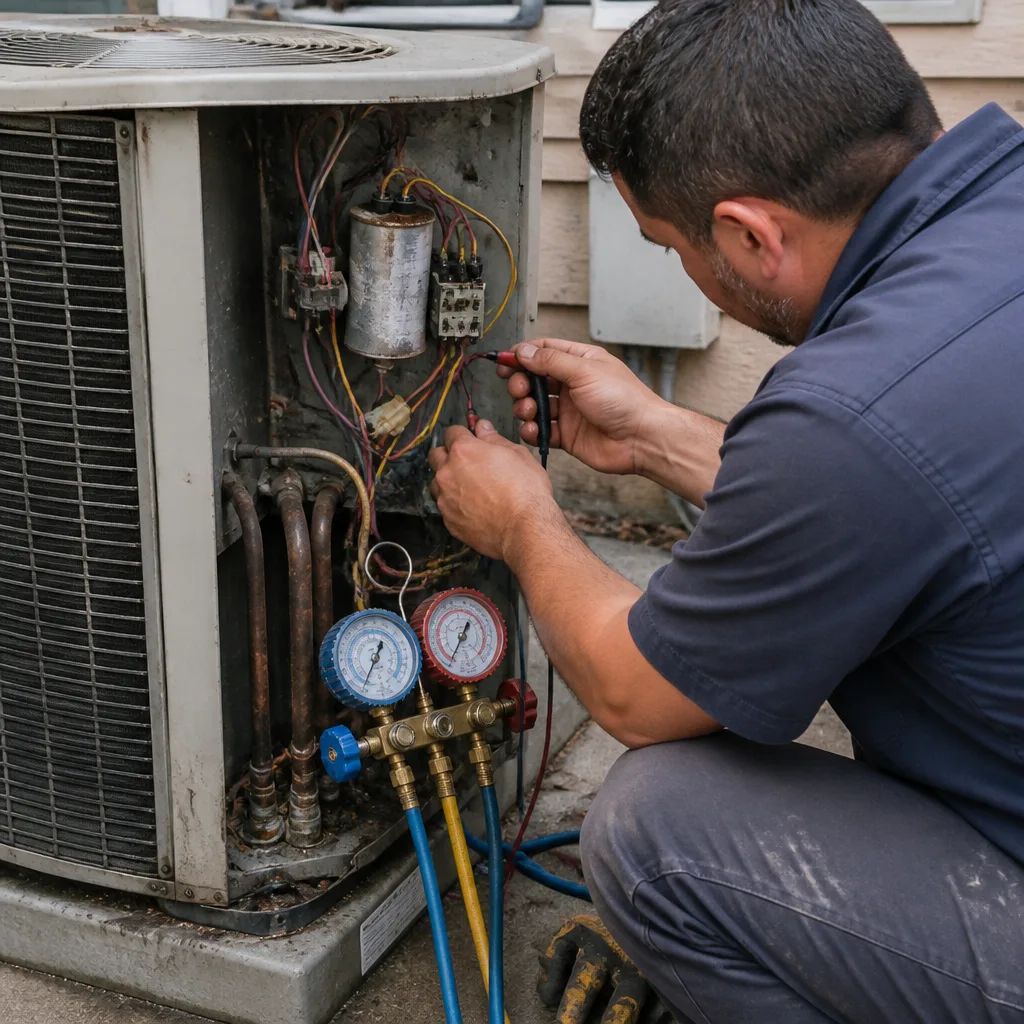 Before
 After
AfterWhen to Call a Professional
Call a licensed HVAC contractor when the capacitor is bulging, when the coil is frozen, when the condensate pan has already overflowed, when you hear grinding or buzzing from the condenser, when the system trips a breaker, or when the refrigerant charge is low. These are not DIY fixes, and in Texas, refrigerant work requires an EPA Section 608 certification. A homeowner who opens the sealed system creates a safety risk, voids the warranty, and will not have the recovery equipment to handle refrigerant legally. Dalton Heating & Air Dallas offers free estimates in Dallas, and every job includes a written price before any work starts. Call (254) 280-5320 and a real person answers around the clock, not a voicemail queue.
Frequently Asked Questions
Change a standard 1-inch filter every 30 to 60 days during Dallas cooling season, and check it every two weeks during March through May dust season and during peak oak and cedar pollen weeks. Homes with pets or construction nearby may need monthly changes year-round. Call (254) 280-5320 if you are not sure which filter rating your blower can handle.
The most common summer AC repair in Dallas is a clogged condensate drain line, which we see more often than capacitor failures, refrigerant leaks, or blower failures combined in July and August. Pouring one cup of white vinegar down the drain vent tee every 60 days is the cheapest prevention available, and it takes less than two minutes.
A professional spring startup inspection in Dallas typically costs between $89 and $160, depending on whether it includes a coil cleaning and refrigerant level check. Repairs found during maintenance are quoted separately, in writing, before any work begins. Call (254) 280-5320 for a specific quote; estimates are free.
If the compressor has failed and the system is over 12 years old, replace it; the repair cost approaches half the cost of a new system without restoring factory efficiency. If the system is under 8 years old and the failure is a capacitor, contactor, or blower motor, repair makes sense. A licensed technician can give you the repair cost, the system’s age, and the expected remaining lifespan so you can make the decision with real numbers.
You can clean the outdoor condenser coil safely with a garden hose and a non-acidic coil cleaner after shutting off the breaker, but indoor evaporator coil cleaning is better left to a licensed technician because access usually requires removing panels near electrical components and the drain pan. Acidic cleaners and pressure washers void coil warranties across brands including York, Daikin, Bryant, and American Standard.
Our technicians are factory-trained to service nine major residential brands: Carrier, Trane, Lennox, Goodman, Rheem, York, Daikin, Bryant, and American Standard. Every repair includes a written price before work starts and a written one-year guarantee, with a free return visit if the repair fails within that year. Call (254) 280-5320 to schedule.
The Bottom Line
Dallas AC maintenance comes down to four habits: keep a clean filter matched to your blower, keep the condensate drain clear with vinegar every 60 days, visually inspect the capacitor twice a year, and pay for a professional spring inspection that checks refrigerant, coils, and electrical connections. Each habit alone prevents a specific failure that costs Dallas homeowners between $400 and $3,500 when ignored. You do not need to become a technician. You need to know what a failing system looks like before it shuts down on a 104°F afternoon, and you need a contractor in Dallas who puts the price in writing and stands behind the work for a year. For more guides & resources, visit our blog. That is exactly how we operate, on every single call.
Written by Marco Benitez, Owner at Dalton Heating & Air Dallas, serving Dallas since 2003.